
Precision Agriculture: Harnessing Machine Learning for Yield and Nitrogen Optimization
Computers and Electronics in Agriculture
This paper provides a comprehensive review of machine learning (ML) techniques for crop yield prediction and nitrogen (N) status estimation in precision agriculture. It highlights how ML models, ranging from Artificial Neural Networks (ANN) to Deep Learning and Gaussian Processes, serve as the backbone for processing high-dimensional remote sensing data to achieve sustainable and optimized farming.
TL;DR
This seminal review explores how Machine Learning (ML) transforms "Precision Agriculture" (PA) from simple remote sensing into a high-fidelity prediction science. By moving beyond basic vegetation indices to complex architectures like Deep Gaussian Processes and Random Forest Residuals Kriging, researchers can now predict crop yields and nitrogen needs with unprecedented localized accuracy.
Background: The Shift to Data-Driven Farming
The agricultural sector faces a dual pressure: increasing yields for a growing population while minimizing environmental impacts from nitrogen runoff. Historically, farmers relied on "destructive" chemical analysis or simplistic spectral ratios (like NDVI). This review positions ML as the critical bridge that converts massive, heterogeneous data—from satellites, drones, and soil sensors—into actionable management zones.
Why Traditional Methods Fail
Traditional statistical methods like Stepwise Multiple Linear Regression (SMLR) often fall victim to Multicollinearity. In hyperspectral imaging, many spectral bands are highly correlated; SMLR struggles to distinguish which band actually represents plant health. Furthermore, agricultural data is inherently "noisy" due to atmospheric interference and soil variability, which linear models cannot effectively filter.
Methodology: The ML Toolbox for Modern Agronomy
The review highlights several sophisticated approaches that address these traditional limitations:
1. Neural Networks & Feature Discovery
While traditional vegetation indices (VIs) only use 2-3 bands, Back-propagation Neural Networks (BPNN) and Deep Learning (CNN/LSTM) can digest the entire spectral trace. This allows the model to "learn" which features are most indicative of yield without human bias.
2. Probabilistic Modeling with Gaussian Processes
One of the most powerful insights is the use of Gaussian Processes (GPs). Unlike "black-box" models, GPs provide a confidence interval for their predictions. In a field setting, knowing the uncertainty of a nitrogen estimate is as important as the estimate itself for risk management.
 Figure 1: Conceptual overview of information fusion from spectral, spatial, and temporal domains.
Experiments and Key Findings
The meta-analysis of multiple studies reveals a clear hierarchy of performance:
- Yield Prediction: Comparison studies show that M5-Prime Regression Trees and Deep Learning typically rank highest in stability and error reduction (RMSE), outperforming kNN and standard SVR.
- Nitrogen (N) Status: LS-SVM (Least Squares Support Vector Machines) emerged as a standout for non-destructive N estimation in rice and wheat, effectively handling the high dimensionality of canopy reflectance.
- Spatial Intelligence: Techniques like Random Forest Residuals Kriging (RFRK) were found to be essential for incorporating spatial autocorrelation—acknowledging that "nearby plants are more likely to be similar."
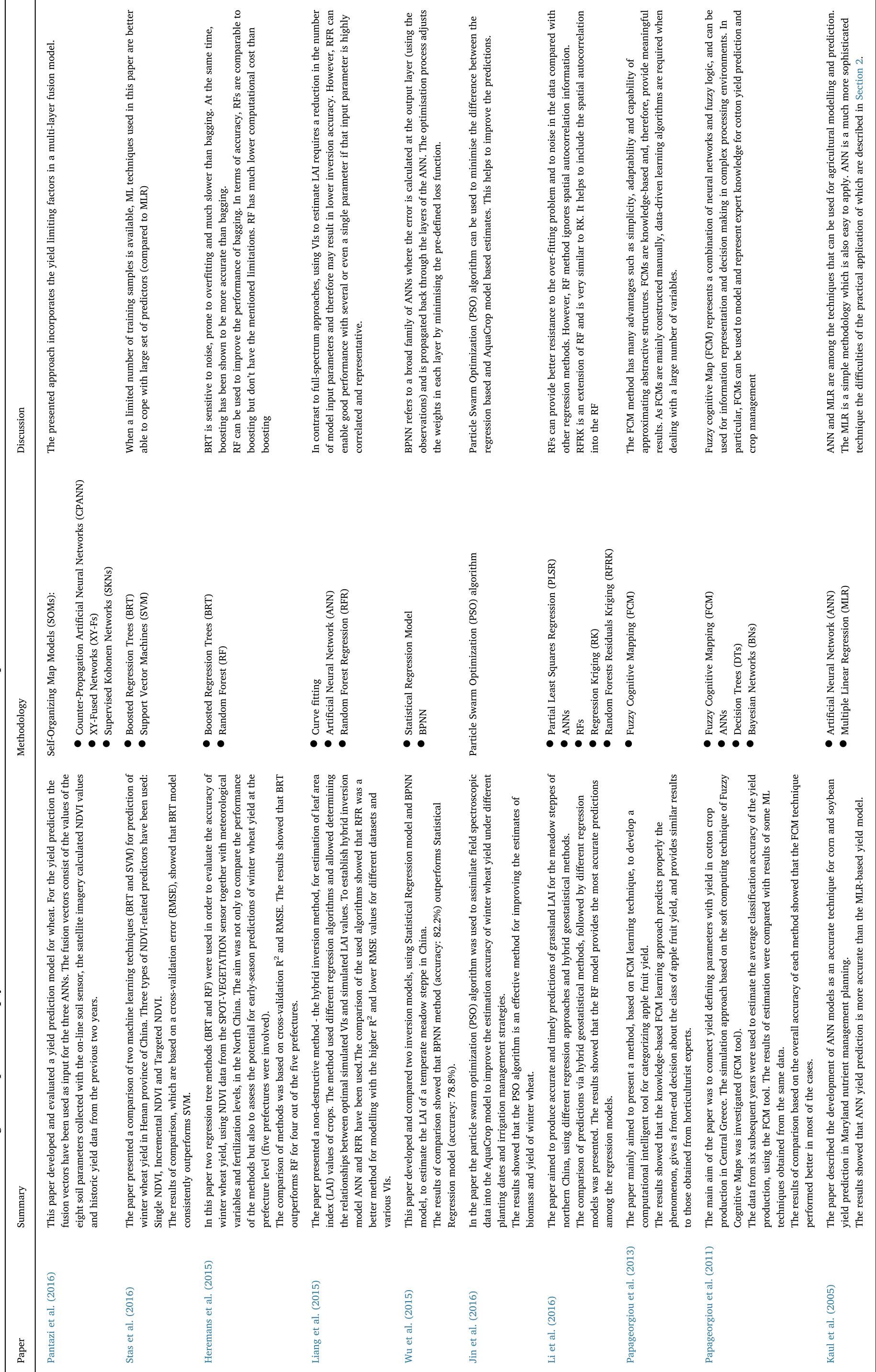 Table 1: Summary of key studies identifying SKN and BRT as top performers for wheat yield tasks.
Critical Insights: Beyond the Algorithm
The review makes a profound point: pure data-driven approaches have limits. The most successful systems in the near future will be Hybrid Systems. These combine:
- Expert Knowledge: Using Fuzzy Cognitive Maps (FCM) to encode agronomist "rules of thumb."
- Signal Processing: Using Continuum-Removal (CR) to isolate absorption features before feeding them into an ANN.
- Sensor Fusion: Fusing stationary soil probes with mobile UAV imagery to update models in real-time.
Conclusion and Future Outlook
We are moving toward an era of "Active Optimal Data Collection." Instead of broad-brush fertilization, ML allows for "Management Zones" where every square meter of a field receives exactly what it needs.
Limitations to Watch:
- Data Quality: ML models are only as good as their training data; atmospheric noise remains a challenge.
- Transferability: A model trained on Iowa corn may not immediately work for Australian wheat without "Transfer Learning."
As we look toward 2026 and beyond, the integration of multi-modal fusion and probabilistic updates will turn farms into giant, self-optimizing biological laboratories.