
IC-Tools as Catalysts for Social Learning: Moving Beyond Technocracy in River Basin Management
Concepts and methods for analysing the role of Information and Communication tools (IC-tools) in Social Learning processes for River Basin Management
This paper introduces a conceptual framework for evaluating Information and Communication tools (IC-tools) within the context of "Social Learning" (SL) for River Basin Management (RBM). It establishes a methodology to assess how technical artefacts—ranging from GIS and simulation models to 3D physical mock-ups—facilitate stakeholder interaction, perspective elicitation, and collective action required by the EU Water Framework Directive.
TL;DR
The management of river basins is no longer just a task for hydraulic engineers; the EU Water Framework Directive (WFD) now mandates active public participation. This paper argues that Information and Communication tools (IC-tools) should not just store data, but serve as catalysts for Social Learning—the process where social networks develop the capacity for collective action. By analyzing case studies in France and Flanders, the authors reveal that "low-tech" accessibility often outweighs "high-tech" sophistication in building trust and resolving environmental conflicts.
The Cognitive Gap: Why Data Isn't Enough
For decades, water management followed a top-down "expert-driven" model. However, the authors point out a critical pain point: Informational Asymmetry. When authorities use complex simulation models as "strategic weapons" to claim authority, it creates a technocratic barrier that alienates local farmers, fishermen, and citizens.
The core challenge isn't just a lack of data, but a lack of Shared Meaning. Stakeholders enter the process with different "frames"—mental lenses through which they view the river (e.g., a fisherman sees a habitat; a utility company sees a power source). Without tools to elicit and align these perspectives, conflict is inevitable.
Methodology: The Social Learning Framework
The authors move away from viewing IC-tools as mere software. Instead, they define them as artefacts used to facilitate social interaction. Their framework evaluates tools based on:
- Usage Purpose: Beyond storage, do tools support Perspective Elicitation (making mental models explicit) and Interaction Support?
- Relational Quality: Does the tool help participants share a common language?
- Perceived Usability: Can a non-expert actually learn and derive satisfaction from using it?
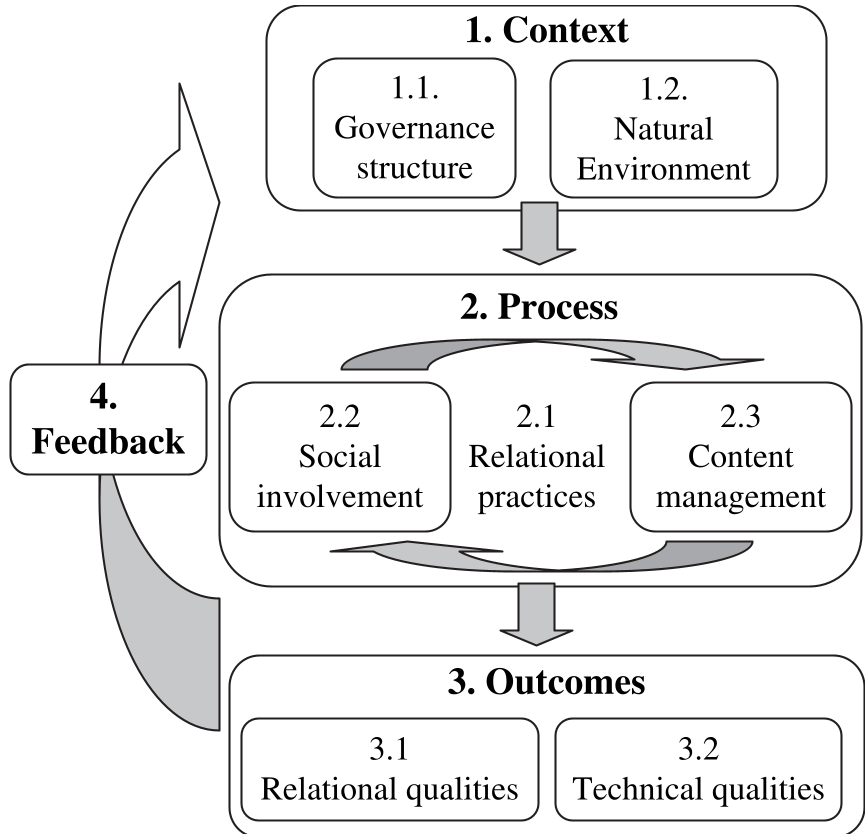 Figure 1: The conceptual framework where River Basin Management is viewed as a combined social-relational and technical task.
Case Study Insights: The Power of "Léon the Sturgeon"
The paper compares the Dordogne (France) and Flemish (Belgium) river basin projects. The findings are a wake-up call for tool developers:
- The Sophistication Paradox: In Flanders, advanced Decision Support Systems (DSS) were available, but they often stayed within the hands of consultants. In contrast, France utilized "Léon the Sturgeon"—a 2-meter 3D model—to spark public dialogue.
- Mapping Perceptions: The most successful "boundary object" in the Dordogne case wasn't a hydraulic map, but a sociological map showing user perceptions of water releases. By visualizing the impact on recreational users alongside technical data, the stakeholders (including the giant utility EDF) were forced to "reframe" the problem from a local engineering issue to a shared social responsibility.
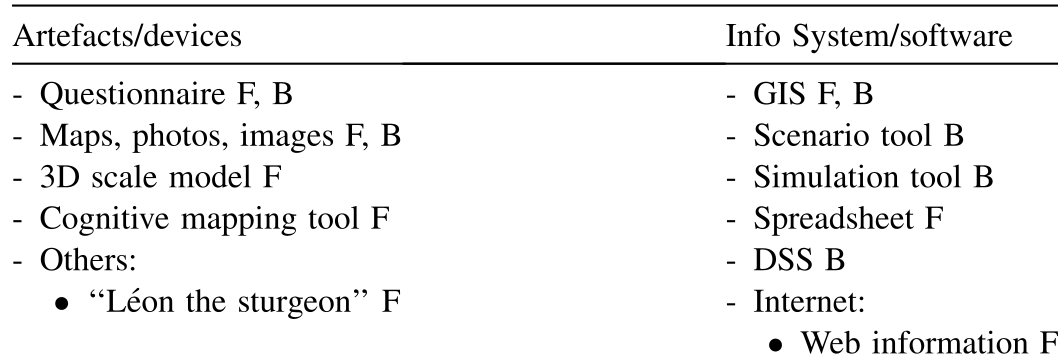 Table 2: Traditional tools like Maps and Questionnaires remain the most prevalent in actual practice compared to advanced simulations.
Deep Insight: Co-Design as a Trust-Building Ritual
One of the most profound observations in the study involves a GIS (Geographic Information System) implementation on the Cère river. A representative spent weeks physically mapping habitats in view of local residents, inviting them to comment.
The result? The stakeholders trusted the digital database because they had witnessed the physical labor of data gathering. This "procedural legitimacy" was absent in a rival case where a hydrologist presented results without ever visiting the field, leading to immediate rejection by the public.
Critical Analysis & Conclusion
The value of this research lies in its shift from Substantive Quality (is the model accurate?) to Relational Quality (does the model build trust?).
Takeaways for the Future:
- Simplicity is Scalable: For "active involvement" to be real, tools must be learnable by non-experts.
- Transparency over Precision: Communicating uncertainty via IC-tools is more important than presenting a single "correct" simulation result.
- Limitations: The paper reflects a 2007 context; today’s challenges would involve managing "data overload" and the role of social media in "framing" environmental issues.
Ultimately, the paper proves that river basin management is a social process supported by technical tools, rather than a technical process that occasionally involves the public.
Final Summary: To achieve the WFD's goals, we must stop building "black boxes" and start building "bridges."