
The Growing Complexity of Economics: A Century of Title Evolution (1890–2012)
The evolution of conceptual diversity in economics titles from 1890 to 2012
This study utilizes bibliometric techniques and Social Network Analysis (SNA) to investigate the 122-year evolution of economics research titles (1890–2012). It reveals a significant shift towards longer, more complex titles and identifies the 1970s as a pivotal decade for conceptual diversity and relational complexity in the field.
TL;DR
While general English prose has become shorter and punchier over the centuries, academic titles in economics have done the exact opposite. This study analyzes over 330,000 titles to show that as economics became more specialized and mathematical, its titles grew longer, more syllable-heavy, and more conceptually dense, peaking in relational complexity during the 1970s.
Perspective: The Architecture of Academic Communication
If you look at a novel from the 1800s, the sentences are long and winding. In contrast, modern business writing is lean. One might assume academic titles followed this "economy of expression." However, this paper argues that academic titles aren't just sentences—they are high-density "cognitive exchanges" designed to signal niche expertise in a crowded market.
Methodology: Mapping the Economic Mind
The authors didn't just count words; they treated titles as a Social Network (SNA).
- Vertices (Nodes): Word stems (e.g., "econom", "polici").
- Edges (Links): Co-occurrence of stems in the same title.
- Conceptual Diversity: A ratio of technical terms (from Deardorff’s Glossary) to the total word count.
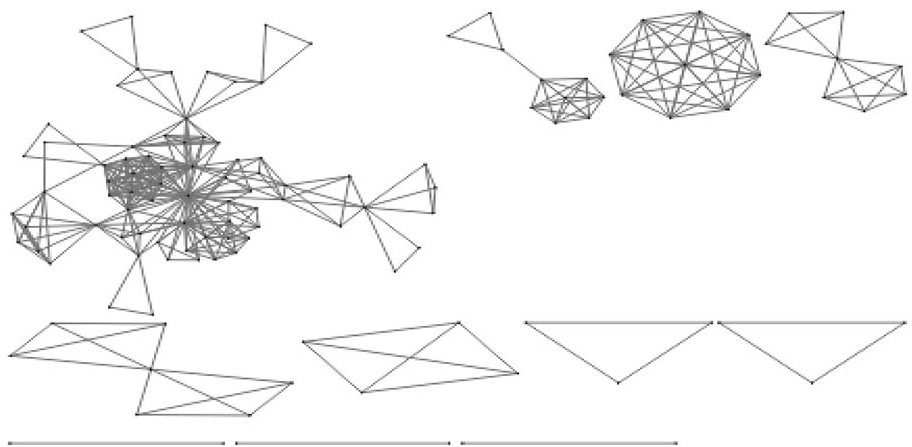 Figure 1: Visualizing the explosion of connections between economic concepts from 1890 (sparse) to 2000 (a dense "giant system").
Key Findings: The "Long Title" Paradox
The data reveals a striking upward trend in complexity:
- Word Count Increase: Titles grew from an average of ~6.9 words in the 1890s to ~10.4 words by 2012.
- The Syllable Surge: Syllable counts grew even faster than word counts (72% vs 50%), meaning authors are choosing longer, more "multisyllabic" (and likely more technical) words.
- Relational Complexity: The "average degree" of a concept (how many other concepts it links to) skyrocketed from 11 to 106. In 1890, a researcher could be a generalist; today, the network is too vast, forcing researchers into hyper-specialized sub-fields.
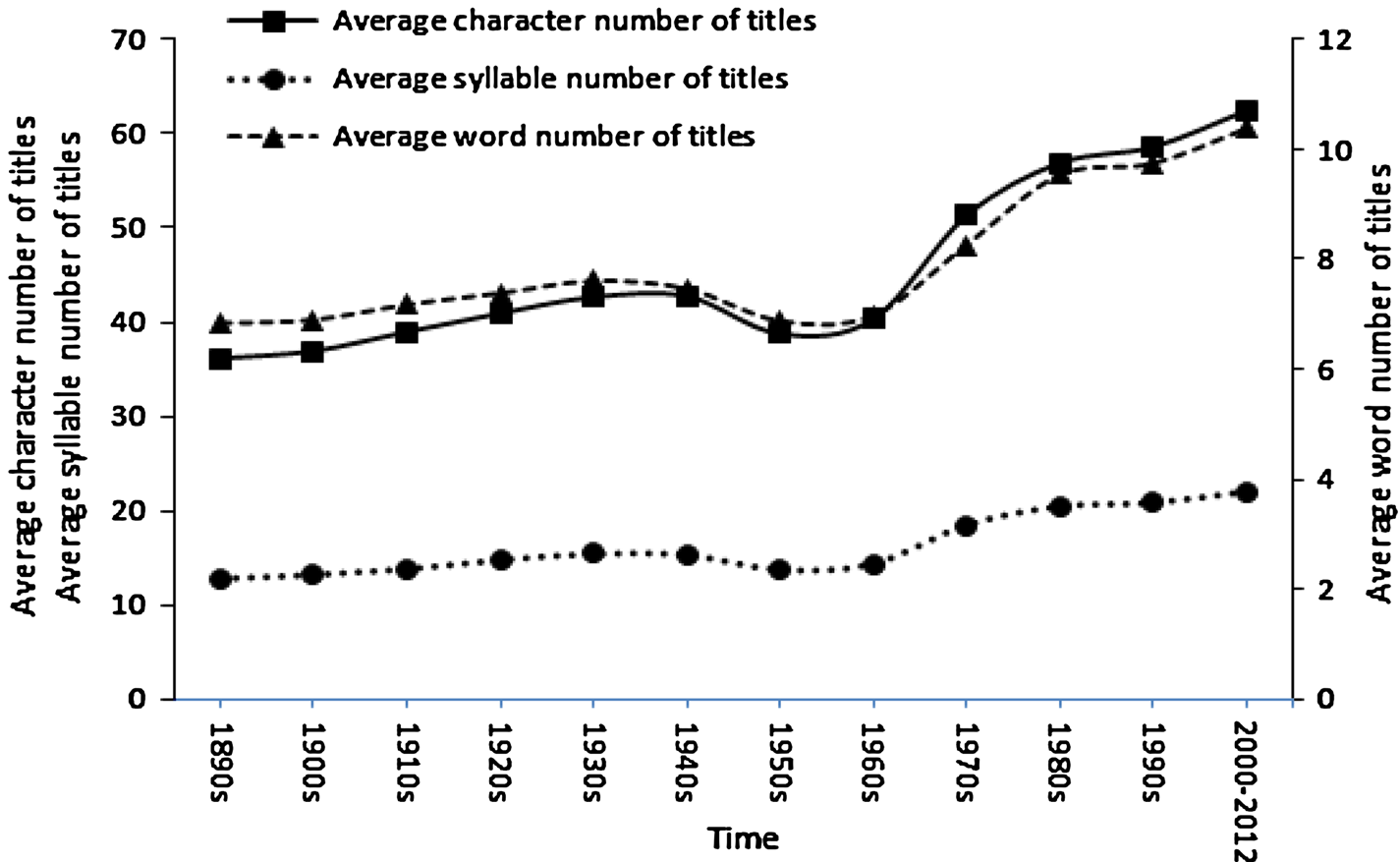 Figure 2: The steady, systematic rise in character, word, and syllable counts over 120 years.
The 1970s: The Golden Age of Relational Novelty
The study highlights the 1970s as a unique anomaly. This decade saw the highest growth rate in relational complexity and conceptual diversity. The authors hypothesize that the rise of Monetarism, Supply-side economics, and the Institutional school injected a massive wave of new vocabulary into the field, creating a "boom time" for conceptual exploration.
Why Does This Happen?
The authors suggest that while literary writers want to reach the masses (requiring simple language), academic authors want to reach experts. In a limited space, a title must convey "maximum specialized information." By using more words and technical concepts, authors provoke curiosity among peers who are scanning thousands of papers.
Critical Insight & Limitations
The study effectively bridges computational linguistics and the history of economic thought. However, it relies on a specific 2013 economics glossary. If that glossary is biased toward modern "math-heavy" terms, it might undervalue the conceptual diversity of the early 20th century. Furthermore, the "dip" in complexity during the 1950s—possibly due to the dominance of the Neo-classical synthesis—suggests that academic language isn't just driven by science, but by intellectual "fashions."
Conclusion
Economics has evolved from a discipline where "Industry," "Agriculture," and "Trade" were focal points, to one dominated by "Models," "Markets," and "Evidence." As the field continues to apply advanced mathematical techniques, we can expect titles to remain the "dense gatekeepers" of economic knowledge.