
The Asymmetric Tug-of-War: How Confirmation Bias Reconfigures Information Spread
Impact of Confirmation Bias on Competitive Information Spread in Social Networks
This paper investigates the impact of confirmation bias (CB) on competitive information spread within social networks using a game-theoretic approach. By modeling opinion evolution as a zero-sum game between two information sources, the authors identify a unique pure-strategy Nash equilibrium and characterize how cognitive biases affect these strategies.
TL;DR
In the modern information era, competition for public opinion is more than a race to the extremes. This paper reveals that Confirmation Bias (CB)—the human tendency to favor information affirming existing beliefs—forces strategic actors into a mathematical tradeoff. Using a zero-sum game framework, the authors prove that competitive sources only moderate their views (move toward the center) when the public has a biased "innate opinion," and surprisingly, they never both move toward the center simultaneously.
The "Stubborn Source" Problem
Traditional social models often assume that if you want to pull a crowd to the left, you should shout from the far left. However, real-world social networks are plagued by "Echo Chambers." If a source is too extreme, CB causes individuals to "tune out," effectively reducing the source's influence to zero.
The researchers identified a critical gap: existing models either ignored this "tuning out" effect or used binary "all-or-nothing" influence thresholds (bounded confidence) that are mathematically impossible to analyze at a steady state.
Methodology: The Mathematics of Bias
The authors adopt an evolution model that tracks opinion over time, influenced by:
- Innate Opinions (): An individual's fixed internal belief.
- Network Topology (): Who influences whom.
- Strategic Sources (): Competitive actors (e.g., "Hank" and "Georgia") trying to pull the network toward or .
The core innovation is the piecewise linear CB model: As the distance between the source () and the individual's current opinion () increases, the weight/influence of that source drops linearly.
 The interaction between the social layer (individuals) and the cyber layer (competitive sources).
Strategic Insights: The Nash Equilibrium
By treating the final steady-state opinion of the network as the payoff in a zero-sum game, the authors derive several counter-intuitive findings:
1. The Neutrality Nullification
If a population is perfectly neutral (average innate opinion = 0.5), CB has zero impact on the Nash equilibrium. Both competitors will remain at the absolute extremes (0 and 1) because any move toward the center would lose more "pulling power" than it gains in "influence weight."
2. The Asymmetry Rule (The "One-at-a-Time" Move)
The most striking discovery: CB can influence one source to move toward the center, but it cannot influence both simultaneously.
- If the public is already leaning toward Georgia (0), Hank (1) might be forced to move toward the center (e.g., to 0.8) to remain "relatable" enough to have influence.
- One actor stays at their extreme to act as an anchor, while the other compromises to capture the biased middle ground.
Experimental Proof
Using Krackhardt’s advice network (a real-world social graph of 21 individuals), the authors tested five scenarios.
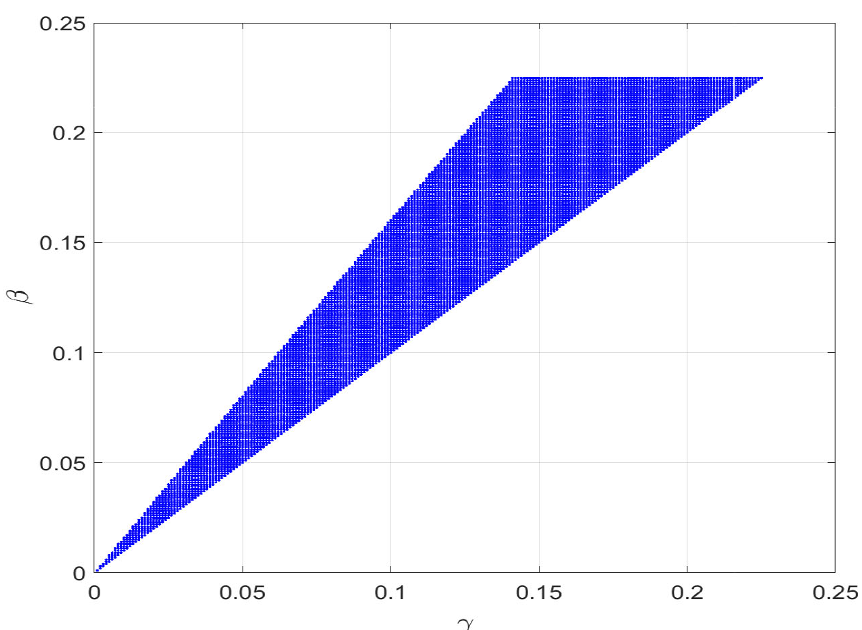 Fig 2: Visualization of the advice network and the resulting opinion distribution at Nash Equilibrium.
In cases where the public had strong innate opinions (e.g., ), Georgia was forced to adjust her strategy from to to maintain any relevance in the network's influence weighted average.
Final Analysis & Takeaways
This work provides a rigorous mathematical backbone for why we see certain political or marketing actors "moderate" their stance while others remain "stubbornly extreme."
- Academic Value: It successfully bridges the gap between simple linear models and complex, non-analytical bounded confidence models.
- Security Implications: The model suggests that defenders can hinder attackers (misinformation spreaders) by protecting the privacy of the network's innate opinion data. If an attacker doesn't know the population's , they cannot calculate the centrist shift required to maximize their influence.
- Future Directions: The next frontier is Asymmetric Bias, where the "cost" of being far from a belief isn't the same for both sides—a common trait in highly polarized political elections.