
Social Connectivity as an Emotional Buffer: A Bayesian Deep Dive into Online Social Capital
Connectivity, Online Social Capital, and Mood: A Bayesian Nonparametric Analysis
This paper introduces a computational framework to quantify "online social capital" and its relationship with mental well-being, specifically mood. By leveraging a massive dataset of 1.6 million LiveJournal users, the authors employ a novel Bayesian nonparametric Poisson-Gamma factor analysis to identify shared and individual mood transition patterns across different levels of social connectivity.
TL;DR
Does your online social circle affect your mental health? This study analyzes 1.6 million users to prove that "online social capital"—measured by your participation and support in digital communities—is a primary driver of mood stability. Using advanced Bayesian nonparametrics, the researchers demonstrate that high social connectivity effectively "filters" negative emotional transitions, while social isolation leads to a more volatile and negative emotional state.
The Digital Social Pulse: Motivation and Insight
For decades, sociologists have known that physical isolation kills as surely as smoking. However, in the era of digital-first interaction, the definition of "social capital" has been blurry. Most research treated social media as a simple text corpus for sentiment analysis.
The authors of this paper shift the focus: they treat connectivity as a sensor. They hypothesize that online social capital (how many groups you join, how many comments you receive) isn't just a vanity metric—it is a structural component of your emotional resilience. The core challenge was mathematical: how do you compare emotional "swings" (transitions) across millions of people without predefined categories?
Methodology: Bayesian Nonparametrics for Mood Transitions
To solve this, the researchers turned to Bayesian Nonparametric Factor Analysis. Unlike standard PCA or K-means, this method doesn't require the researcher to guess the number of "mood patterns" (factors) beforehand.
1. Defining Social Capital
The study categorizes users into LOW, MEDIUM, and HIGH cohorts based on:
- Social Participation: Groups joined, posts written, comments made.
- Social Support: Number of friends, followers, and comments received.
2. The Poisson-Gamma Factor Model
Since mood transitions are "count data" (how many times you went from 'Sad' to 'Happy'), Gaussian models fail. The authors used a Restricted Hierarchical Beta Process (R-HBP).
- The Logic: The model learns a "dictionary" of mood transition patterns ().
- The Sharing: It identifies which patterns are universal and which are unique to lonely (LOW) or highly connected (HIGH) users.
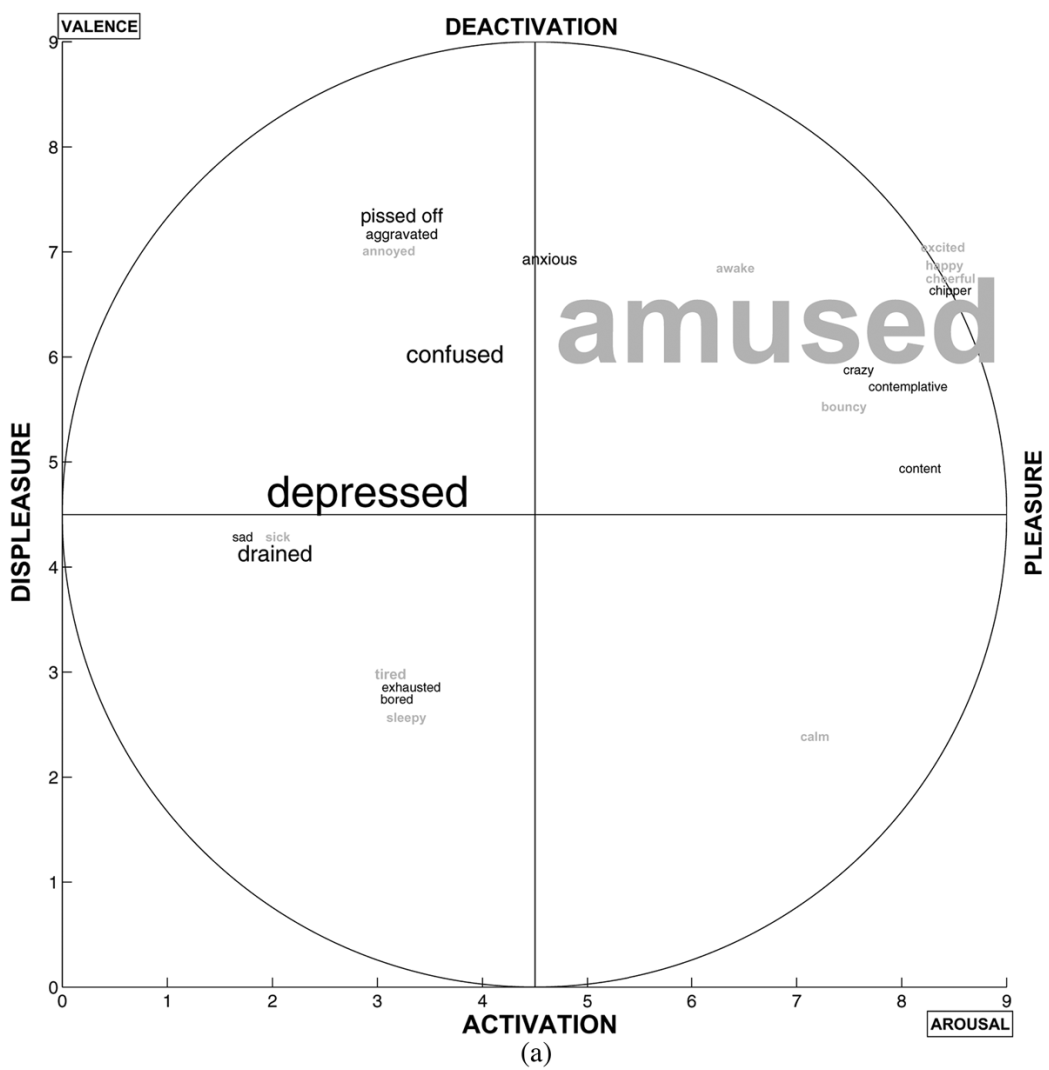 Figure 1: The framework for correlating social connectivity with latent mood factors.
Key Findings: The "Positivity Filter"
The results provide startling evidence of the emotional benefits of connection.
The Mood Cloud
When users move from LOW to HIGH social capital, negative moods like "depressed," "tired," and "lonely" decrease drastically (shown in black in the tag cloud), while "amused," "excited," and "happy" (shown in gray/white) surge.
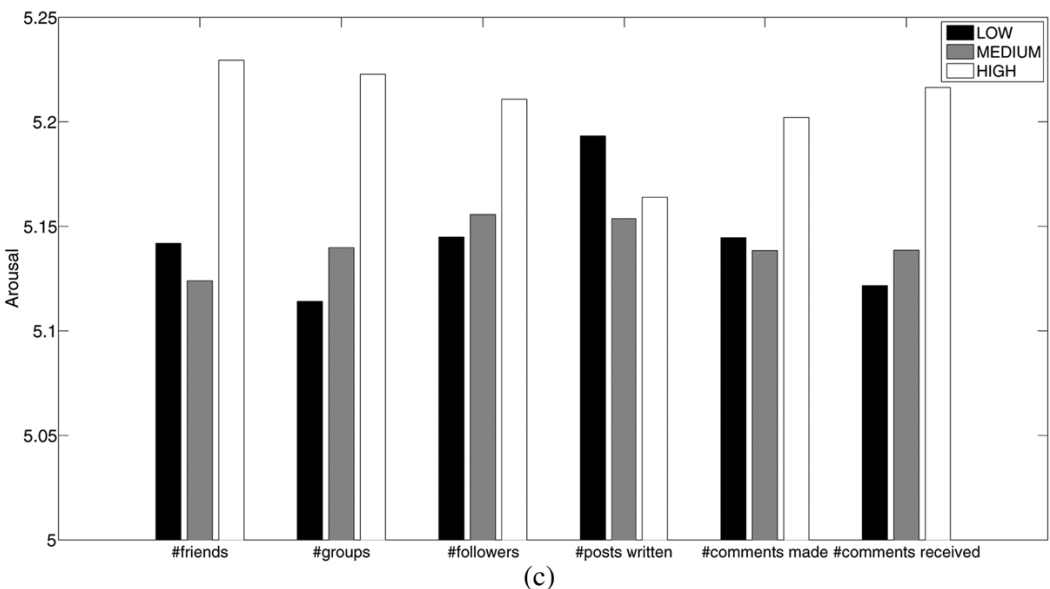 Figure 2: Visualizing the shift in mood frequency as social capital increases.
Latent Factor Analysis
The Bayesian model discovered 21 distinct "mood swing patterns."
- HIGH Social Capital users were almost exclusively associated with Factors 1–10, which represent transitions to high-valence, high-arousal states (stable positivity).
- LOW Social Capital users were scattered across all factors, especially the negative-valence factors 12–21.
This suggests that high social capital acts as a stabilizer, anchoring users in positive emotional loops, whereas low social capital leaves users vulnerable to a wider, more negative range of emotional volatility.
Critical Insights & Future Outlook
This work establishes social media as a legitimate "barometer for mood."
Academic Perspective: The use of R-HBP for count-data transition matrices is a sophisticated way to handle "noisy" social media logs. It bypasses the limitations of simple sentiment counting by looking at the dynamics of emotion.
Implications:
- Clinical Monitoring: Online activity triggers could help identify at-risk individuals before a mental health crisis occurs.
- Platform Design: If receiving comments is a key metric for "Social Support" that stabilizes mood, social platforms could algorithmically prioritize support-seeking posts.
Limitations: The study shows correlation, not necessarily causation. Does having more friends make you happier, or do happy people simply attract more friends? While the Bayesian analysis points toward structural stability in high-capital groups, the "chicken or egg" problem in social capital remains an open research frontier.
Conclusion
In a world where digital interaction is often criticized, this research highlights a profound truth: meaningful online connectivity is a vital pillar of our emotional infrastructure. As the authors conclude, online social capital is not just about likes; it's about life.