
WS-260: Toward Neuro-Validated Semantic Similarity in Chinese NLP
Constructing and validating word similarity datasets by integrating methods from psychology, brain science and computational linguistics
This paper introduces WS-260, a novel Chinese word similarity gold-standard dataset constructed through a multidisciplinary framework integrating Computational Linguistics, Psychology, and Brain Science. The core innovation is the first-ever use of Event-Related Potentials (ERPs) to validate the cognitive soundness of similarity scores.
TL;DR
The paper introduces WS-260, a Chinese word similarity dataset that moves beyond traditional human-scoring methods by integrating Brain Science (ERPs). The authors demonstrate that high-quality NLP evaluation resources must account for psycholinguistic variables (word frequency/length) and be validated by the brain's actual electrical response to semantic "surprises."
The "Gold Standard" Identity Crisis
In NLP, we often evaluate word similarity models by comparing their output to "Gold Standard" datasets. However, these datasets are frequently problematic:
- Psychological Noise: Human scoring is subjective and can be influenced by how a question is phrased.
- Hidden Variables: Word length and frequency affect how our brains process meaning, yet these are rarely controlled during word pair selection.
- Blurred Lines: Many datasets fail to distinguish between Similarity (e.g., "Apple" and "Pear") and Relatedness (e.g., "Car" and "Wheel").
The authors argue that if a dataset is truly a "Gold Standard," it should align with the objective neural patterns of human semantics.
Methodology: The Multidisciplinary Pipeline
The authors propose a framework that bridges three distinct fields:
1. Construction (Computational Linguistics & Psychology)
- Controlled Sampling: Words were sampled from the Sogou News Corpus and filtered via HowNet. Only entity words were used.
- Factor Control: Word lengths were fixed at 2 characters, and frequency ratios between pairs were kept under 1.5 to minimize neuropsychological interference.
- Categorization: Pairs were divided into "Similarity" (categorical) and "Relatedness" (associative) subsets based on initial model scores.
2. Validation (Brain Science - The ERP Breakthrough)
The most significant contribution is the inclusion of Event-Related Potentials (ERPs). The authors focused on two specific brain wave components:
- N400: A negative deflection peaking at 400ms, typically triggered by semantic incongruity (when a word doesn't fit the context).
- N270: A potential sensitive to early semantic priming conflicts.
 Figure 1: The framework integrating AI, Psychology, and Brain Science.
Experimental Insights: What the Brain Says
The validation process yielded three critical "Results" that confirm the dataset's soundness:
- Response Time: Subjects took significantly longer to judge "Relatedness" (Group A) than "Similarity" (Group C3), confirming that associative links are cognitively more demanding than categorical ones.
- The N400 Signature: Unrelated word pairs (Group C1) triggered much stronger N400 amplitudes than highly similar pairs (Group C3). This proves the human scores assigned in the dataset correlate with the brain's "surprise" level.
- The N270 Distinction: Word pairs that were "Related but not Similar" (Group A) triggered a unique N270 potential around 270ms, providing a neurological basis for separating similarity from relatedness.
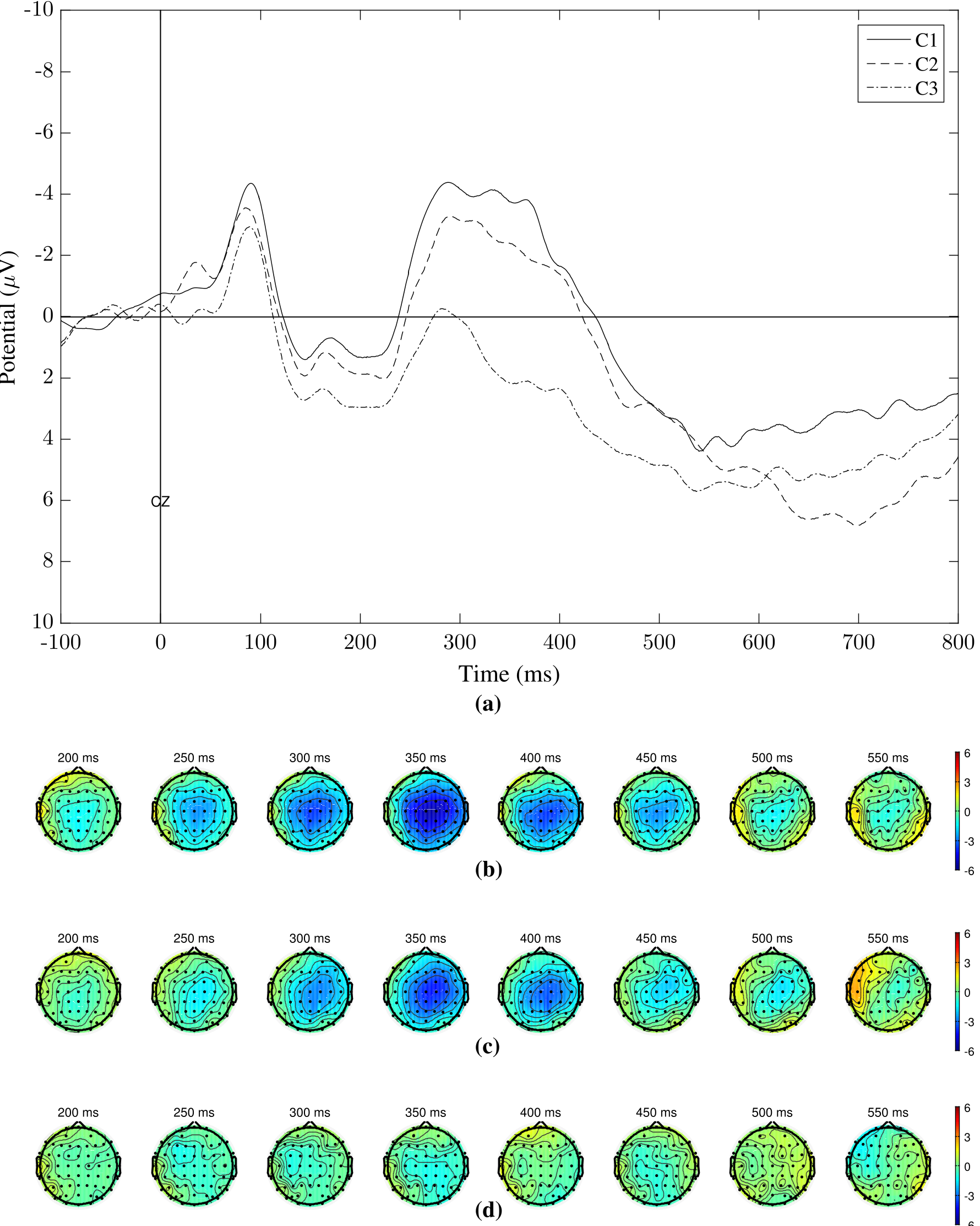 Figure 11: Comparison of N400 waves among different similarity groups.
Model Benchmarking
The authors tested several semantic models on WS-260:
- Knowledge-based: HowNet
- Vector Space: HAL, COALS
- Neural Embeddings: Word2Vec (CBOW, Skip-Gram)
Key Outcome: Neural models (Skip-Gram) achieved a Spearman's correlation of 0.885, significantly higher than on older datasets like WS-240 (0.551). This suggests that WS-260 is a "cleaner" and more reliable benchmark for modern NLP.
Critical Analysis & Conclusion
Takeaway
WS-260 is not just another dataset; it's a proof-of-concept for Neurometric NLP. By using brain waves to validate human scores, the researchers have created a benchmark that is grounded in biological reality rather than just statistical correlation.
Limitations
- Scale: At 260 pairs, the dataset is relatively small compared to modern needs (though this is typical for high-effort psycholinguistic data).
- Language Specificity: While the framework is universal, WS-260 is specifically Chinese.
Future Outlook
This work paves the way for "Cognitive Alignment" in Large Language Models (LLMs). As we strive to make AI more human-like, validating its internal representations against human neural signatures like N400 and N270 will become an essential engineering tool.