
SAFE-ICU: Why Standard Antifungal Doses Are Failing Our Most Critical Patients
Are contemporary antifungal doses sufficient for critically ill patients? Outcomes from an international, multicenter pharmacokinetics study for Screening Antifungal Exposure in Intensive Care Units—the SAFE-ICU study
The SAFE-ICU study is a large-scale, international prospective pharmacokinetic (PK) investigation involving 339 critically ill patients across 30 ICUs in 12 countries. It evaluates whether standard dosing of common antifungals (azoles, echinocandins, polyenes) achieves therapeutic PK/PD targets, revealing significant subtherapeutic exposure for several key agents.
TL;DR
The SAFE-ICU study, published in Intensive Care Medicine, reveals a critical gap in modern medicine: standard "label" doses for antifungals are frequently insufficient for patients in the ICU. With failure rates reaching nearly 60% for drugs like Amphotericin B, the study calls for an urgent shift toward personalized dosing and Therapeutic Drug Monitoring (TDM).
The "Invisible" Crisis in the ICU
When a patient enters septic shock or experiences multi-organ failure, their body's chemistry changes radically. Fluid resuscitation increases the volume of distribution, while hepatic or renal failure slows drug clearance. Despite these known changes, antifungal dosing has remained largely standardized.
The SAFE-ICU study (Screening Antifungal Exposure in Intensive Care Units) is the first multinational effort to quantify just how often we miss the mark. Covering 339 patients across 12 countries, it provides a sobering look at our current "best evidence" practices.
Methodology: Mapping the Pharmacokinetic Landscape
The researchers didn't just look at whether patients survived; they looked at the Area Under the Curve (AUC) and Minimum Inhibitory Concentrations (MIC). By sampling blood at three points during a dosing interval, they could determine if the drug concentration actually spent enough time above the "killing threshold" for the fungi involved.
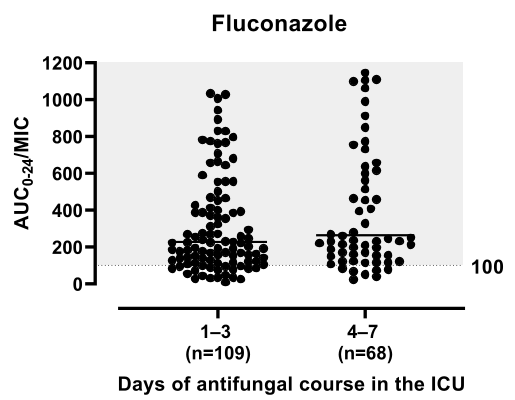 Fig 1: PK/PD target-related exposures per occasion. The shaded area represents the therapeutic target zone. Note how many data points fall below the line.
The Results: A Statistical Wake-Up Call
The study found a massive discrepancy between prophylaxis (preventing infection) and treatment (fighting active infection).
- The Successes: Fluconazole treatment and most prophylactic regimens performed relatively well, with >80% target attainment.
- The Failures:
- Voriconazole: Only 57.1% of patients reached the target during treatment.
- Amphotericin B: A staggering 58.3% of patients failed to reach the target concentration.
- Micafungin: Despite its reputation, nearly 36% of treatment patients were under-dosed.
Why Does This Happen?
The study highlights that weight and SOFA scores (a measure of organ failure) are critical drivers of drug exposure. Interestingly, patients on vasopressors actually had higher target attainment in some cases, suggesting that circulatory support might stabilize drug distribution, yet these same patients still faced higher mortality due to the severity of their illness.
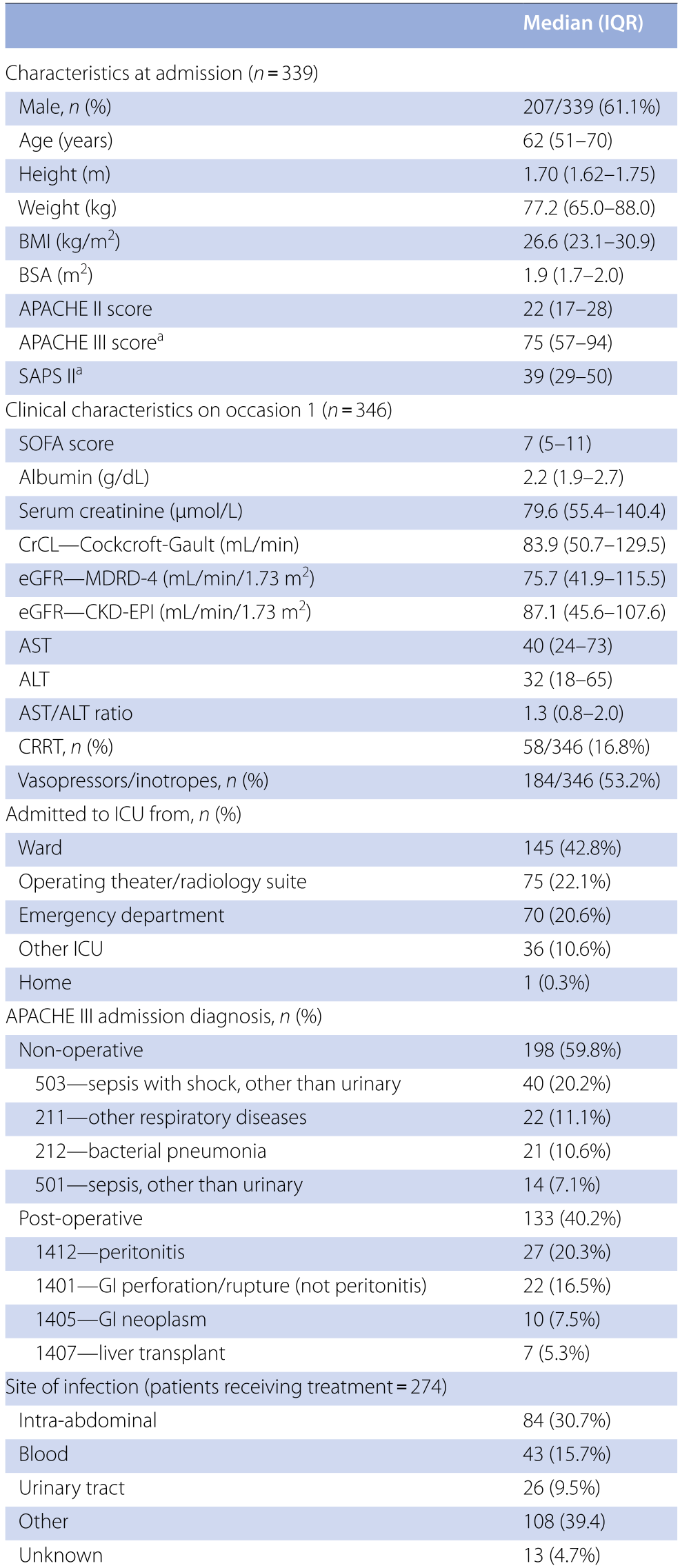 Table 1: The diversity of the ICU cohort highlights how varying weights and illness severities make standard dosing a gamble.
Deep Insight: The TDM Imperative
The most profound takeaway is the lack of MIC data. In the study, only 26% of identified fungi had an available Minimum Inhibitory Concentration. Without knowing how "strong" the enemy is, and without measuring how much "ammunition" (drug) is in the blood, clinicians are essentially flying blind.
The authors argue that the high variability (often >30% variation between patients) makes Therapeutic Drug Monitoring (TDM) a necessity rather than a luxury. This is especially true for Voriconazole, where the window between "ineffective" and "toxic" is narrow.
Conclusion & Future Outlook
The SAFE-ICU study proves that the "Standard Dose" is a myth in the context of critical illness. To improve survival:
- Loading Doses: Larger initial doses are needed for echinocandins to reach steady state faster.
- Personalization: Dosing must be adjusted for body weight and renal function (CRRT).
- TDM Adoption: Hospitals must invest in rapid-turnaround drug level testing.
As we move toward 2026 and beyond, the legacy of SAFE-ICU will likely be the transition from protocol-driven medicine to precision pharmacology in the intensive care unit.
Take-home message: Being "in the ICU" is a pharmacokinetic state of its own. If we don't dose differently, we aren't dosing correctly.