
CA-EHS: Revolutionizing Elderly Care Through Context-Aware AI and Signal Analysis
A Modelling of Context-Aware Elderly Healthcare Eco-System-(CA-EHS) Using Signal Analysis and Machine Learning Approach
This paper proposes a Context-Aware Elderly Healthcare Eco-System (CA-EHS) that integrates IoT sensors, cloud computing, and machine learning to monitor the biological and behavioral activities of the elderly. Using a multi-class Support Vector Machine (SVM) and signal processing, the system achieves a 94% accuracy in activity recognition, outperforming traditional Random Forest models.
TL;DR
The CA-EHS (Context-Aware Elderly Healthcare Eco-System) is a comprehensive monitoring framework designed to keep a "digital eye" on the elderly. By combining IoT sensor signals with Multi-class SVM models hosted on the cloud, this system can predict human behavior with 94% accuracy, providing both on-demand and proactive medical interventions.
Background & Motivation: The Aging Paradox
In our increasingly globalized world, professional demands often leave elderly family members living alone. This creates a dangerous "care gap." Prior work has attempted to bridge this gap with surveillance, but these attempts often suffer from high computational complexity or a lack of real-time proactive support.
The authors' insight is simple yet powerful: Healthcare should not just react to an emergency; it should be an automated ecosystem that understands the "context" of a person's daily movements to predict and prevent health crises.
Methodology: The Three-Layer Architecture
The proposed system is structured into three logical layers:
- Smart Home Layer: Sensors (Accelerometers, Temperature, Occupancy) collect raw data.
- Gateway Layer: Acts as a secure conduit, managing sensor nodes and transmitting data.
- Cloud Layer: The "brain" of the operation, where the SVM model resides and where health analytics trigger emergency alerts.
The SVM Core
Rather than using a standard binary SVM, the authors implemented a Multi-class SVM using a quadratic kernel. To solve the issue of computational overhead—a common criticism of multi-class SVMs—they introduced a transition table (Table 2 in the paper) that optimizes which classifier processes the data at any given state.
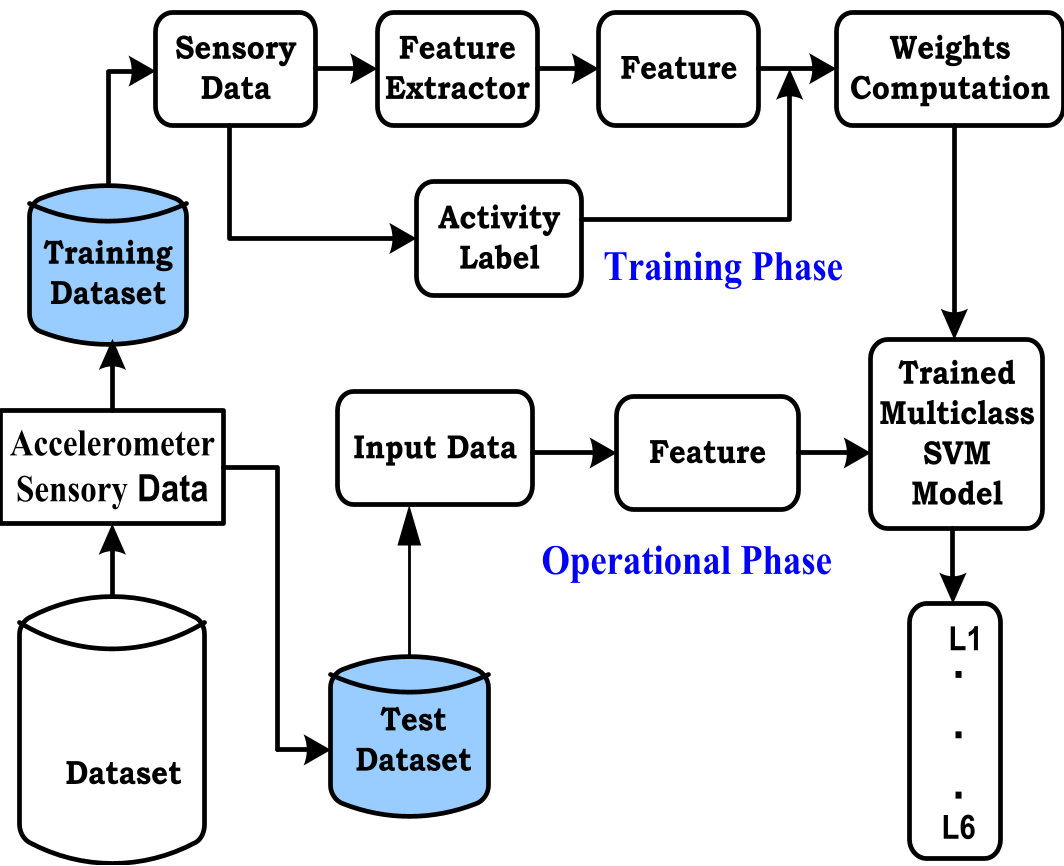 Figure 1: The overall workflow of the proposed activity prediction model, detailing the path from raw signal to classification.
Signal Processing Pipeline
The system doesn't just feed raw data into the AI. It employs a sophisticated pipeline:
- Filtering: Using Butterworth and Median filters to strip away noise and gravitational artifacts.
- Feature Extraction: Segmenting signals into windows and extracting 3-axis acceleration data (x, y, z) to identify patterns in the time and frequency domains.
Experimental Results: SVM vs. Random Forest
The effectiveness of CA-EHS was benchmarked against the popular Random Forest (RF) classifier using the HAR Dataset.
- Accuracy Recognition: The SVM approach outperformed RF significantly, achieving 94% versus the RF's 88%.
- Loss Rate: The SVM displayed a consistently lower loss rate, indicating a more robust model for different behavioral patterns (Walking, Standing, Sitting, Laying, etc.).
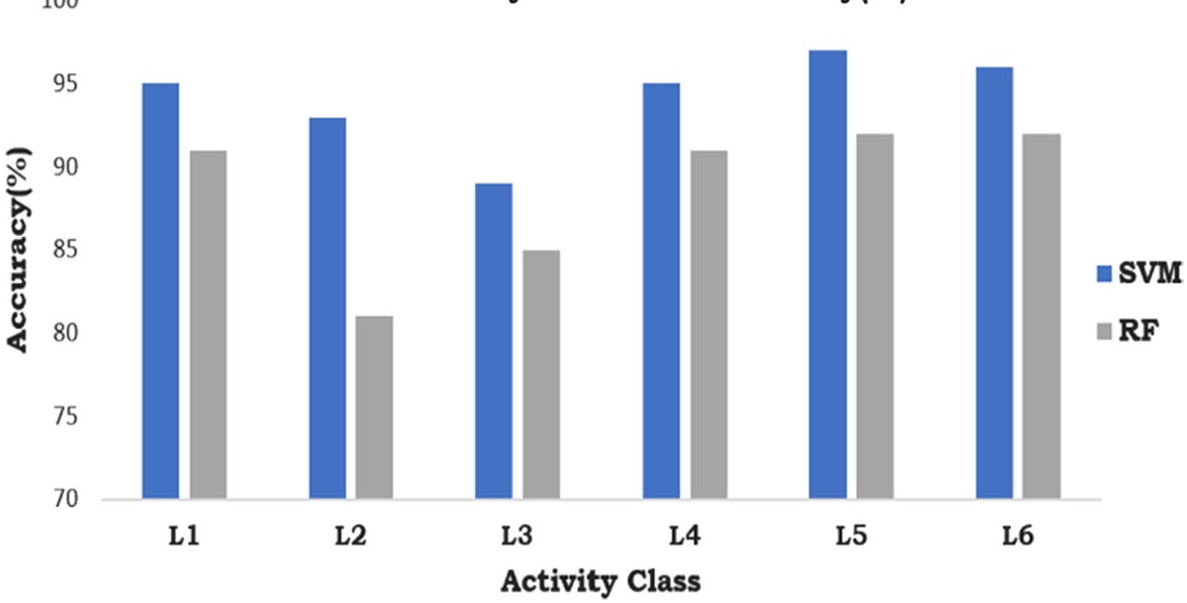 Figure 2: Performance comparison showing SVM's superior accuracy across test cycles.
Critical Insight & Conclusion
The true value of this research lies in its integrated approach. Most papers focus solely on the algorithm (the "What"); this study focuses on the Eco-system (the "How" and "Where"). By housing the intelligence in the cloud, the system allows for proactive clinical care, where a hospital can be alerted before a patient even knows they are in trouble based on behavioral anomalies.
Limitations: While the accuracy is high, the reliance on wearable devices assumes the elderly will always remember to wear them. Future iterations might benefit from integrating more non-contact sensors (like the occupancy and visual sensors mentioned) to ensure 100% fail-safe monitoring.
Takeaway: CA-EHS proves that with the right combination of signal refinement and optimized SVMs, we can build a scalable, cost-effective infrastructure for the well-being of the elderly in smart cities.