
Driving Accuracy in Crowdsourcing: The Power of Context-Aware Inference
Context-aware result inference in crowdsourcing
The paper introduces Context-Inf, a novel context-aware result inference framework for context-sensitive tasks (CSTs) like handwriting recognition and audio transcription. It utilizes a Hidden Markov Model (HMM) to capture semantic correlations between subtasks and employs a POMDP-based iterative strategy to optimize the trade-off between result quality and crowdsourcing cost.
TL;DR
Traditional crowdsourcing assumes each subtask (like labeling an image) is independent. This paper breaks that assumption for Context-Sensitive Tasks (CSTs)—such as transcribing a sentence. By modeling the "contextual glue" between words using a Hidden Markov Model (HMM) and managing iterations via POMDP, the authors achieve a massive leap in accuracy (up to 43% improvement) over standard voting methods.
The Problem: The "Independence" Fallacy
In crowdsourcing, we typically split a big task into tiny pieces to make them "human-computable." However, in tasks like handwriting recognition or translation, the pieces are contextually correlated.
- Current Failure 1: If you give a worker a whole page to transcribe, they make too many mistakes because it's too hard.
- Current Failure 2: If you split the page into individual words and use "Majority Voting," you might get "misspelled several works" instead of "several words" because the voting doesn't know that "several" and "words" belong together.
Methodology: Bridging the Gap with HMM & POMDP
1. The Probabilistic Architecture
The authors propose Context-Inf, which views the sequence of subtasks as a Markov chain.
- Hidden States: The true answers for each subtask.
- Observations: The noisy answers provided by various workers.
- State Transitions ( matrix): Built using external knowledge bases (like Google n-grams) to define how likely one word follows another.
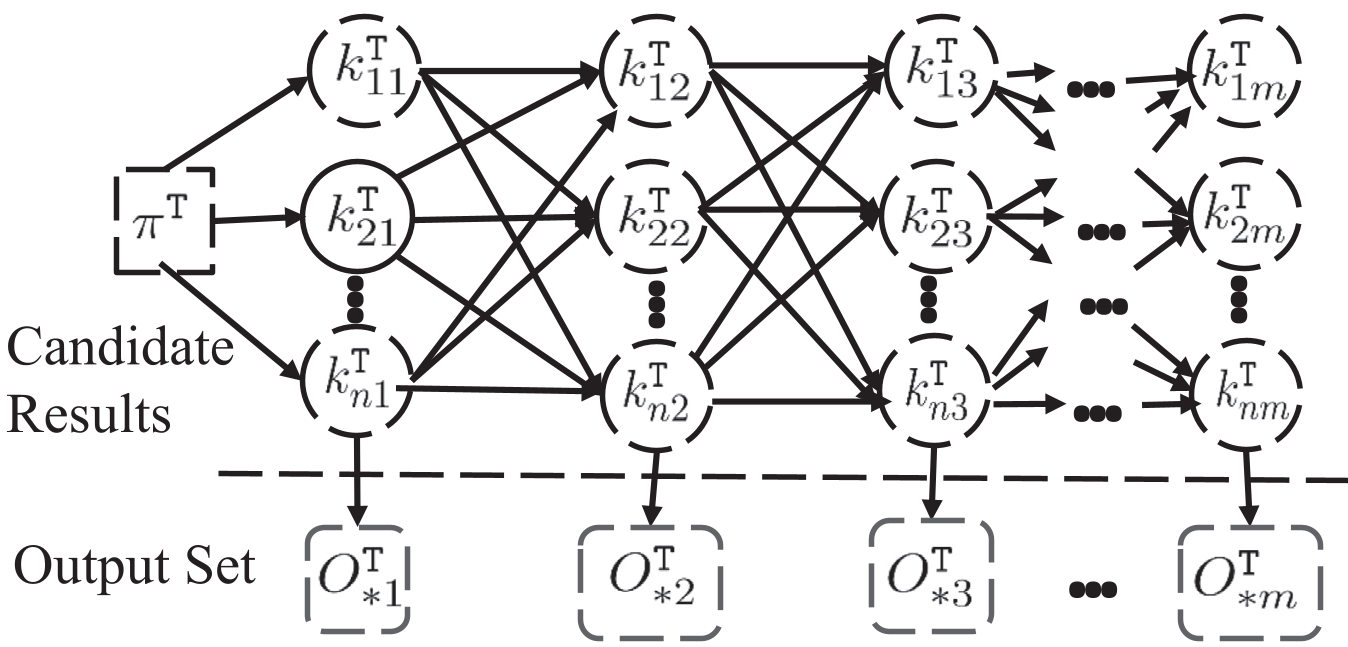 Fig 1: HMM for Result Inference – capturing the relationship between worker observations and hidden ground truths.
2. Learning the "Expertise" (EM Algorithm)
Not all workers are equal. The model uses an Expectation-Maximization (EM) approach to simultaneously estimate the difficulty of the task () and the accuracy of the worker (). This ensures that a "smart" worker's input has more weight in the final HMM sequence.
3. Knowing When to Stop (POMDP)
Crowdsourcing costs money. To prevent infinite loops, the authors use a Partially Observable Markov Decision Process (POMDP). It calculates the "Utility" of asking for more labels. If the expected quality gain is lower than the cost of hiring more workers, the system terminates and submits the best current inference.
Experimental Evidence: SOTA Breakthroughs
The authors tested their method on the IAM handwriting database and CMU audio transcriptions.
- Handwriting Recognition: Context-Inf crushed "Task-Inf" (Majority Voting) by 43.01% and even beat advanced models like SAM by 7.76%.
- Audio Transcription: Showed an 11.11% improvement over subtask-level Bayes models.
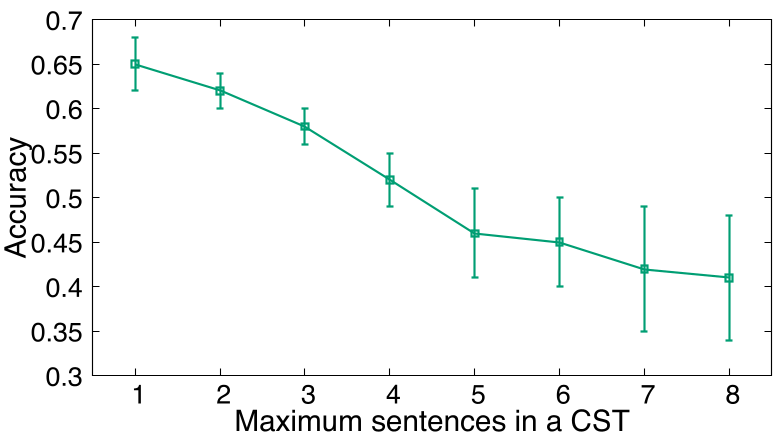 Fig 2: Performance comparison showing Context-Inf's superior accuracy across varied task loads.
Critical Insight: Why This Works
The "Secret Sauce" is the incorporation of external knowledge. By using an n-gram model as the transition matrix, the HMM acts as a semantic autocorrect. Even if every single worker makes a slight typo on a specific word, the model can "guess" the correct word because it fits the surrounding context and worker reliability profiles.
Conclusion & Future Outlook
This work highlights that context is not just noise; it's a feature. For industries relying on human-in-the-loop (HITL) data labeling—like autonomous driving or medical AI—moving from "independent voting" to "context-aware graph models" is essential for reaching the 99%+ accuracy thresholds required for production.
Limitations: The reliance on external knowledge bases means that for highly niche domains (e.g., specialized medical jargon), the model's transition matrix () must be custom-built, or it might bias the results toward common language patterns.