
CAFCLA: Gamifying Energy Efficiency via Context-Aware Social Computing
Use of Context-aware Social Computing to Improve Energy Efficiency in Public Buildings State of the Art and System Overview
This paper introduces a serious game designed to foster energy-saving behaviors in public buildings using the CAFCLA framework. The system integrates Wireless Sensor Networks (WSN), Real-Time Locating Systems (RTLS), and Social Computing to create a gamified environment where users are rewarded for efficient energy habits.
TL;DR
To tackle the "careless" energy use in public buildings—where users have no financial skin in the game—this paper proposes a serious game built on the CAFCLA framework. By deploying a dense network of ZigBee sensors and a Virtual Organization of Agents (VOA), the system tracks real-time behavior (like taking the lift vs. stairs) and rewards users with virtual coins, effectively turning energy conservation into a social, competitive experience.
The "Careless User" Problem in Public Spaces
Unlike residential settings where monthly bills dictate behavior, public buildings suffer from a lack of individual accountability. Most technical solutions focus on automation (e.g., motion-sensor lights), but these often fail to "re-educate" the user. The authors argue that a sustainable shift requires behavioral change, which is notoriously difficult to achieve without continuous, attractive, and contextual feedback.
Methodology: The CAFCLA Architecture
The core of this work is the CAFCLA (Context-Aware Framework for Collaborative Learning Applications). It is structured into five layers, moving from raw hardware to social intelligence.
1. Sensing and Communication (The Foundation)
The system utilizes the n-Core platform based on the ZigBee protocol.
- WSN (Wireless Sensor Networks): Measures luminosity, temperature, and specific plug-load (PC, printers).
- RTLS (Real-Time Locating System): Uses beacons and wearable tags (Sirius Quantum) to track user movement with one-meter accuracy.
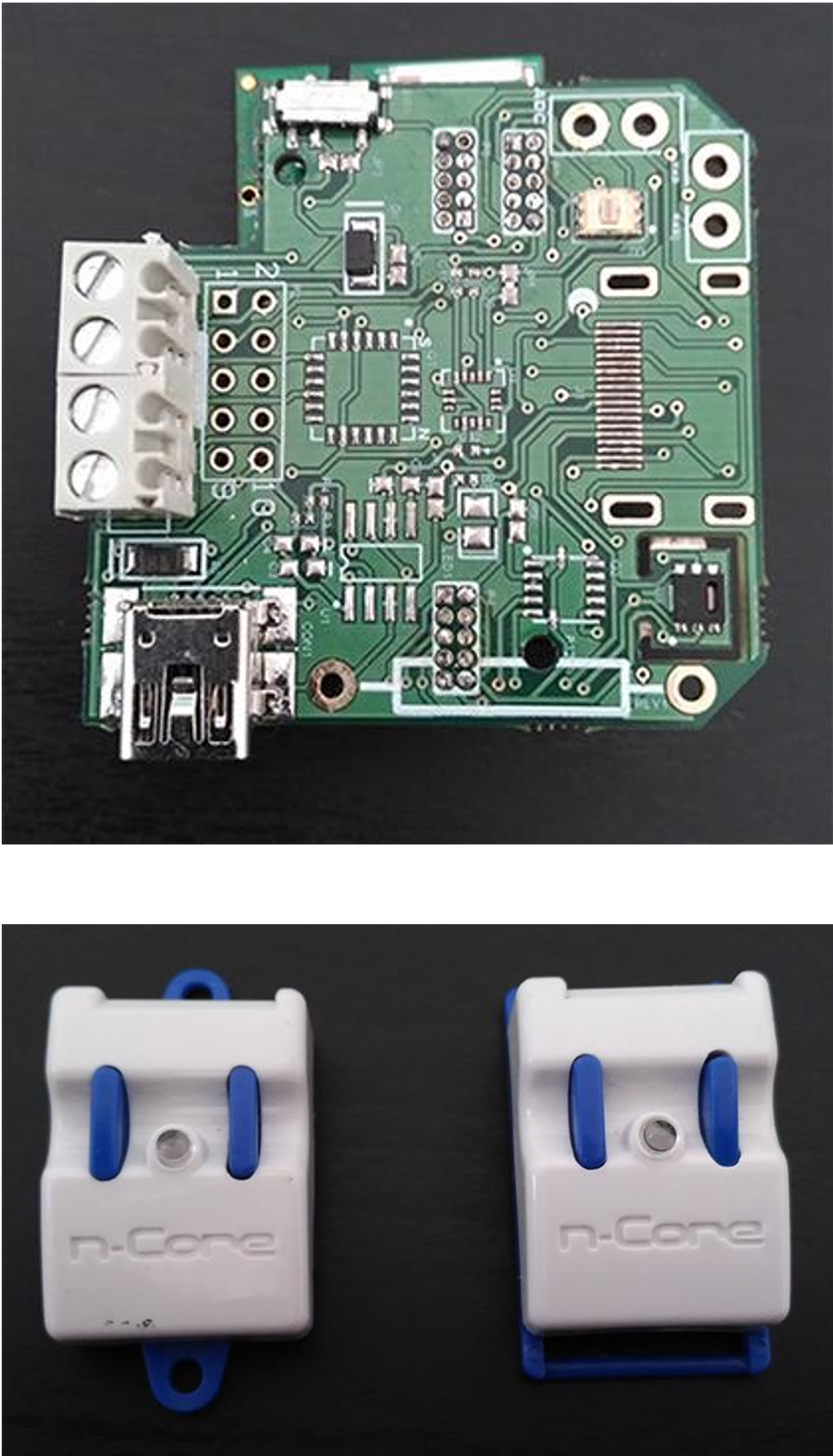 Fig 1: n-Core hardware components including IOn-E (plug monitors) and Sirius tags (user tracking).
2. The Management Layer: Social Machines & VOAs
This is where the "intelligence" happens. The authors treat the office environment as a Social Machine. A Virtual Organization of Agents (VOA) manages different aspects of the game:
- Data Management: Maintains data integrity.
- Game Organization: Coordinates rewards/penalties based on real-time data.
- Social Machine Org: Facilitates player-to-player and player-to-machine interactions.
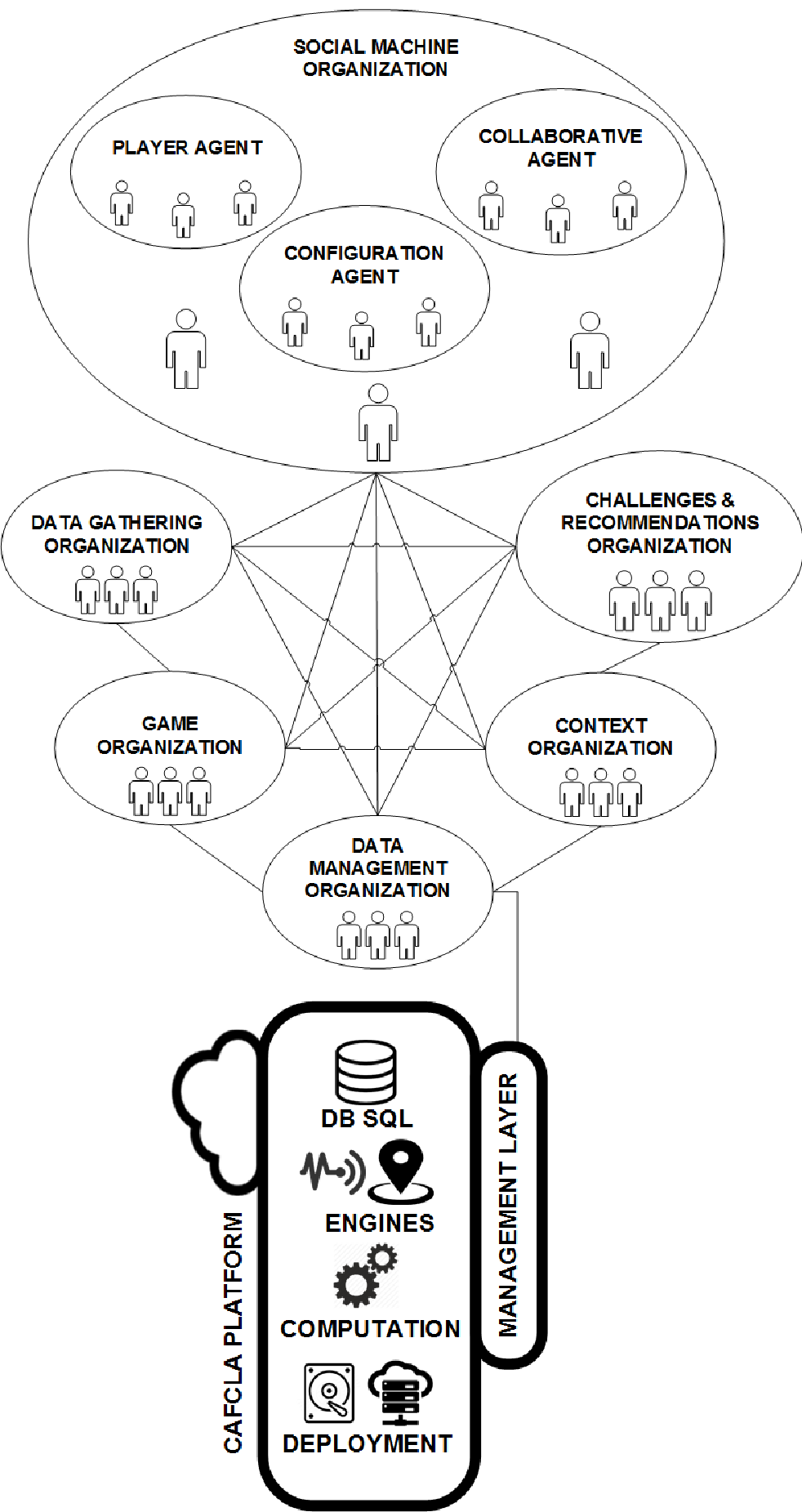 Fig 2: The multi-agent organizational structure governing the game logic.
The Game Loop: Actions and Incentives
The deployment in the BISITE laboratory (Salamanca) involves 18 workstations. The game is defined by specific "Efficiency Milestones":
- Natural Lighting Mastery: +10 coins for using natural light in meeting rooms when Lux > 200.
- Physical Activity: +10 coins for using stairs; penalties for using the lift.
- The "Last Out" Rule: +10 coins for the last person to exit who properly shuts down HVAC and lights.
- Real-World Reward: 250 virtual coins can be exchanged for a free coffee or soft drink, bridging the gap between digital achievement and physical gratification.
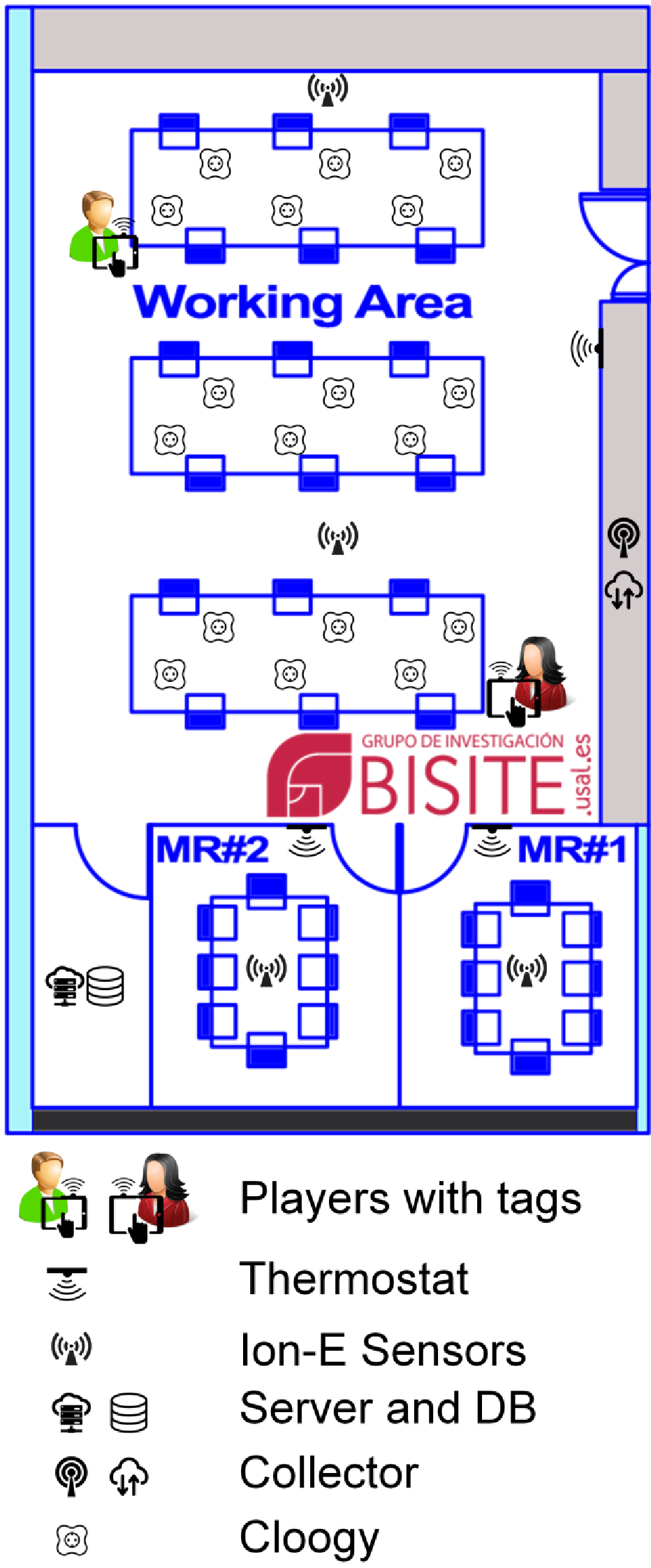 Fig 3: Spatial distribution of occupancy, environmental, and energy sensors in the test lab.
Critical Insight: Why Social Computing?
The brilliance of this approach lies in its Inductive Bias toward social dynamics. By using a VOA, the system doesn't just act as a monitor; it acts as an participant. It predicts social dynamics and allows for collaborative goals (e.g., the whole lab working together to reduce average previous-day consumption).
Conclusion and Future Outlook
While the paper focuses on the technical framework, the implications are significant for "Green IoT." The authors prove that Context-Aware Learning is the missing link in smart building design. Future work will quantify the exact percentage of energy reduction, but the framework successfully demonstrates that human-machine interaction, when gamified correctly, can overcome the "careless occupant" dilemma.