
Context-Centric Pricing: Cracking the Code of Software Crowdsourcing Tasks
Context-Centric Pricing: Early Pricing Models for Software Crowdsourcing Tasks
The paper introduces Context-Centric Pricing (CCP), a novel approach for estimating the price of software crowdsourcing tasks on platforms like TopCoder. It leverages Natural Language Processing (NLP) and Topic Modeling to predict prices using only early-stage textual requirements, achieving 65% accuracy with SVM.
TL;DR
In the high-stakes world of software crowdsourcing, setting the wrong price means your task either starves for talent or wastes your budget. This paper introduces the Context-Centric Pricing (CCP) framework, which uses NLP and Topic Modeling to predict task prices based solely on raw requirement text. By focusing on "local contexts"—grouping similar tasks together—the researchers boosted prediction reliability significantly, achieving 65% accuracy with SVM.
The "Early Planning" Dilemma: Why Pricing is Broken
Most software crowdsourcing platforms (like TopCoder) operate in the dark during the initial planning phase. Previous pricing research was "cheating" by using data that only exists after a task is already underway—such as the number of people who signed up or the quality of prior design work.
The problem? If you don't know the price before you post the task, you risk Task Starvation: a scenario where workers ignore your project because the reward doesn't match the complexity.
Methodology: From Text to Dollars
The authors propose that the "context" of a requirement contains hidden signals about its complexity. The CCP workflow follows three heavy-lifting stages:
- Driver Extraction: Instead of looking at metadata, the model looks at the text itself. It extracts factors like:
- User Stories: A proxy for functional volume.
- Algorithms: Indicators of logic complexity.
- Linguistic Tokens: The density of Nouns and Verbs.
- Context Construction (Topic Modeling): Using MALLET, the system identifies the "vibe" of the task. Is it a Web UI task? A Database entity task? Or a Logic-heavy API?
- Local vs. Global Modeling: This is the paper's "secret sauce." Instead of one model to rule them all (Global), they build models based on subsets of similar projects (Local).
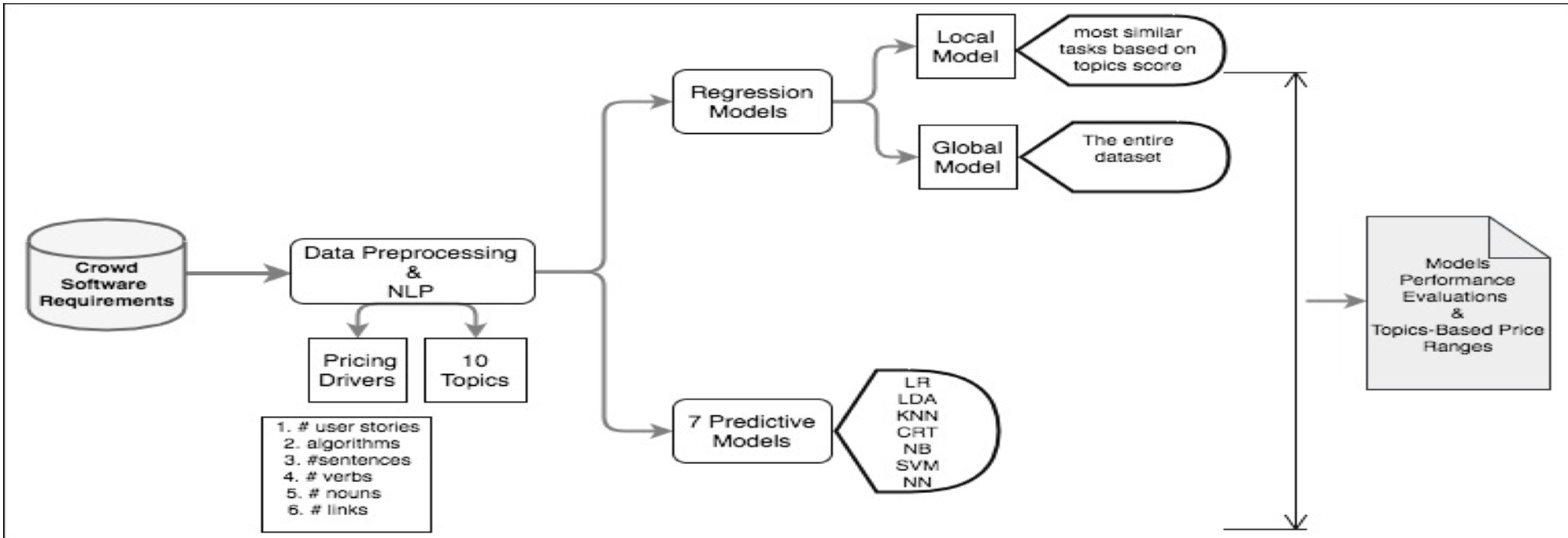 Figure 1: The Context-centric Pricing (CCP) Workflow, moving from raw requirements to local/global regression models.
The Power of Local Context
One of the most striking findings is the superiority of Local Models. When the authors applied Topic Modeling to group similar projects, the R-squared value (a measure of how well the model explains the variance) jumped from 50% (Global) to 79% (Local).
Intuition tells us that the "cost" of a verb in a UI design task is different from the "cost" of a verb in a backend security task. By grouping tasks by topic, the model accounts for these domain-specific nuances.
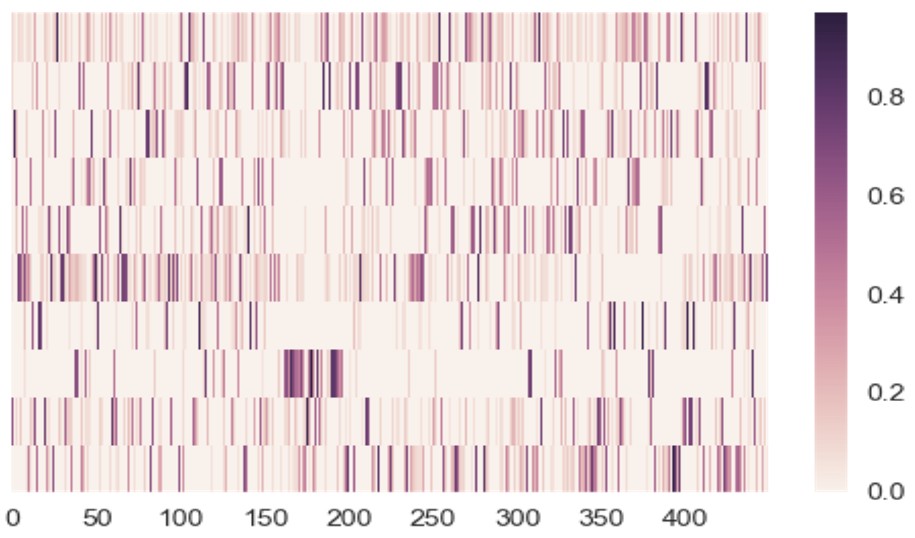 Figure 2: Distribution of 10 primary topics across 450 projects, showing how task themes are concentrated.
Experimental Showdown: SVM Wins
The researchers tested seven different ML algorithms (Logistic Regression, KNN, Naive Bayes, etc.). The Support Vector Machine (SVM) emerged as the champion with 65% accuracy.
| Algorithm | Accuracy (Mean) | F1 Score |
|---|---|---|
| SVM | 0.65 | 0.52 |
| Logistic Regression | 0.63 | 0.54 |
| KNN | 0.61 | 0.50 |
| Naive Bayes | 0.16 | 0.27 |
Note: Naive Bayes performed poorly, likely due to the specific distribution of the topic modeling dataset.
Mapping Themes to Price Ranges
The study also revealed which topics command the highest prices.
- High End (3,000): Complex UI/GUI tasks (Topic 2 & 8) involving HTML5, Web Events, and interactive nodes.
- Mid Range (~$781): Service-oriented tasks (Topic 1 & 6) involving Server-Client responses and XMI handlers.
- Lower End (525): Data persistence and basic filtering tasks (Topic 7 & 9).
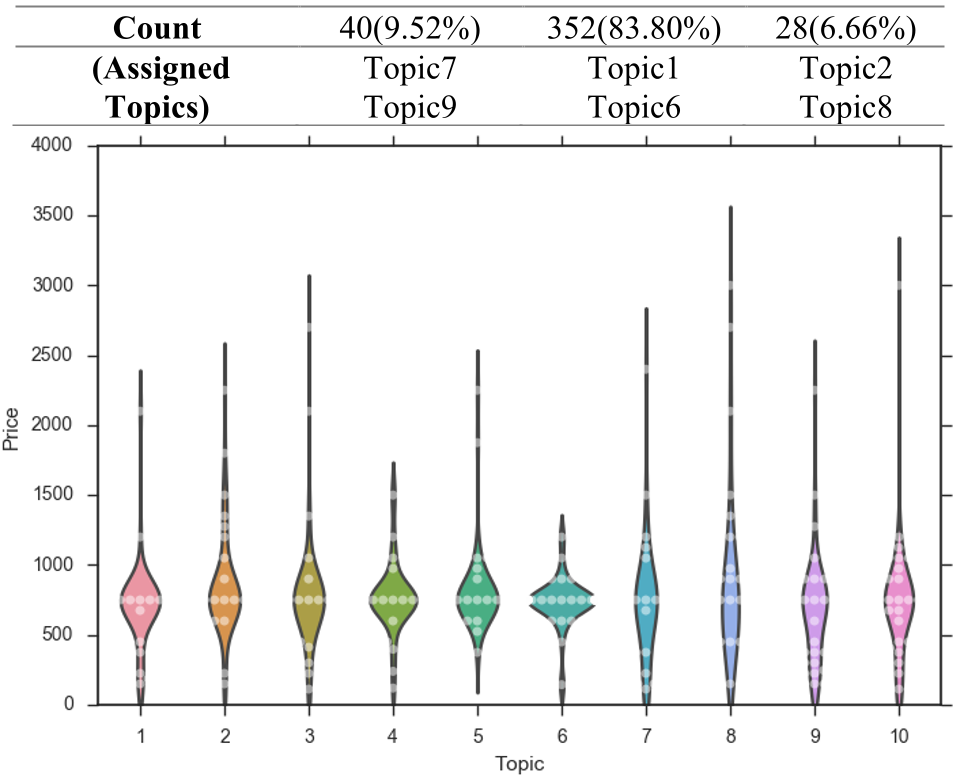 Figure 3: Visualization of how different task topics map to distinct price clusters.
Critical Perspective: Is 65% Enough?
While 65% accuracy is a major step forward for "early planning" estimation, it still leaves room for error. The authors acknowledge that the sample size (450 projects) and the fixed number of topics (K=10) are limitations. However, the shift in focus from Metadata-centric to Context-centric provides a blueprint for more resilient crowdsourcing markets.
Conclusion
This research proves that the "flavor" of a software requirement is a powerful indicator of its market value. By leveraging NLP to understand task context, requesters can set prices that attract top talent without breaking the bank. For the industry, this moves us closer to "Automated Pricing as a Service" for the gig economy of software engineering.