
Beyond the Algorithm: Multi-Dimensional User Profiling for the Social Age
Context- and Social-Aware User Profiling for Audiovisual Recommender Systems
The paper introduces a hybrid user profiling framework for audiovisual recommender systems that integrates explicit, implicit, and stereotypical preferences. It leverages social network data and real-time session context to provide personalized content suggestions.
TL;DR
Recommender systems are evolving from simple "if you liked this, you'll like that" logic into sophisticated systems that understand who you are, where you are, and how you talk to your friends. This paper presents a framework that merges social network activity, real-time context, and traditional preference modeling to create a holistic "Context- and Social-Aware" user profile.
Contextual Intelligence: The Missing Link
Most recommendation engines treat users as static data points. However, a user watching a movie on a mobile phone while commuting has different needs than that same user on a 4K TV at home with their family. The authors argue that by ignoring Social Data (likes, tweets, shares) and Contextual Data (location, companionship, device), current systems miss the nuances of human behavior.
Methodology: A Tri-Partite Approach to Branding Interest
The paper's core innovation lies in its three-pillar User Model:
- Explicit Preferences: Data directly provided (forms) or explicitly pulled from social media "likes."
- Implicit Preferences: The "engine room" of the profile. It uses a Vector Space Model (VSM) to track behaviors.
- Stereotypical Preferences: Predetermined demographic groupings (age, gender, profession) used to populate a profile immediately upon registration, effectively bypassing the Cold Start problem.
The Physics of Interest: Weight and Reliability
The authors propose a sophisticated update formula to keep profiles fresh. It isn't just about what you watch; it's about how much of it you watched and what you did afterward.
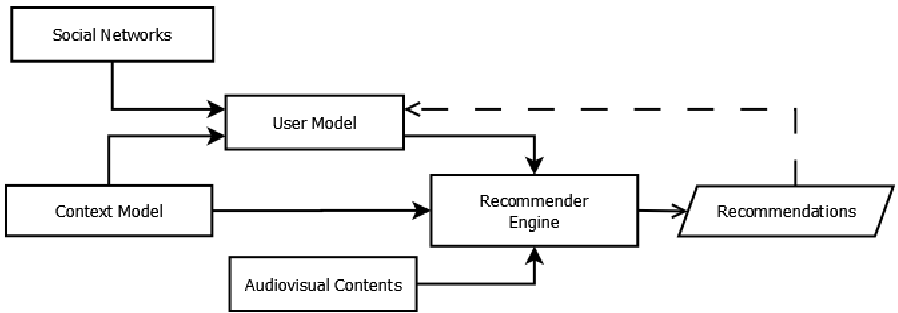 Figure 1: High-level overview of the integrated recommendation architecture.
The weight update formula is particularly insightful: Here, represents the Learning Rate—the speed at which the system "forgets" old you and learns "new you."
Action-Based Quantification
One of the paper's most practical contributions is the mapping of social actions to numerical values ():
- Sharing/Recommending: +2 (Strong positive)
- Disliking: -2 (Strong negative)
- Tweets/Comments: +1 or -1 (Requires semantic sentiment analysis)
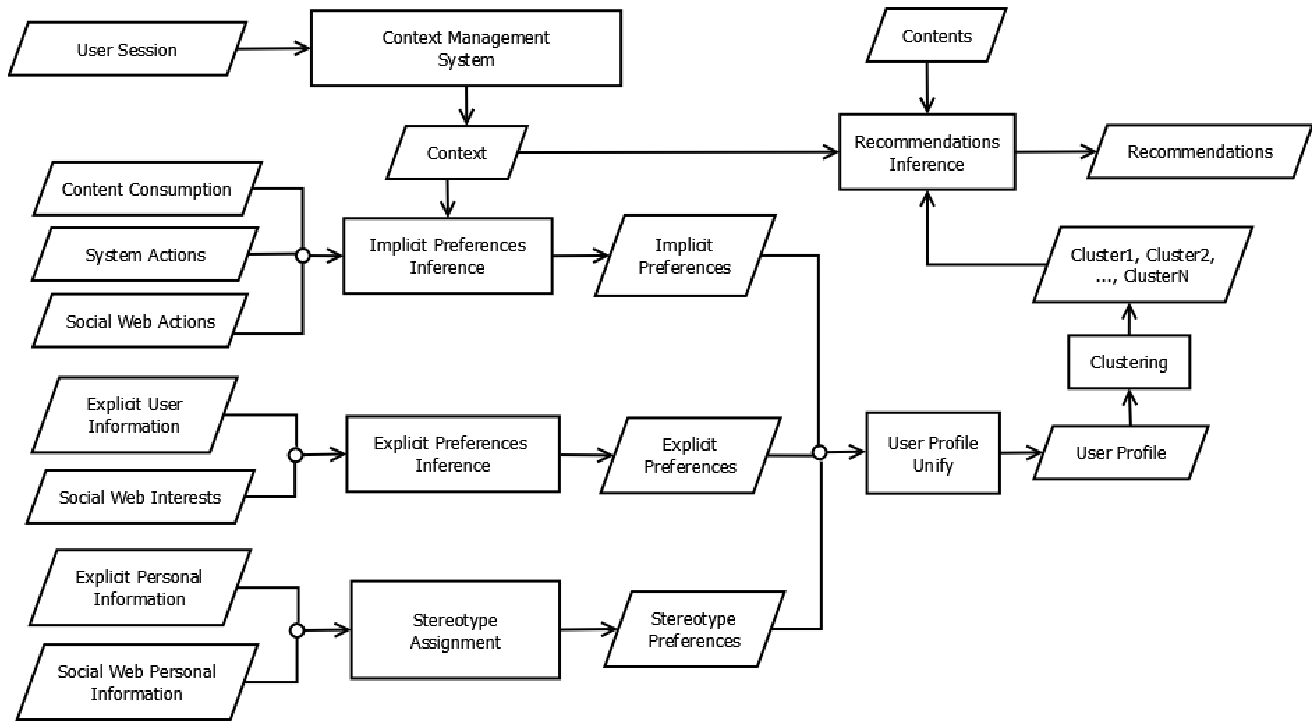 Figure 2: Detailed breakdown of the User Model components.
Deep Insights: Why This Matters
The shift toward Social-Awareness allows the system to bridge the gap between "private behavior" (watching a video) and "public endorsement" (sharing it). By unifying these into a single Reliability Score, the recommender can prioritize preferences born from active engagement over accidental clicks.
Limitations and Looking Ahead
While the mathematical framework is sound, the reliance on social media APIs (like Facebook or Twitter) presents challenges in modern privacy-focused landscapes (GDPR, etc.). Furthermore, the "Stereotype" model relies on surveys that may become outdated as cultural consumption habits shift rapidly.
Conclusion
This work serves as a blueprint for the next generation of audiovisual platforms. By calculating a "Unified Preference" that balances who we are (stereotypes), what we say we like (explicit), and what our actions actually prove (implicit/social), the system moves closer to a truly "intelligent" assistant.