
Beyond Data Points: Context Weaver and the Shift to Exploratory Mobile Crowdsourcing
Context Weaver: Awareness and feedback in networked mobile crowdsourcing tools
This paper introduces Context Weaver, a networked mobile crowdsourcing system designed for "geocentric" citizen participation. It utilizes dynamic social tagging and a tabletop analysis tool to support a collaborative workflow spanning planning, fieldwork, and in situ analysis, achieving significantly higher creative output than traditional isolated crowdsourcing tasks.
TL;DR
Mobile crowdsourcing is moving past simple "task-and-report" mechanics. Context Weaver is a research prototype that transforms participants from passive sensors into active collaborators. By integrating real-time social tagging and a mobile "tabletop" analysis tool, it enables citizens to tackle "wicked" urban problems through a continuous loop of planning, execution, and immediate feedback.
The Problem: The "Wicked" Gap in Urban Sensing
Most current crowdsourcing apps like FixMyStreet follow a linear path: see a problem, snap a photo, upload. While efficient for fixing potholes, this "micro-task" approach fails when faced with wicked problems—complex issues like urban safety or public space design that don't have a single correct answer.
The authors identify a critical vacuum in current systems:
- Lack of Exploration: Systems "trivialize" the impact of citizens by not allowing them to adapt their focus based on what they find.
- Isolation: Workers often act as "lone wolves," leading to redundant data and a lack of shared mental models.
- The Analysis Lag: Data is usually analyzed weeks later in a remote office, losing the "situated" intuition of the person on the street.
Methodology: The "Connective Glue" of Social Tagging
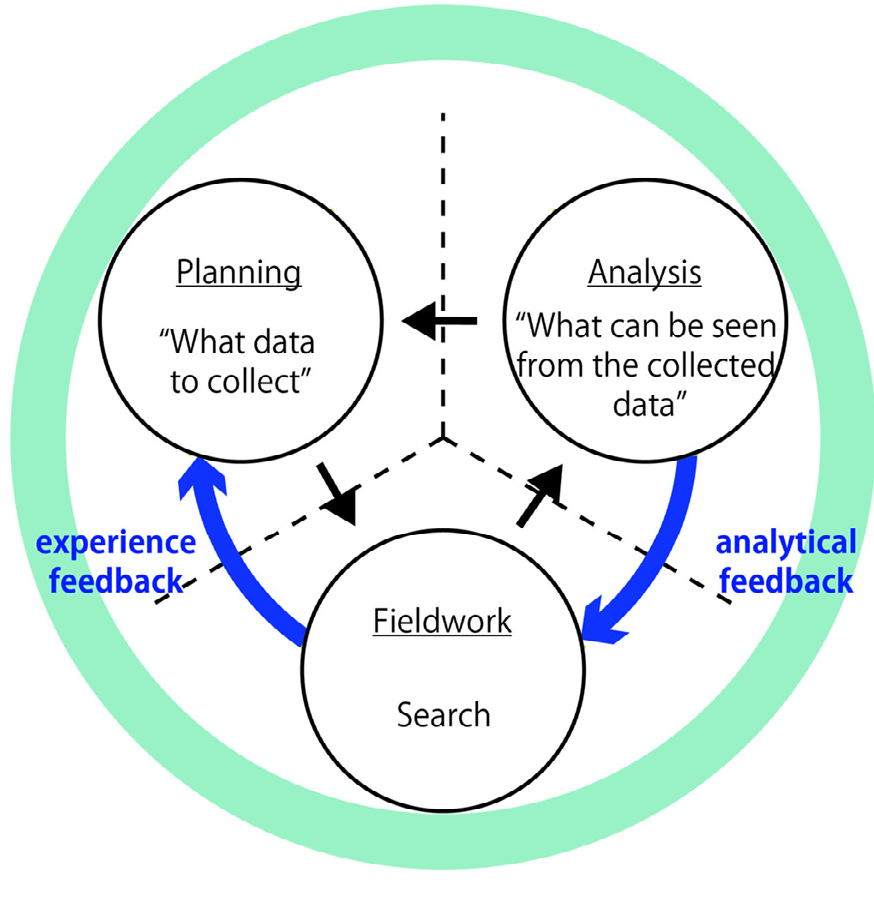
Context Weaver bridges this gap by introducing a three-stage networked workflow: Planning Fieldwork Analysis.
1. The Tools
The system utilizes two primary interfaces:
- Scene Memo: A mobile app where tags act as the "networked" element. Participants can see tags created by others in real-time, sparking new ideas for what to document.
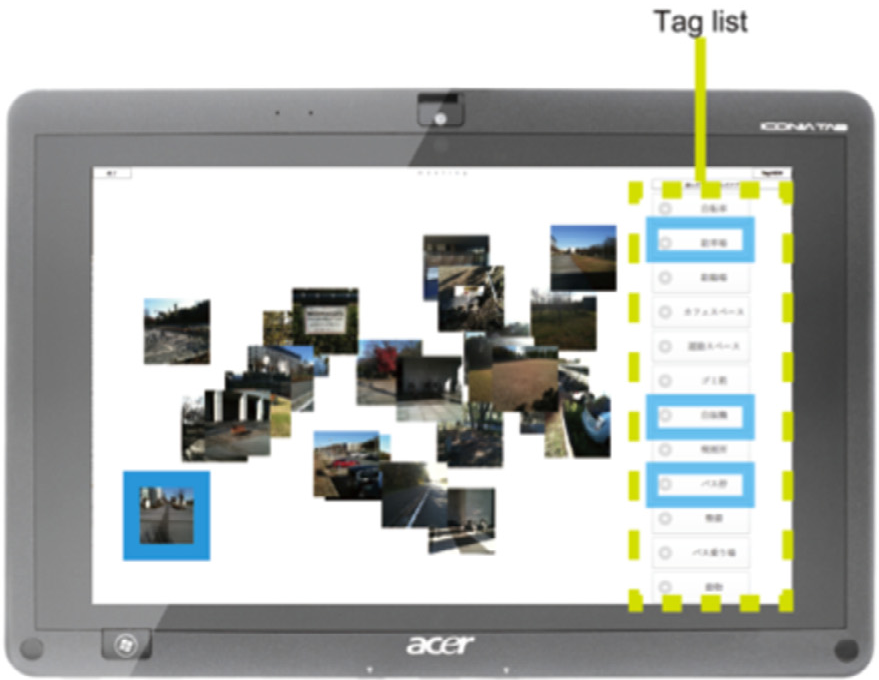
- Discussion Table: A tablet-based interface used in the field (e.g., at a park bench) to immediately group, link, and discuss the photos captured.
2. Feedback Loops
The genius of the system lies in its two feedback mechanisms:
- Experiential Feedback: Field discoveries inform the next round of planning.
- Analytical Feedback: Early-stage analysis on the tablet dictates what data needs to be collected next, turning the fieldwork into an iterative process rather than a one-shot deal.
Field Trials: Finding the "Sweet Spot" of Cooperation
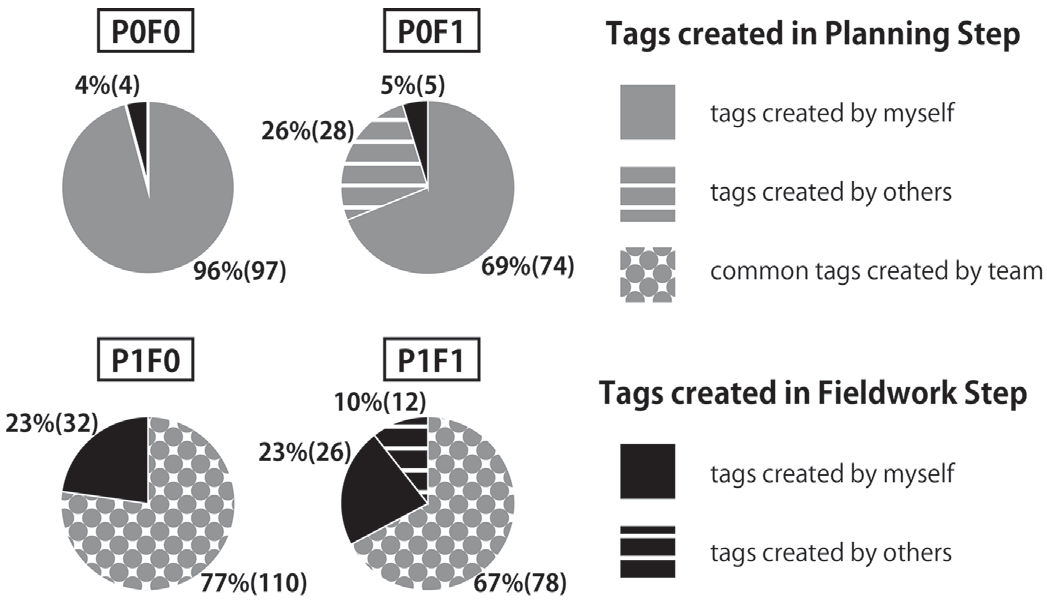
The researchers tested various conditions, from purely private tagging (P0F0) to fully shared tagging (P1F1).
Key Findings:
- The Awareness Effect: Seeing shared tags like "street lamp" or "narrow street" acted as a "lens," helping others discover things they previously overlooked.
- The Checklist Trap: Interestingly, if tags were too strictly defined during the planning phase, participants felt like they were just checking off a list, which actually stifled creativity.
- The Power of "In Situ": 97% of participants reported new discoveries during the analysis phase. Doing the analysis while the experience was still "hot" allowed them to articulate feelings that a photo alone couldn't capture.
Critical Insight: The "Conceptual Scale"
A fascinating takeaway from the study is how the timing of a tag changes its nature. Tags created during Planning were broad and categorical (e.g., "Roads"). Tags created during Fieldwork were specific and "zoomed-in" (e.g., "Pothole that affects bikers").
A successful networked system must allow for both. If a system is too rigid, it loses the "broad lens"; if it's too loose, it loses the "detailed description."
Conclusion & Future Outlook
Context Weaver proves that the "Wisdom of the Crowd" isn't just about aggregating numbers—it's about connecting perspectives. By providing mutual awareness and rapid, situated feedback, we can move from simple crowd sensing to true crowd problem-solving.
Future work will likely look at how these groups can form at scale—allowing strangers with complementary skills to "weave" their contexts together to fix the cities of tomorrow.
Source: Sasao et al., "Context Weaver: Awareness and feedback in networked mobile crowdsourcing tools," Pervasive and Mobile Computing, 2015.