
The Hidden Economy of Duplicates: A Contextual Deep Dive into YouTube’s Copycat Content
A contextual analysis of the YouTube duplicate content
This paper presents a large-scale contextual analysis of duplicate video content on YouTube, utilizing a dataset of over 100,000 duplicate videos. It investigates how identical content differs in terms of metadata (tags, titles, categories), popularity metrics (views, ratings), and uploader characteristics, while also identifying malicious "tag-attack" behaviors.
TL;DR
In the vast ocean of YouTube, the same video is often uploaded hundreds of times by different users. This paper reveals that these duplicates are rarely "identical" in the eyes of the system: they vary wildly in metadata, fragment the audience, and are frequently used as tools for "tag-attacks" to manipulate search algorithms. The uploader's existing "fame" (total profile views) is the biggest predictor of which duplicate version wins the popularity race.
Problem & Motivation
In 2009, YouTube already accounted for 34% of the US online video market. With millions of independent uploaders, the platform faced a massive "Duplicate Content" problem. While duplicates are often seen as simple storage wastes, this research argues they represent a deeper psychological and technical challenge:
- Subjective Interpretation: Different users describe the same video using completely different tags and categories.
- Infrastructure Strain: Duplicates split views, making it harder for Content Delivery Networks (CDNs) to cache "hot" content effectively.
- Malicious Exploitation: Spammers use duplicates to "carpet bomb" search results with unrelated but popular tags.
Methodology - The Core
The researchers deployed a distributed crawler (1 server, 10 clients) that leveraged YouTube's own "view duplicates" feature—a link often hidden from standard search results.
Data Acquisition & Quality Control
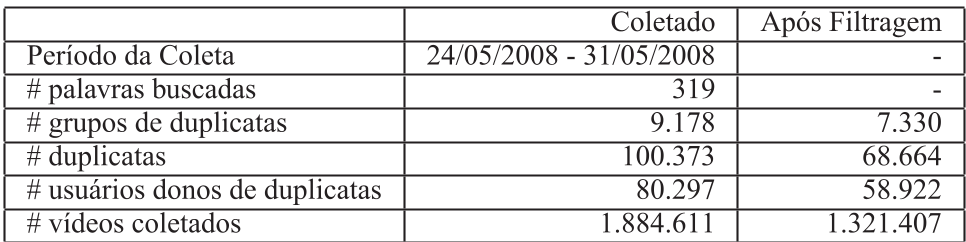
The authors collected over 100,000 duplicates within 9,178 clusters. To ensure they were analyzing "true" duplicates, they filtered out videos whose durations deviated by more than 2% from the cluster median and conducted a manual audit on 1,059 videos, achieving a 95% confidence level in the dataset's accuracy.
The Jaccard Metric for Metadata Reliability
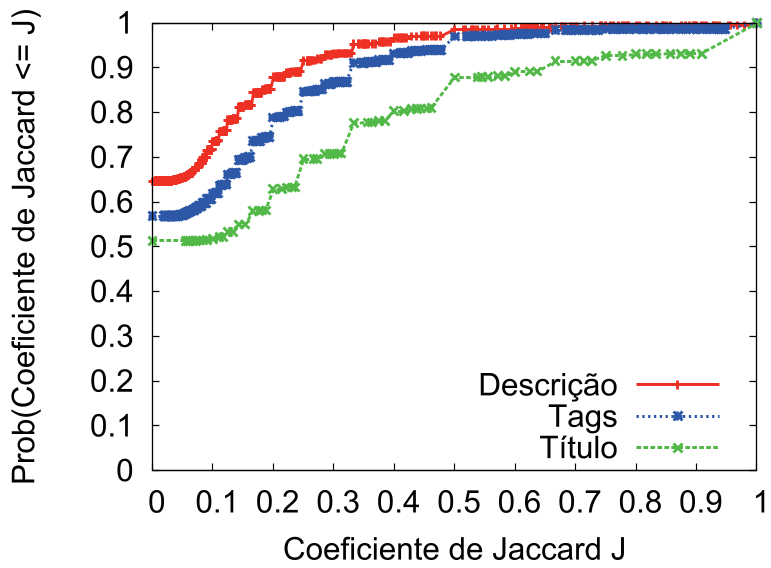
To measure how much users "agree" on the description of a video, the authors used the Jaccard Coefficient. If two videos share the same tags, the coefficient is 1.0; if none, it's 0.0.
Key Insights: Why Your Video Gets No Views (Even if it's the Same as a Viral One)
1. Metadata Anarchy
One of the most surprising findings is the lack of consensus. 56% of duplicate pairs shared ZERO tags. Even titles, which are generally more descriptive, showed low similarity, with 70% of pairs having a Jaccard coefficient below 0.3.
Physical Intuition: This suggests that video is a "high-entropy" medium. One user sees a "funny dog," another sees a "Golden Retriever," and a third sees "cute animals." Relying on user-generated tags for search is fundamentally flawed.
2. The "Rich Get Richer" Effect (Inductive Bias)
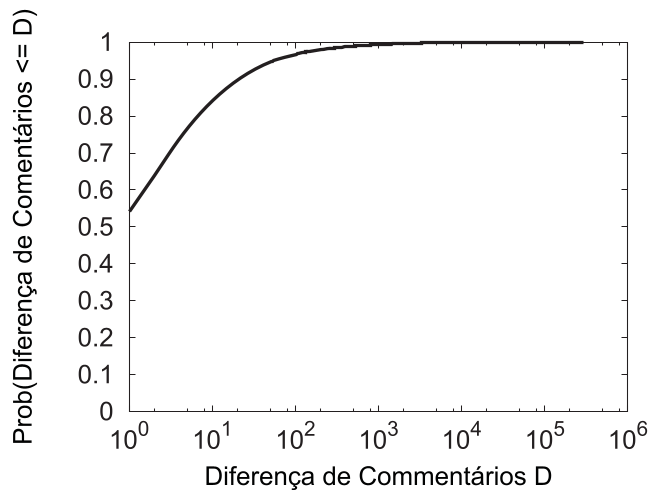
Why does one version of a video get 1,000,000 views while an identical copy uploaded on the same day gets 10? The authors analyzed the correlation between Uploader Profile Popularity and Duplicate Success.
- Total Views Correlation: In large duplicate groups, there is a 0.92 correlation between the owner’s total profile views and the success of the duplicate.
- Social Connections: Users with more friends tend to have more popular duplicates, confirming that "Social Browsing" is a primary discovery mechanism.
3. Detecting Malicious "Tag Attacks"
The study identified a subset of users uploading dozens of duplicates of the same content (e.g., advertisements) but with intentionally different and popular tags. This "Tag Attack" strategy aims to hijack search traffic for irrelevant queries. Interestingly, these malicious duplicates have the lowest tag similarity, as spammers deliberately vary tags to cover more search "real estate."
Critical Analysis & Conclusion
Takeaway
This classic 2009 study provided a foundational understanding of the "Social Video" ecosystem. It proved that metadata is a poor proxy for content and that uploader reputation is the most significant "hidden feature" in content performance.
Limitations
- Temporal Snapshot: The data is from 2008-2009. Current algorithmic feeds (like YouTube's neural-net based recommendations) likely mitigate some of the "tag attack" issues described.
- Content Blindness: The study uses YouTube's internal duplicate detection. A more robust modern approach would use Self-Supervised Learning (SSL) to generate visual embeddings for comparison.
Future Outlook
The findings advocate for Content-Based Information Retrieval (CBIR). Since users cannot be trusted to tag consistently, systems must "look" at the pixels to understand what a video is about, a direction that has now become the standard in modern AI-driven platforms.