
Reconstructing the Self: Why Your Virtual Persona Determines Your Community Satisfaction
The mechanism through which members with reconstructed identities become satisfied with a social network community: A contingency model
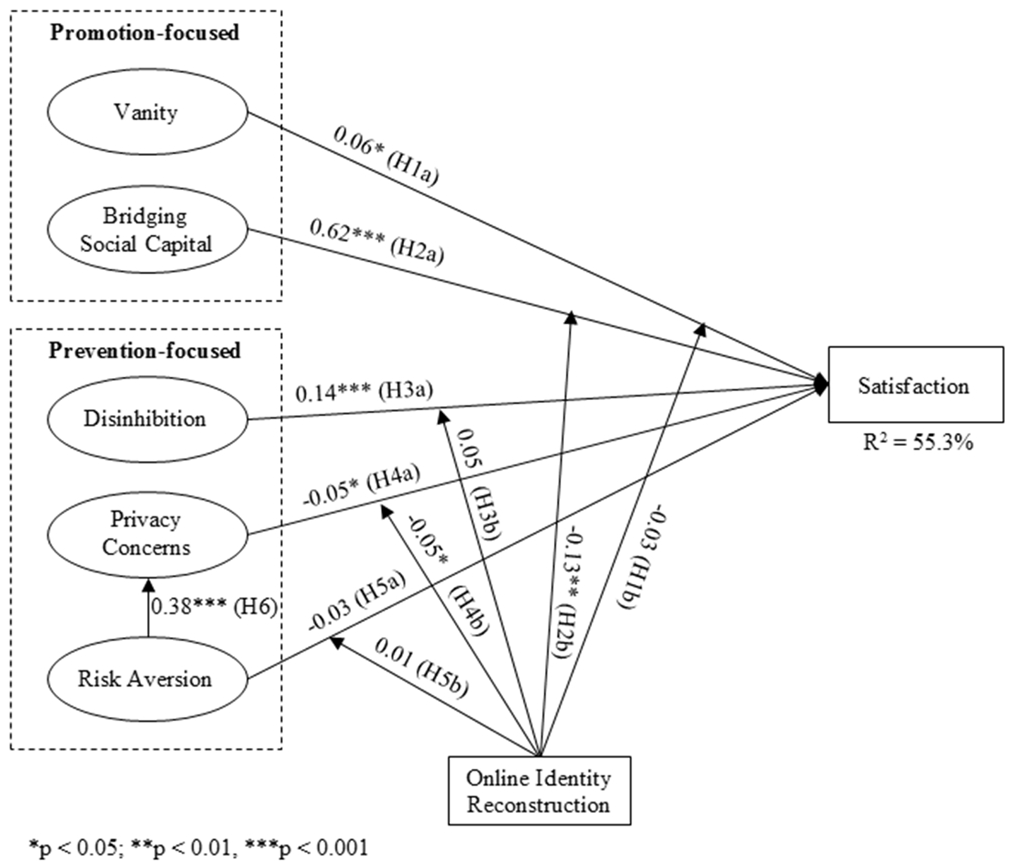
This study investigates user satisfaction in interest-based social network communities (SNCs) through the lens of identity reconstruction. Using Self-Discrepancy and Regulatory Focus theories, it identifies how virtual identities—modeled to reduce gaps between the actual and ideal self—drive community satisfaction, achieving a model that explains 55.3% of satisfaction variance.
TL;DR
In interest-based social network communities (SNCs), users aren't just there for information; they are there to bridge the gap between who they are and who they want to be. This study reveals that Online Identity Reconstruction—the act of creating a virtual persona different from one's real-world identity—is a powerful tool that amplifies the benefits of social capital and acts as a shield against privacy anxieties.
The "Identity" Blind Spot in Social Tech
Why do people spend hours in niche online forums or QQ groups? Most research points to education, information sharing, or "sense of community." However, this overlooks the psychological liberation these platforms provide. In the physical world, your identity is "anchored" by your job, wealth, and status. Online, you are whoever you say you are.
The authors argue that dissatisfaction with our real-world "Actual Self" drives us to create a "Reconstructed Identity" that aligns closer to our "Ideal Self" (Hopes/Dreams) or "Ought Self" (Duties). This reconstruction isn't just "faking it"—it is a strategic self-regulation process.
Methodology: The Contingency Model
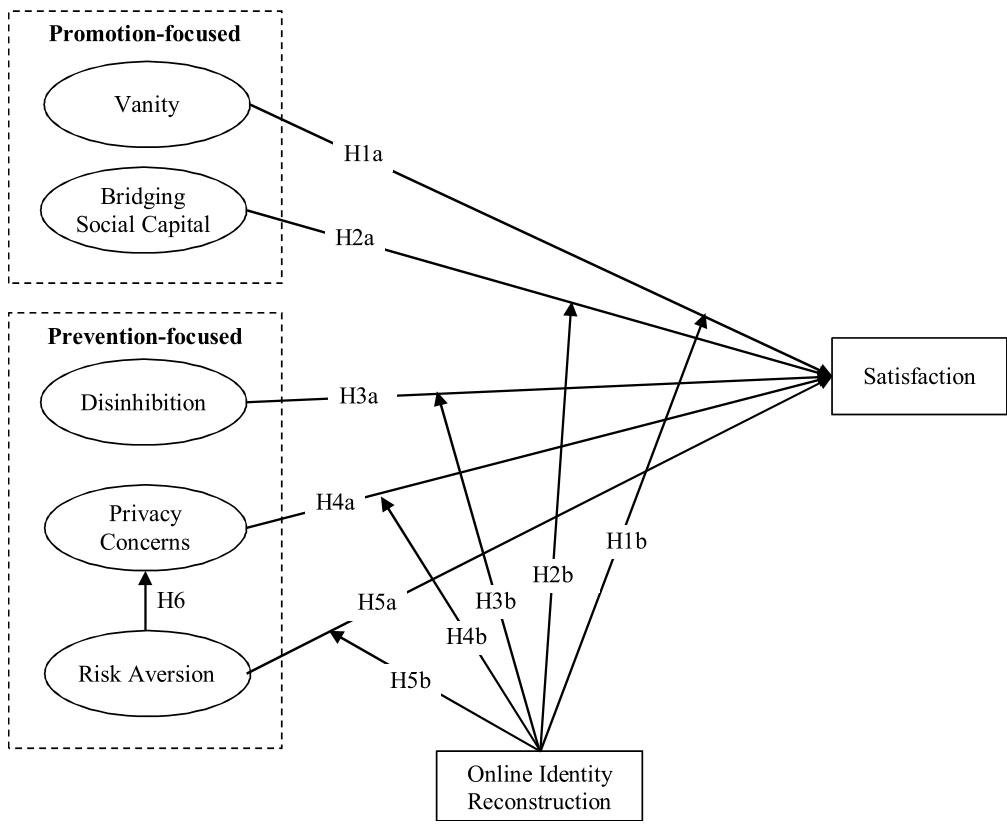
The researchers surveyed 1,063 users across six QQ interest-based communities (travelers, gamers, etc.). They looked at five key factors divided by Regulatory Focus Theory:
- Promotion Focused (Seeking Gains): Vanity and Bridging Social Capital.
- Prevention Focused (Avoiding Pain): Disinhibition, Privacy Concerns, and Risk Aversion.
The "secret sauce" of this study was testing whether Identity Reconstruction acts as a moderator—meaning, does the degree to which you change your identity change how much these other factors affect your happiness?
Key Insights: Why "Fake" Identities Yield Real Satisfaction
1. The Social Capital Catalyst
The study found a strong positive link between Bridging Social Capital (making diverse, non-redundant connections) and satisfaction. But here is the catch: this effect was significantly stronger for those who reconstructed their identities. Insight: If you are a cashier but pretend to be a legal expert in a community, you can bridge into circles you could never access in the physical world. The identity reconstruction is the "passport" to new social resources.
2. The Privacy Shield
Privacy concerns usually kill satisfaction. However, the study revealed that for users who totally reconstructed their identities, privacy concerns barely mattered. Insight: By detaching the virtual self from the real-world self, the "risk" of data misuse evaporates. You can't be doxed or shamed in your real life if your virtual profile has no tether to your legal name.
3. The Power of Disinhibition
Users reported higher satisfaction when they felt they could "talk about anything" without the weight of social norms. This identifies SNCs as a "third space" for emotional release, particularly for sensitive or "blue" emotions.
Critical Analysis & Takeaways
While the study provides a robust framework, it notes that Risk Aversion did not directly lower satisfaction. This suggests that even cautious people find a way to enjoy SNCs, perhaps because the "safety net" of a pseudonym allows them to explore without fear.
Limitations to Consider
- Culture-Bound: The data comes from QQ (China), a culture with specific views on "Face" (Social Image) and anonymity.
- Cross-sectional: It captures a snapshot in time, not how a user's identity evolves as they stay in a community for years.
Future Outlook
This work challenges the modern push for "Real Name Verification" on social platforms. While real names might reduce toxicity, they also destroy the psychological mechanism that allows users to reduce self-discrepancy. For niche, interest-based communities, anonymity is not a bug—it’s a feature of satisfaction.
The Bottom Line: If you want a thriving online community, give people the tools to be someone else.