
Distributed Harmonic Influence: Decoding Scalable Opinion Dynamics
On the Convergence of Message Passing Computation of Harmonic Influence in Social Networks
The paper investigates the "harmonic influence" metric in social networks and presents a convergence analysis of a distributed Message Passing Algorithm (MPA). The algorithm concurrently computes the influence of all nodes and achieves exact results on tree-like structures while providing robust approximations on general symmetric graphs.
TL;DR
Calculating how much a single "leader" node can shift the collective opinion of a network usually requires solving massive, redundant linear systems. This paper proves that a Message Passing Algorithm (MPA) can compute these values for all nodes concurrently and in a distributed fashion. While perfectly accurate on tree-like networks, it provides a fast, reliable approximation for complex, cyclic graphs, scaling efficiently as the network grows.
Background: The Battle for the Average Opinion
In social network theory, Harmonic Influence measures a node's ability to pull the network's average opinion toward its own, specifically when competing against a fixed "adversary" (the field node ). Mathematically, this is a discrete Dirichlet problem.
The catch? For a network of nodes, you'd typically solve different systems of equations. For modern social graphs, this is a computational nightmare. The authors solve this by asking: Can we let nodes just talk to their neighbors and converge on the answer?
The "Message Digraph" Insight
The core methodology rests on transforming the undirected social graph into a Message Digraph.
- Nodes as Messages: Each edge in the social graph is replaced by two directed "message nodes" in the digraph.
- Dynamics: Nodes exchange two types of information—likelihood of influence () and accumulated influence value ().
By analyzing the spectral radius of the transition matrix within this message digraph, the authors prove that if the network's weights are symmetric, the algorithm must converge.
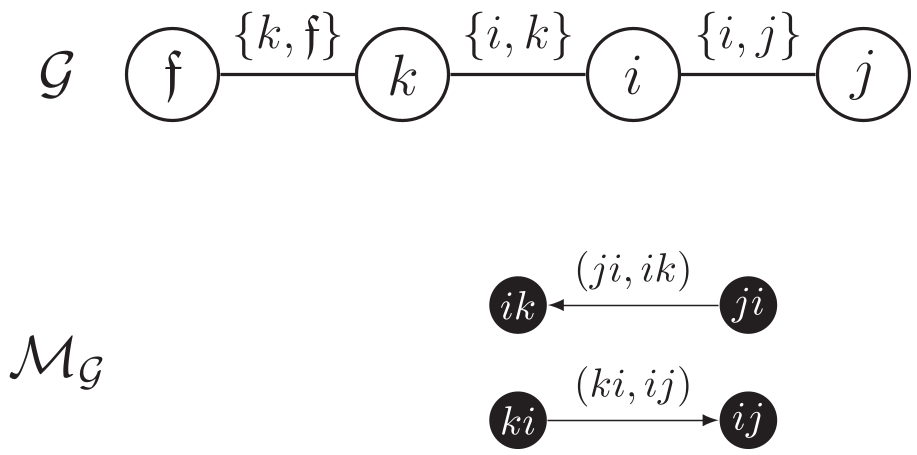 Figure 1: Transformation of a physical path into a message passing dependency structure.
Methodology: Nonlinear Recursion
The algorithm uses the following update rules:
- Confidence ( Update): A node adjusts how much it "trusts" a neighbor's message based on other incoming signals.
- Harmonic Contribution ( Update): A node sums the weighted influence of its neighbors to estimate its own reach.
The beauty of this approach is its local nature. No node needs to know the "diameter" of the network or its total size; it only needs to know its direct neighbors.
Experimental Evidence: Handling the "Cycle Tax"
The authors tested the algorithm on Erdős-Rényi random graphs. They discovered a fundamental trade-off: Cycles increase complexity.
- Trees: Convergence is reached in a number of steps equal to the graph diameter. The results are exact.
- Cyclic Graphs: As cycles increase, the algorithm takes longer to settle and starts to slightly overestimate the absolute influence values.
- Ranking Preservation: Crucially, even when the absolute numbers were off, the rank order of nodes (who is more influential than whom) remained incredibly accurate, often reaching a Spearman correlation of over 0.99.
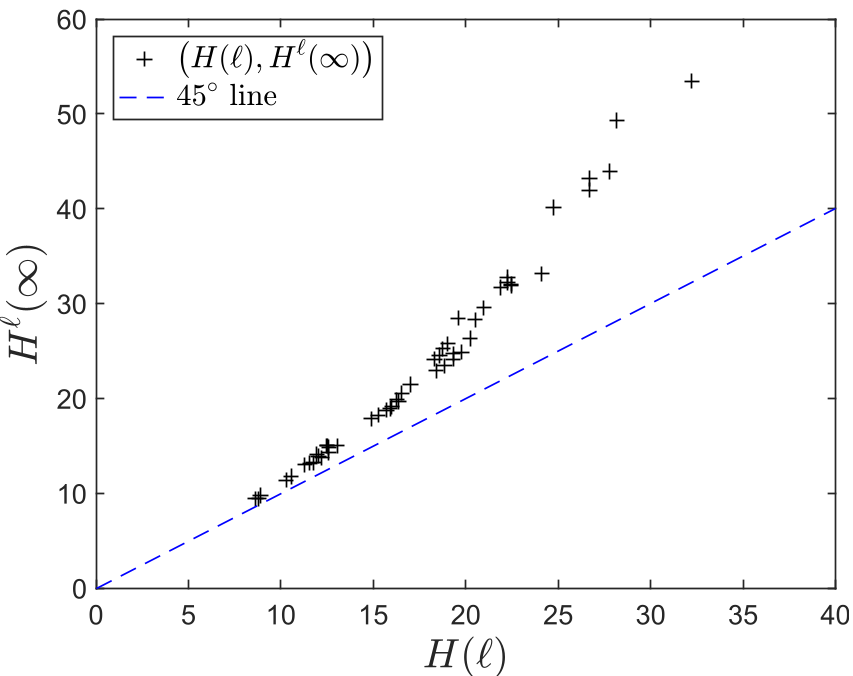 Figure 2: Scaling behavior showing convergence time against network size . Note the stable scaling even as reaches 2,000.
Critical Analysis & Future Outlook
The paper successfully bridges the gap between theoretical Gaussian belief propagation and practical social influence. However, two main points remain open:
- Symmetry: The proof requires symmetric weights (reciprocal influence), but simulations suggest the algorithm works even without it. Proving this "Asymmetric Convergence" is the next frontier.
- Estimation Error: While the approximation is "useful," a rigorous theoretical bound on the error introduced by cycles is still missing.
Final Takeaway
For developers of large-scale recommendation systems or social analytics tools, this work suggests that high-fidelity centrality metrics do not require global compute clusters. Simple, asynchronous local message passing is sufficient to identify the key movers and shakers of any network.
References
- Vassio, L., et al. (2014). "Message passing optimization of harmonic influence centrality." IEEE Trans. Control Netw. Syst.
- Rossi, W. S., & Frasca, P. "On the Convergence of Message Passing Computation of Harmonic Influence in Social Networks."