
Cooperate or Defect? Decoding Social Dynamics Through Agent-Based Modeling
Cooperate Or Defect? How an Agent Based Model Simulation on Helping Behavior Can Be an Educational Tool
This paper presents an Agent-Based Model (ABM) designed to simulate helping behavior as a pedagogical tool. By categorizing agents into four behavioral types—Warm-Glow, Gratitude, Hybrid Cooperators, and Defectors—the study quantifies how varying prosocial motivations influence the overall resource flow and "wealth" of a virtual society.
TL;DR
Why do we help others, and what happens to society if we stop? This paper introduces a specialized Agent-Based Model (ABM) designed as an educational "glass box." By simulating four distinct archetypes of altruism—ranging from those who give to feel good to those who give because they received—the authors demonstrate why collective prosocial behavior is more than just the sum of individual acts.
Background: Beyond the Black Box
In social sciences, understanding the macro-effects of micro-decisions is notoriously difficult. The authors argue that ABMs are the perfect remedy. Unlike "black box" systems where logic is hidden, the proposed "glass box" approach allows learners to see, modify, and simulate the "inner gears" of human interaction.
The Anatomy of Altruism: Four Agent Types
The researchers mapped prosocial behavior onto two axes: the ability to Initiate help and the tendency to Pass on help.
| Agent Type | Strategy | Motivation |
|---|---|---|
| Warm-Glow (WG) | Initiate Only | Helps because it increases self-esteem; does not "recycle" received help. |
| Gratitude (GC) | Pass-on Only | Helps only after being helped (Indirect Reciprocity). |
| Cooperator (C) | Both | The "Engine" of the system; initiates and passes on help. |
| Defector (D) | Neither | Purely extractive; receives help but never contributes. |
The Engine of the System
Each agent tracks variables like Variable Help (h)—the fuel for movement and action. While WG and C agents start with an arbitrary resource pool (), their ability to sustain the system differs wildly based on their internal logic.
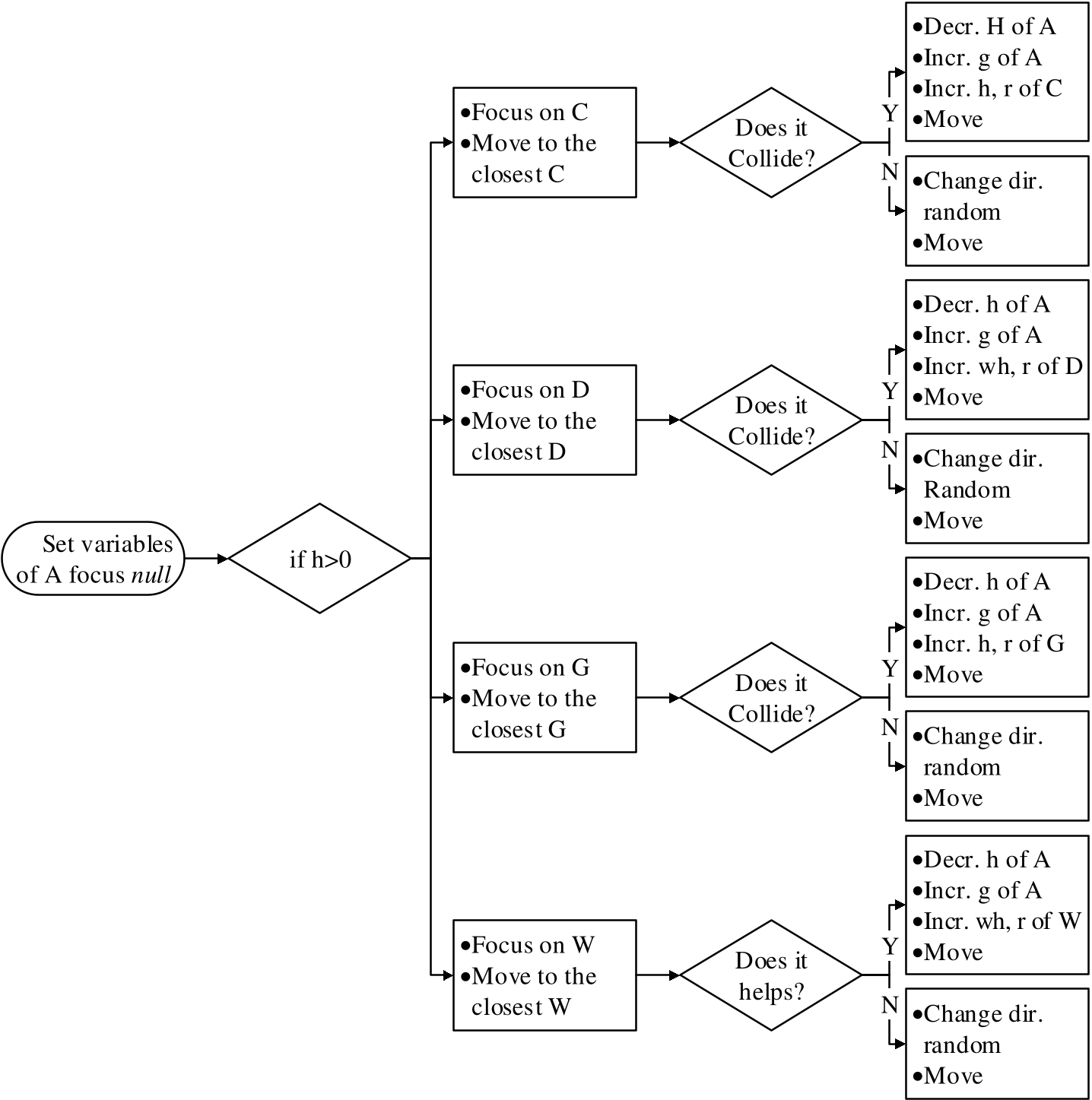 Figure 1: The decision-making flowchart for a Hybrid Cooperator (C) agent.
Simulation Insights: The High Cost of Defection
The study manipulated the ratios of these agents to see how the "Total Help Received" (a proxy for societal welfare) fluctuated.
Key Experimental Findings:
- The Dominance of Cooperators: In balanced populations, C agents gave 2.15x more help than GC agents. Because they "recycle" the help they receive back into the system, they maintain the highest resource levels ().
- The "Defector Drain": Reducing the number of Defectors from 100 to 25 resulted in a 27% increase in total societal help. Defectors act as "sinks" where help goes to die (recorded as
Wasted Help). - Fragility of Warm-Glow: While WG agents are essential for "jump-starting" a society with initial help, they are inefficient long-term because they don't propagate the help they receive.
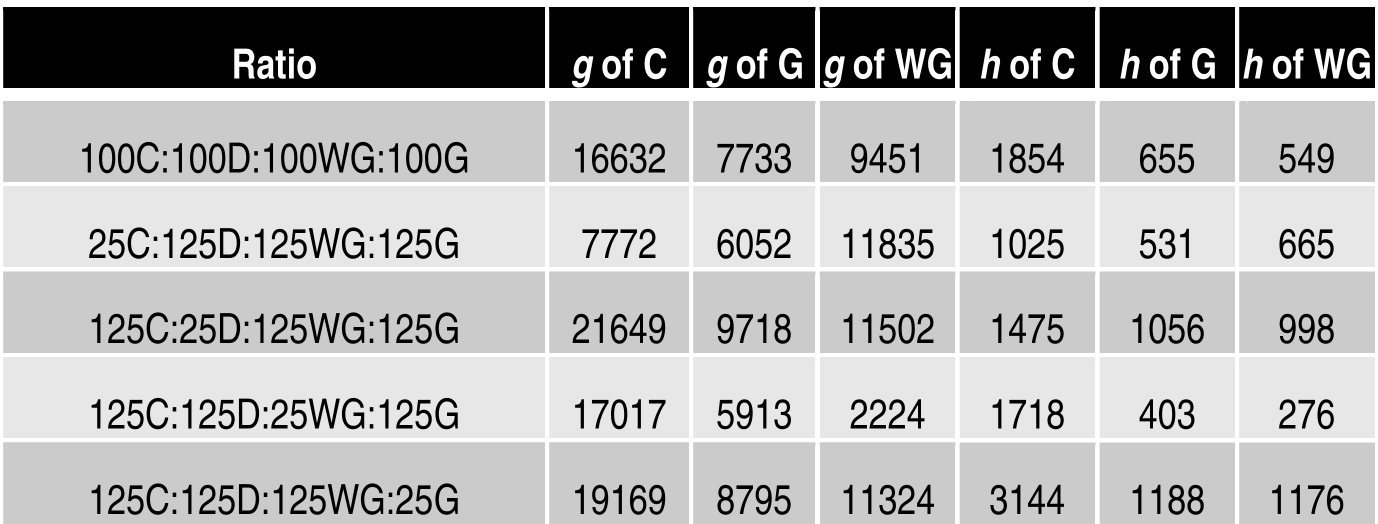 Table 3: Comparative analysis of help given () and current potential () across different population ratios.
Academic Insight: Why This Matters for Education
The study reveals a "moral paradox" that is ripe for classroom discussion: Even if Defectors contribute nothing, they receive as much help as Cooperators.
This finding is a powerful "Aha!" moment for students. It forces them to move beyond a "Just World" hypothesis and consider more complex social mechanisms, such as:
- Memory & Reputation: What if agents remembered who helped them?
- Punishment: Should society "tax" defectors or exclude them?
Conclusion & Future Outlook
This ABM doesn't just teach what happens in a society; it teaches why social structures emerge. By visualizing "Wasted Help" and resource flow, students gain an intuitive grasp of socio-biology and economic cooperation.
Future Work: The authors suggest expanding this model to explore environmental preservation and tax evasion—complex phenomena where individual choices lead to massive, often counter-intuitive, global consequences.