
Retailer-Led Coordination: Breaking the Information Barrier in Modern Supply Chains
Coordinating Supply Chains With a General Price-Dependent Demand Function: Impacts of Channel Leadership and Information Asymmetry
This paper investigates supply chain coordination (SCC) under various channel leaderships (manufacturer-led vs. retailer-led) and information asymmetry (cost vs. demand sensitivity) using quantity discount (QD) contracts. It identifies that retailer-led QD (RQD) is superior to manufacturer-led QD (MQD), achieving coordination even under asymmetric information and allowing flexible profit allocation.
TL;DR
As the balance of power shifts from manufacturers to retail giants, traditional coordination models are becoming obsolete. This paper demonstrates that Retailer-led Quantity Discount (RQD) contracts outshine Manufacturer-led (MQD) versions by achieving Supply Chain Coordination (SCC) even when production costs are hidden. Through a "menu of contracts," retailers can ensure both system efficiency and flexible profit sharing.
Background: The Power Shift
In the traditional "Manufacturer-led" paradigm, the producer dictates terms. However, in the era of Walmart and Tesco, the Retailer-led scenario is more realistic. The core challenge is Information Asymmetry: Manufacturers hide their costs, and retailers hide their market insights. This leads to inefficient pricing and stocking, known as the "double marginalization" effect.
The Intuition: Why Retailers Make Better Leaders
The research reveals a striking physical intuition: Under RQD, the condition to reach the system-wide optimum is distribution-free. This means the retailer can coordinate the chain without needing to know the exact probability distribution of market demand. In contrast, a manufacturer needs precise data to lead effectively.
Architecture of the Decision Flow
The study models the interaction as a multistage sequential game involving three primary contract types:
- MQD (Manufacturer-led): Manufacturer sets wholesale prices and discount factors.
- RQD (Retailer-led): Retailer sets the terms; Manufacturer decides the quantity.
- VQD (Vendor Managed Inventory): A specialized retailer-led setup where the manufacturer manages inventory but only gets paid for sold units.
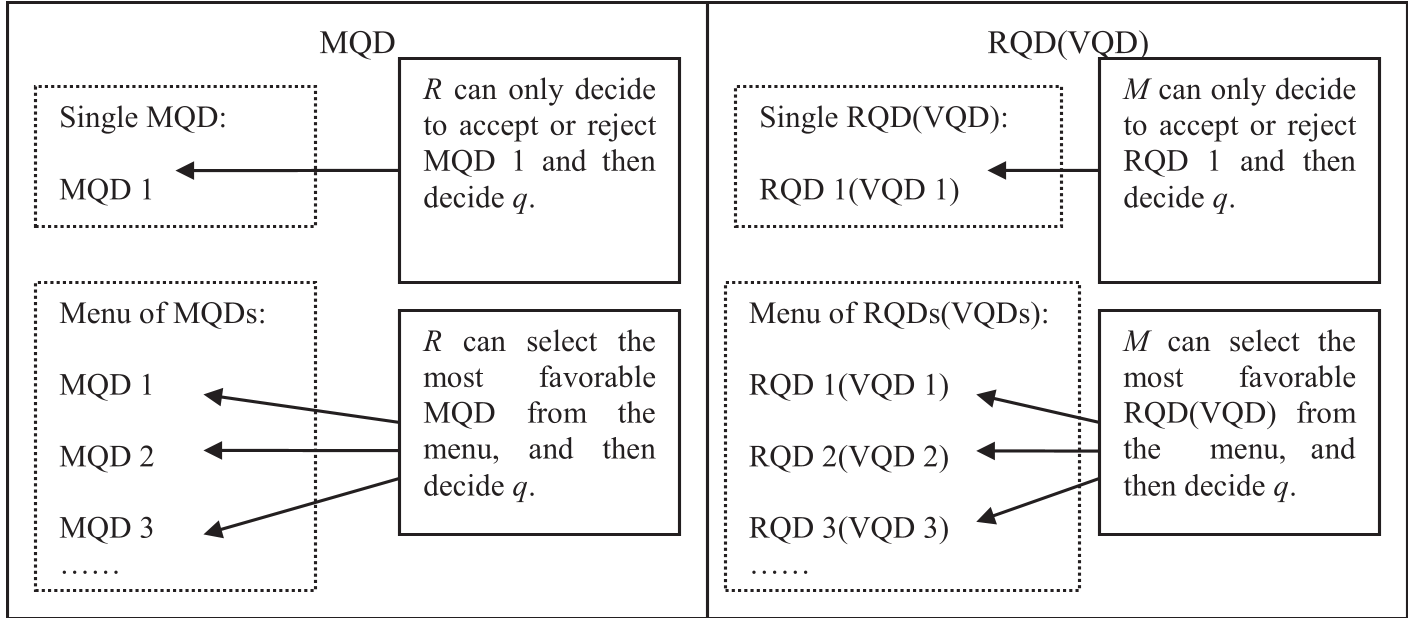 Figure 1: The sequence of events showing how market information is updated between stocking and pricing decisions.
Methodology: The Power of the "Menu"
When information is asymmetric (e.g., the retailer doesn't know if the manufacturer's cost is High or Low), a single contract is too rigid. The author proposes a Menu of RQDs. By offering two distinct contract options, the retailer forces the manufacturer to "self-select" the contract that matches their true cost. This is an application of Incentive Compatibility (IC).
Key finding: Any VQD contract that coordinates the chain has an equivalent RQD counterpart. This suggests that the complex VMI arrangements often seen in industry are effectively a form of "power sacrifice" by the retailer to ensure the manufacturer doesn't get squeezed too hard.
Experimental Evidence: SOTA Comparison
Comparing MQD and RQD yields a clear winner across both symmetric and asymmetric scenarios.
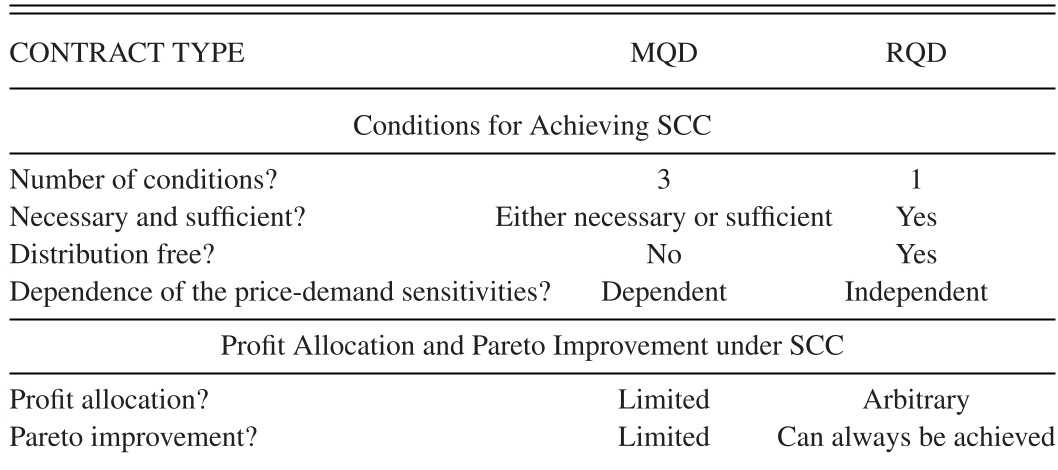 Table 1: RQD achieves coordination with fewer restrictions and allows for arbitrary profit division.
In the asymmetric case, the results are even more lopsided. The study shows that MQD fails completely if the manufacturer cannot guess the retailer's optimal quantity. Meanwhile, the RQD menu approach maintains SCC.
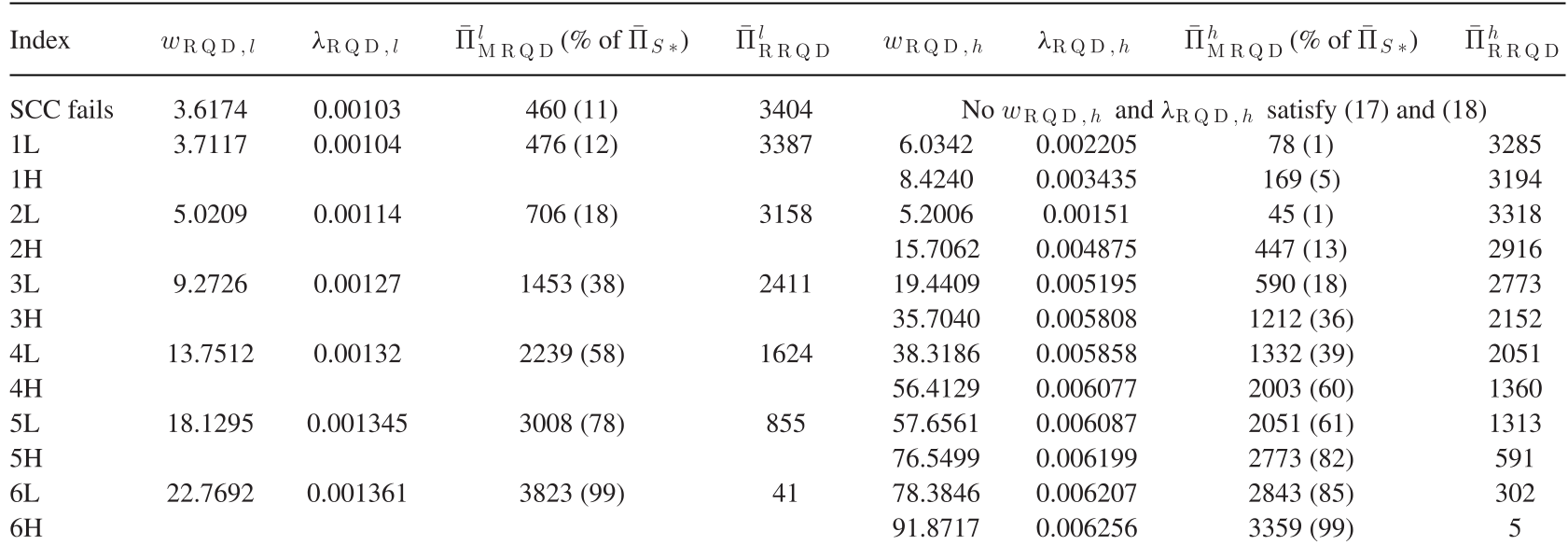 Table 2: Demonstrating how different "Menus" (Indices 1L through 6H) allow the retailer to shift profit allocation while keeping the total system at maximum efficiency.
Deep Insight & Future Outlook
The most profound takeaway is that channel leadership fundamentally changes the requirements for Information Symmetry. By taking the lead, retailers remove the manufacturer's need for market-side distribution data to reach an optimal quantity decision.
Limitations: The model currently focuses on a single-manufacturer, single-retailer dyad. In the real world, multi-tier networks with competing retailers add layers of complexity (e.g., "weak" vs. "dominant" retailers) that still require exploration.
Conclusion: If you are managing a retail-driven supply chain, stop trying to force manufacturer-led templates onto your vendors. Adopting an RQD framework with a menu-based selection isn't just "fairer"—it's mathematically more robust to the unknowns of the production line.