
Beyond the Job Board: Balancing Fun and Function in Social Media Recruiting
Corporate career presences on social network sites: an analysis of hedonic and utilitarian value
This research investigates the design of corporate career presences on Social Network Sites (SNS) to attract potential applicants. Using a Structural Equation Model (SEM) on 470 respondents, it identifies seven key characteristics that drive both hedonic (pleasure-oriented) and utilitarian (task-oriented) value, significantly impacting the intention to use these platforms for job seeking.
TL;DR
In the "war for talent," a company's Facebook or LinkedIn page is often the first point of contact for high-potential graduates. This study reveals that successful corporate career presences must master a "dual-identity": providing utilitarian value (job facts and routines) while maintaining hedonic value (entertainment and engagement). The research proves that while users visit for information, they stay and engage because of the experience.
The "Mixed System" Dilemma
Why do some corporate career pages feel like ghost towns while others thrive? The problem lies in the nature of Social Network Sites (SNS). Unlike a dedicated job portal (e.g., Monster.com), an SNS is a mixed system. Users are there to be entertained, but they are also open to professional opportunities.
The authors argue that companies often fail because they don't distinguish between these two "loci of causality." If a page is too dry, it fails the social context; if it's too frivolous, it lacks professional utility.
Methodology: The Seven Pillars of Attraction
The researchers identified seven specific characteristics through an intensive 12-month pre-study of 80 global brands. These were mapped against the Technology Acceptance Model (TAM) but extended to account for "Perceived Enjoyment."
The Model Architecture
The study uses Structural Equation Modeling (SEM) to link content types to psychological value.
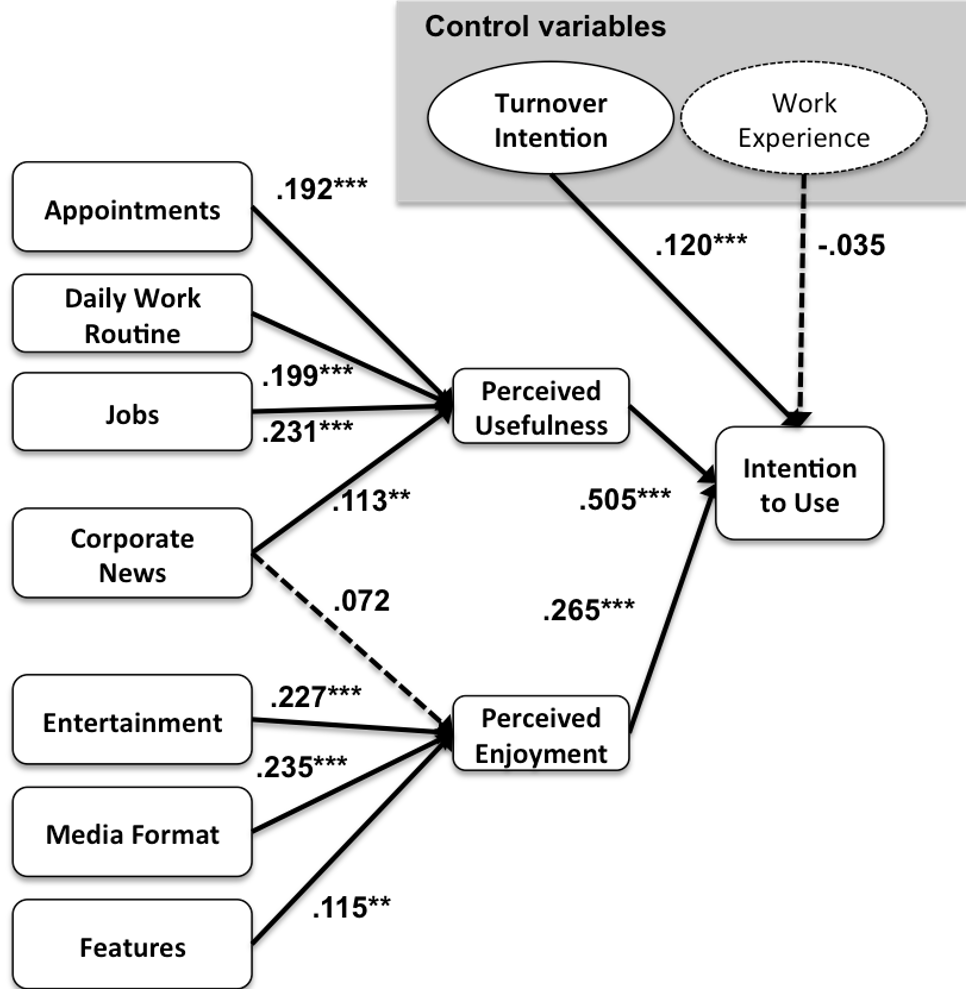 Figure 1: The structural model showing the path coefficients between content characteristics and user intention.
Key Insights: What Drives Value?
1. The Utilitarian Drivers (The "Need to Know")
- Daily Working Routine: This was the strongest predictor of usefulness. Potential applicants crave "insider" information—salaries, work-life balance, and employee interviews—that typically isn't found on official corporate sites.
- Appointments & Jobs: Even if listed elsewhere, having job fairs and vacancies in the SNS feed creates convenience, appearing directly on the user's wall.
2. The Hedonic Drivers (The "Fun Factor")
- Media Format: The use of video and varied visual content significantly boosts the "fun" aspect of the presence.
- Entertainment: Reposting relevant but non-job-related content (news, humor) offers insights into the company culture through the "internal locus of causality."
Experimental Results
The survey of 470 participants showed a clear divide in adoption rates. Interestingly, while Facebook was the dominant platform for information (65%), professional sites like Xing and LinkedIn were preferred by those with more work experience.
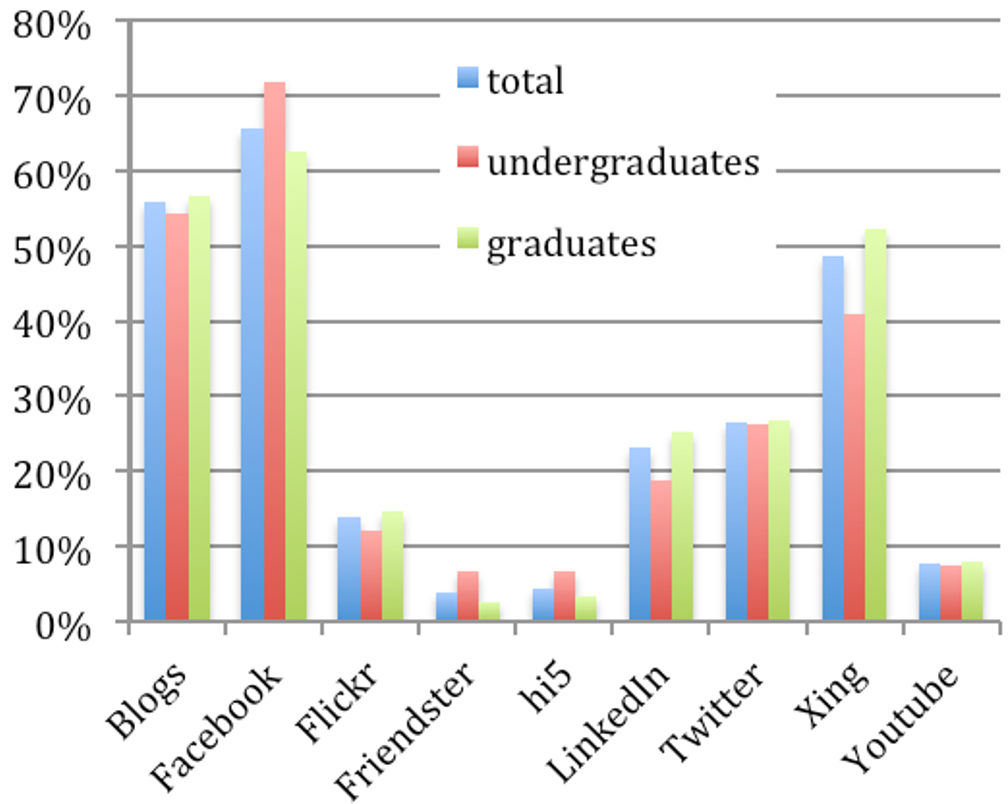 Figure 2: Adoption rates across different social platforms for career purposes.
Quantitatively, Perceived Usefulness remains the primary driver of the Intention to Use (Effect size 0.35). However, Perceived Enjoyment acts as a crucial secondary motivator (Effect size 0.10) that distinguishes SNS from traditional, boring recruiting websites.
Critical Analysis & Managerial Implications
The takeaway for HR departments is clear: Don't just repost your website.
- Aggregated Value: Users want a "one-stop shop" on their feed.
- Vulnerability is Value: Sharing the "Daily Routine" makes a company feel authentic.
- Culture via Curation: Entertaining content isn't just "filler"—it's a reflection of company culture that makes the brand more approachable.
Limitations
The study is a snapshot of early-2010s SNS usage. In the modern era of TikTok and algorithmic "For You" pages, the "Media Format" construct would likely have an even higher path coefficient toward recruitment intention than it did in this 2012 analysis.
Conclusion
This paper serves as a foundational blueprint for Employer Branding 2.0. By balancing the instrumental need for job data with the intrinsic human desire for connection and entertainment, companies can transform their social presences from mere advertisements into high-value communities.