
Deciphering Laughter: Does the "233" Danmaku Predict Video Popularity?
Correlation Analysis between User's Emotional Comments and Popularity Measures
This paper investigates the relationship between emotional user comments—specifically the Chinese Internet jargon "233" (representing laughter)—and video popularity metrics on Bilibili.tv. By analyzing over 480,000 video metadata records, the authors quantify how emotional expressions correlate with play counts, bookmarks, and user-gifted "coins."
TL;DR
Researchers from Kyushu University explored whether the frequency of "233" (the Chinese equivalent of "LOL") in Bilibili's bullet comments serves as a reliable indicator of video popularity. Despite the intuition that more laughter equals more success, the study reveals that emotional intensity correlates strongly with comment volume but surprisingly weakly with "Coins" and "Bookmarks"—the platform’s gold standards for quality.
Background & Motivation
On platforms like Bilibili and Niconico, "Danmaku" (bullet comments) provides a unique stream of collective intelligence. Unlike static BBS comments, these are time-synced to the video, capturing immediate emotional reactions. The authors sought to bridge the gap between Sentiment Analysis and Content Evaluation, asking: Can we use the "233" jargon as a data mining resource to automatically rank high-quality content?
The "233" Phenomenon
In Chinese internet culture, "233" originated from an emoticon on Mop.com. Much like the Japanese "wwww," adding more "3s" (e.g., 233333) signifies stronger laughter. The authors identified this as a primary "emotional comment" metric to test against traditional popularity measures.
Data Collection Scaling
- Dataset: ~480,000 video metadata records from Bilibili.
- Total Comments: Over 77 million, with "233 comments" appearing in roughly 30.5% of all videos.
- Key Visual:
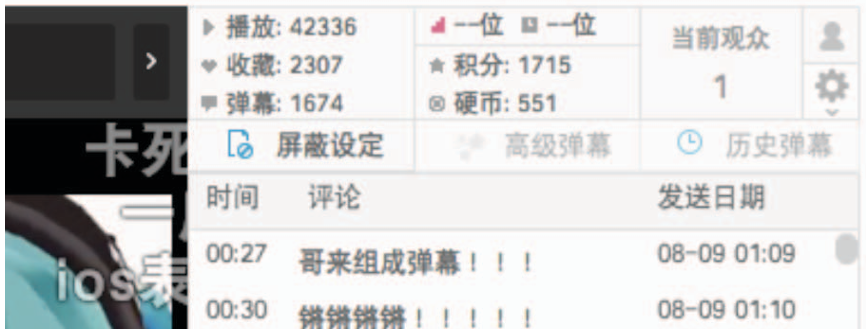 Fig 1. An example of the popularity measures tracked: View count, Coins, and Bookmarks (Mylist).
Methodology: Correlation Analysis
The researchers categorized "233 Videos" and calculated the correlation between the frequency of laughter and the following:
- Replay Number (P): Total views.
- Coins (C) & Score (H): Active user endorsements (requires "currency" earned by watching).
- Mylist (M): Bookmarks/saves.
Hard Truths from the Data
The results provide a sobering look at how "virality" differs from "value." While laughter is infectious, it doesn't always lead to a "save" or a "coin."
Key Statistical Findings (Correlation Coefficients):
- 233 vs. Danmaku Count: 0.56 (Strong correlation - busy videos have more laughter).
- 233 vs. Score: 0.23 (Weak).
- 233 vs. Coin: 0.19 (Very Weak).
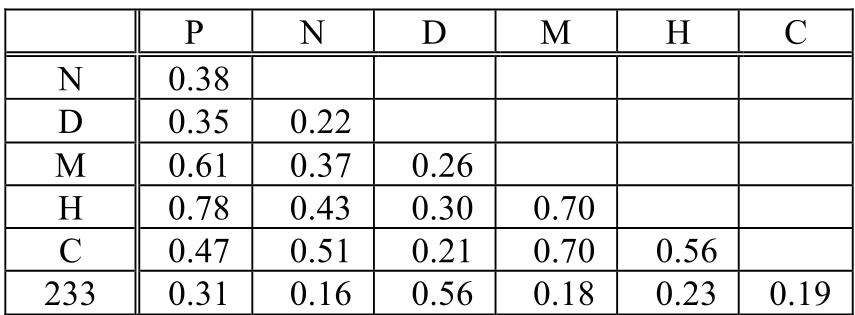 Table V. The correlation matrix showing that "233" laughter comments do not effectively mirror popularity measures like high coins or replay counts.
Even when looking exclusively at "Top 100" or "Top 1000" videos, the trend remained the same. Popularity affects the number of coins, but when results are normalized (Coins per Replay), the "233" frequency showed zero meaningful correlation (0.04).
Critical Insight & Conclusion
Why the Disconnect?
The study suggests that laughter is a fleeting emotion. A video can be hilarious in the moment (generating many "233s"), but users may not find it "meaningful" enough to bookmark or spend their limited daily "Coins" on. Conversely, deeply educational or artistic videos might have high popularity but very few "233" comments.
Future Outlook
This work serves as a foundational step. It proves that frequency-based sentiment analysis for a single keyword is insufficient for ranking. Future models must:
- Define a broader spectrum of emotional keywords beyond laughter.
- Weights the "intensity" (number of 3s) more heavily in the algorithm.
- Incorporate the temporal density of comments to find "emotional peaks" within a video.
While "233" tells us when a crowd is laughing, it doesn't yet tell us if the crowd will come back tomorrow.