
Harmonizing the Digital Classroom: Using Brain-Inspired Algorithms to Optimize Online Conversations
Using Cortical Learning Algorithm to Arrange Sporadic Online Conversation Groups According to Personality Traits
This paper proposes a novel framework for arranging sporadic online conversation groups in language learning environments by leveraging personality traits. It utilizes the Cortical Learning Algorithm (CLA) to predict group compatibility and optimize student-teacher matching for improved satisfaction.
TL;DR
Online language learning often suffers from unpredictable group dynamics. This paper introduces an intelligent system that predicts "social chemistry" by mining Big 5 personality traits from social media and processing them through the Cortical Learning Algorithm (CLA). By proactively matching students and teachers who are likely to get along, the system moves beyond simple teacher ratings to create balanced, engaging, and highly-rated conversation groups.
Problem & Motivation: The Chaos of Sporadic Networks
In "sporadic" social networks—like a one-hour English conversation class—users meet briefly and often never see each other again. This creates a unique challenge for platforms like Verbling or HowDoYouDo:
- No Historical Context: Unlike long-term university cohorts, you can't "learn" group dynamics over months.
- Passive Feedback: Current systems only punish bad teachers via low ratings after the damage is done; they don't prevent bad group pairings before they happen.
- The Participation Gap: A single dominant or mismatched personality can stifle an entire group’s learning potential.
The authors argue that if we can understand the personality profile of participants beforehand, we can treat group formation as an optimization problem rather than a roll of the dice.
Methodology: From Facebook Likes to Neural Patterns
The proposed architecture consists of four distinct modules designed to turn social footprints into optimized schedules:
- Social Miner: Uses the Apply Magic Sauce API to translate Facebook activity into Big 5 personality traits (Openness, Conscientiousness, Extraversion, Agreeableness, Neuroticism).
- Feedback & Personality Reasoner: This is the "brain" of the system. It uses the Cortical Learning Algorithm (CLA), a model inspired by the human neocortex. Unlike standard Bayesian networks, CLA is adept at discovering complex, evolving patterns in noisy data.
- Schedule Optimizer: Based on OptaPlanner, this module treats group formation as a constraint satisfaction problem, balancing teacher availability, student levels, and the personality compatibility predicted by the CLA.
- Reservations Manager: Selectively alerts students to classes where they are predicted to have a high satisfaction rate.
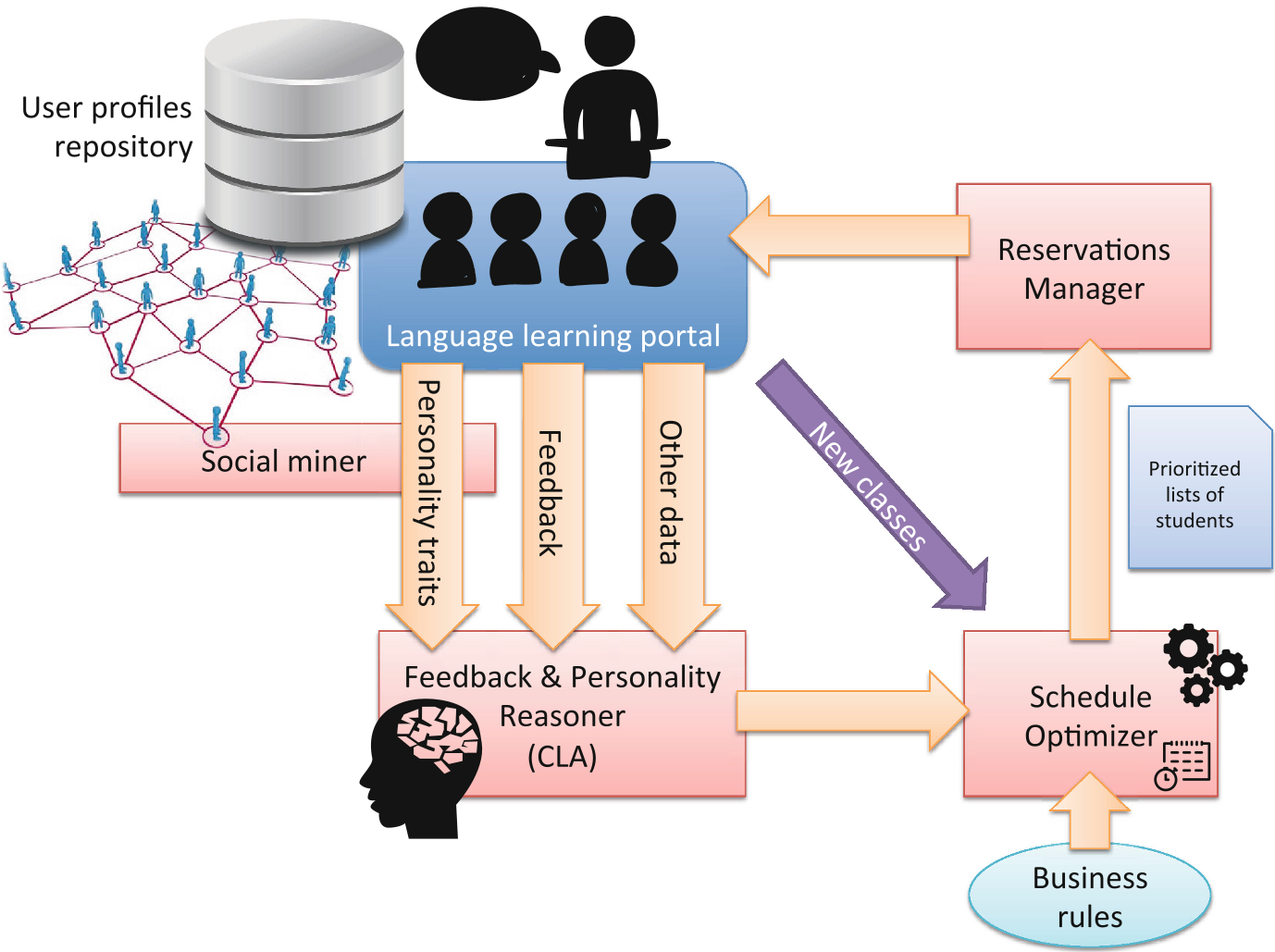 Fig 1: The architectural scheme showing the flow from social mining to schedule optimization.
Why CLA?
The choice of the Cortical Learning Algorithm is significant. CLA models the structural properties of the brain to handle streaming data. In this context, it "assimilates" the results of every finished class, continuously refining its understanding of which trait combinations (e.g., a highly extroverted teacher with introverted students) lead to "Very Positive" Likert scale feedback.
Experiments & Results
The approach was integrated into a real-world English teaching portal for Spanish speakers.
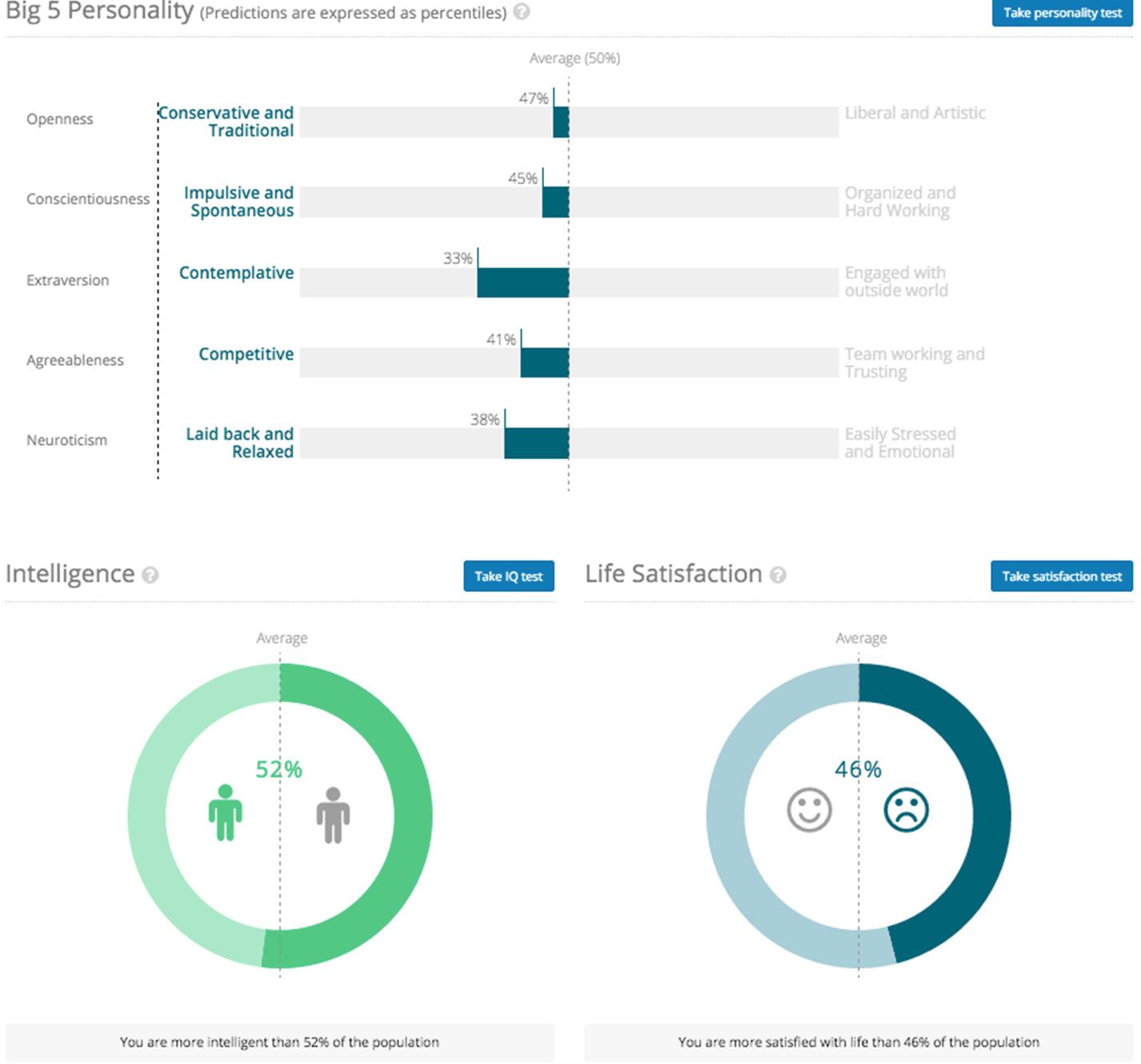 Fig 2: Example of Big 5 personality estimations including intelligence and life satisfaction metrics used as input features.
Key Findings:
- Higher Satisfaction: Initial data shows a clear upward trend in average student satisfaction scores compared to the pre-AI era.
- Peer Compatibility: Interestingly, students didn't just like the teachers more; they rated their interactions with other students significantly higher when the Optimizer was in charge.
- Business Efficiency: The system successfully balanced "business rules" (class occupancy targets) with "social rules" (personality compatibility), proving that user satisfaction doesn't have to come at the expense of profitability.
Critical Analysis & Conclusion
While the results are promising, the authors acknowledge a few hurdles. The ANOVA tests suggested that while the satisfaction trend is positive, they need a larger sample size (likely a full year of data) to prove statistical significance beyond a doubt.
The Future of Social AI
The project plans to move beyond static surveys. The next phase involves:
- Multimodal Feedback: Using sound processing and face recognition during the call to detect smiles, laughs, and shyness in real-time.
- Topic Mining: Grouping people not just by who they are (personality), but by what they love (mining topics like "Sports" or "Culture" from their social feeds).
This research demonstrates that the "black box" of human social interaction can be decoded. By treating a conversation group as a carefully engineered ecosystem rather than a random collection of users, online learning platforms can significantly reduce churn and enhance the pedagogical value of every session.