
Finding the Hidden Hand: A Game-Theoretic Approach to Covert Node Mining
Covert nodes mining in social networks based on games theory
This paper introduces FCNG (Finding Covert Nodes based on Game theory), a novel framework for identifying non-observable influential actors in social networks. By modeling information diffusion as a dynamic repeated game, the authors calculate node-specific earnings to rank and identify potential covert nodes, achieving effectiveness on both synthetic networks and the Schol@t real-world dataset.
TL;DR
Identifying "covert nodes"—influential actors who remain hidden while pulling the strings of social activity—is a critical challenge in anti-terrorism, marketing, and epidemic control. This paper shifts the focus from simple graph topology to Game Theory, proposing a dynamic model where influence transmission is a series of strategic choices. The resulting FCNG algorithm ranks nodes by their "earnings" in these games to expose hidden influencers.
Problem & Motivation: The Limits of Static Observation
Most social network analysis (SNA) treats bridges between communities as structural anomalies. However, in the real world:
- Networks are Dynamic: Edges appear and disappear rapidly, making static snapshots obsolete.
- Information is Incomplete: Covert nodes (terrorists, gossip sources) actively avoid detection, creating "incomplete information" environments.
Existing heuristics, such as Jaccard coefficients or K-medoids, assume we can see the full graph. The authors argue that since influence is a human interaction, it should be modeled as a decision-making process where players maximize their utility.
Methodology: Influence as a Dynamic Game
The core of the paper lies in treating the spread of a message as a Non-Cooperative Game.
1. The Player Roles
The game involves two types of players:
- Normal Users: Can be either "Normal" or "Infected" by a message.
- Influentials: Can choose to be "Overt" (visible) or "Covert" (hidden).
2. The Payoff and Probability
To handle the "hidden" nature of these nodes, the authors employ Asymmetrical Information Games. Using Bayes' Theorem, the model updates the probability of a node being covert based on "clues" () found in collaborative activities.
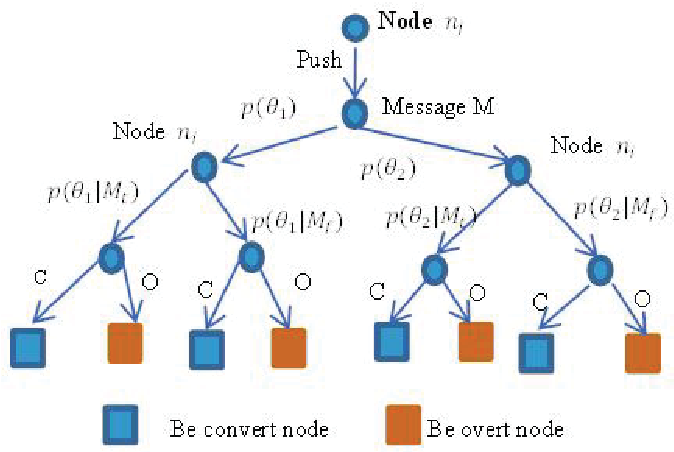
Fig 1: The decision tree illustrating the branching paths of discovery based on message clues and player strategy.
3. FCNG Algorithm
Instead of just looking at who has the most friends (Degree Centrality), the FCNG (Finding Covert Nodes based on Game theory) algorithm simulates influence rounds. It calculates the cumulative expected value () for each node across repeated game stages. Nodes that consistently yield high "payoffs"—meaning they are effective at influencing others while balancing their hidden status—rise to the top of the ranking list.
Experiments & Results
The authors tested their approach against two common benchmarks: Degree Centrality and the Greedy Algorithm.
- Simulation: Using a 5,000-node scale-free network generated via the Brite tool.
- Real-World Data: The Schol@t dataset, a scholar social network featuring 1,449 users and over 13,000 papers.
Performance Insights
The FCNG approach demonstrated superior precision in picking out designated covert nodes compared to simple structural metrics. A key finding was the relationship between Camouflage: as node camouflage increases, the difficulty of discovery rises linearly, yet the game-theoretic model maintains a more stable detection rate than topology-only methods.
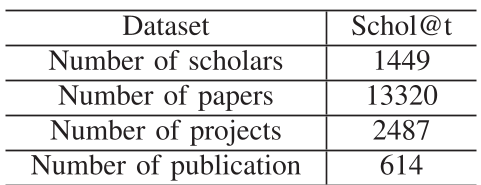
Table 1: Characteristics of the Schol@t co-authorship network used for validation.
Critical Analysis & Conclusion
Takeaway
The shift from SNA as Geometry to SNA as Economics is powerful. By defining "influence" as a utility-maximizing behavior, we can detect nodes that are strategically positioned even if they are structurally inconspicuous.
Limitations
- Prior Probabilities: The model relies on initial assumptions about the probability of a node being covert (), which might be hard to estimate in a vacuum.
- Computational Intensity: Calculating payoffs for every node in a repeated game format might struggle to scale to "Twitter-sized" networks without significant optimization.
Future Work
The authors intend to apply this method to broader real-world social networks to verify how different types of "social payoff" (e.g., political influence vs. financial gain) affect the accuracy of the mining algorithm.