
Crisis Crowdsourcing: Moving Beyond Spontaneous Voluntarism to Strategic Systems
Crisis Crowdsourcing Framework: Designing Strategic Configurations of Crowdsourcing for the Emergency Management Domain
This paper introduces the "Crisis Crowdsourcing Framework," a systematic approach to designing strategic crowdsourcing configurations for emergency management. It synthesizes lessons from the 2010 Haiti earthquake and USGS initiatives to define a multidimensional model for integrating digital volunteerism into formal response workflows.
Executive Summary
TL;DR: Large-scale disasters trigger a "digital convergence" of information and volunteers that can either save lives or cause coordination chaos. This paper presents the Crisis Crowdsourcing Framework, a structured methodology to transform ad-hoc digital effort into actionable science and response. By focusing on the "invisible" coordination work, the author demonstrates how agencies like the USGS can leverage the crowd for high-stakes tasks like earthquake detection and coastal erosion analysis.
Contextual Positioning: This is a seminal framework paper that bridges Crisis Informatics, Disaster Sociology, and CSCW. It moves the field from observing what volunteers do to engineering how they can be integrated into official SOTA emergency workflows.
The Problem: The Chaos of Convergence
When disaster strikes, the problem is no longer just a lack of data; it is information overload. Prior to the formalization of these frameworks, "disaster convergence"—the mass migration of people and data toward a crisis—often created more work for emergency managers than it solved.
The author identifies a critical gap: Articulation Work. In the world of Computer-Supported Cooperative Work (CSCW), this refers to the "work that supports other work"—the planning, negotiating, and integrating that happens behind the scenes. Without a framework to articulate these tasks, crowdsourcing remains a "black box" of varying quality and reliability.
Methodology: The Crisis Crowdsourcing Framework
The core contribution is a systematic, problem-driven approach built on six dimensions and four critical interfaces.
1. The Six Dimensions of Strategy
To move away from "blanket descriptors," the framework requires designers to specify:
- Why: The information problem (Sensing, Tagging, Mapping, or Curating).
- Who: The target crowd (Affected populations, Diasporas, Social Networks, or VTCs).
- What: Interaction flows (Parallel/Iterative sourcing, Harvesting, or Feeding).
- When: Disaster lifecycle phase (Prediction vs. Response vs. Mitigation).
- Where: Spatial context (Impact zone vs. Remote virtual platforms).
- How: The STOP interfaces.
2. The STOP Interfaces: The "How" of Integration
This is where the physical intuition of organizational structure meets technical design. The author argues that simple apps aren't enough; we must design for:
- Social: Cultural norms and trust.
- Technological: Scalable, robust artifacts.
- Organizational: Standard operating protocols (SOPs).
- Policy: Legal constraints like the Privacy Act or Licensing.
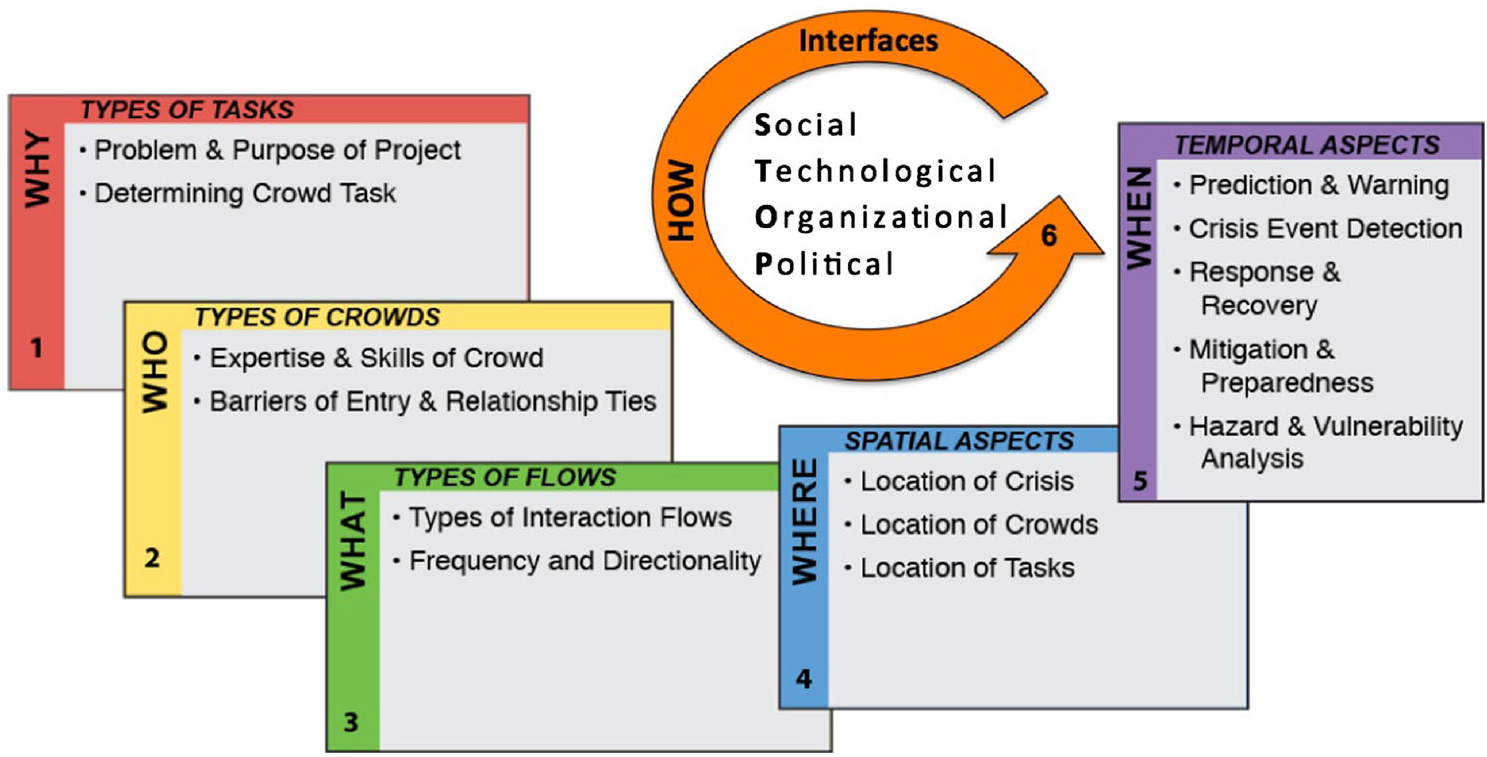 Figure 1: The iterative workflow for designing crowdsourcing systems based on the Framework.
Case Study: USGS iCoast
The framework’s validity is proven through iCoast, a project designed to ground-truth USGS coastal erosion models.
- The Mission: After Hurricane Sandy, the USGS had 9,000+ aerial photos but lacked the manpower to analyze geomorphic changes.
- The Solution: Using a Parallel Sourcing model, iCoast asked volunteers (the "Who") to tag changes in pre- and post-storm imagery (the "Why").
- Key Insight: By identifying the "Organizational" interface, the tags were developed to match the scientific conceptual schemas used by oceanographers, making the crowd's output immediately usable for model validation.
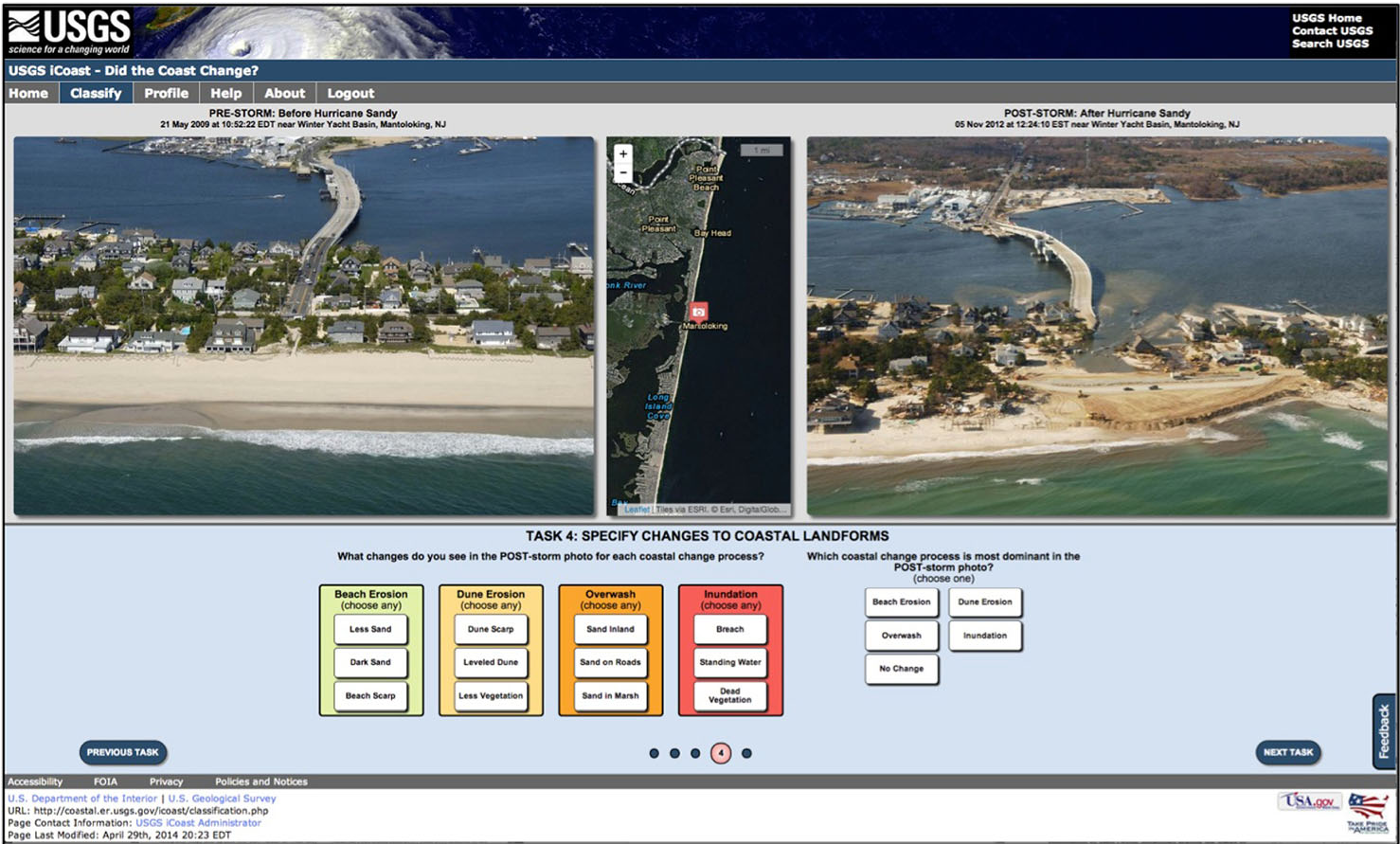 Figure 2: The iCoast interface demonstrating how scientific tags are presented to the crowd.
SOTA Comparison & Experimental Results
The paper highlights "Citizen Seismology" as a gold standard:
- DYFI (Did You Feel It?): Has received over 2.7 million responses, turning qualitative "shaking reports" into quantitative intensity maps.
- TED (Tweet Earthquake Dispatch): Detects earthquakes within 2 minutes—often beating physical seismic networks in regions with poor sensor coverage.
- Mission 4636: During the Haiti crisis, processed 80,000 messages with an average turnaround of 10 minutes.
Critical Analysis & Takeaways
The "Invisible" Value
The paper’s greatest strength is its objective look at the Policy Interface. It highlights that while technology moves fast, legacy policies (like the Paperwork Reduction Act) often hinder the very "Agile" development needed for crisis response.
Limitations
The author acknowledges that the framework does not deeply address motivation/incentives (why a crowd stays) or the ethical implications of undercutting paid work with digital volunteerism.
Conclusion
Final Takeaway: Crowdsourcing is no longer an "emergent" hobby; it is a professionalized component of information infrastructure. For technology to be operationalized in a crisis, we must stop designing tools and start designing interfaces—specifically those that align policy, organization, and social trust.