The Human Toll of Techlash: Inside the Emotional Habitus of Silicon Valley
18864_Critical Affects Tech Work Emotions Amidst the Techlash.
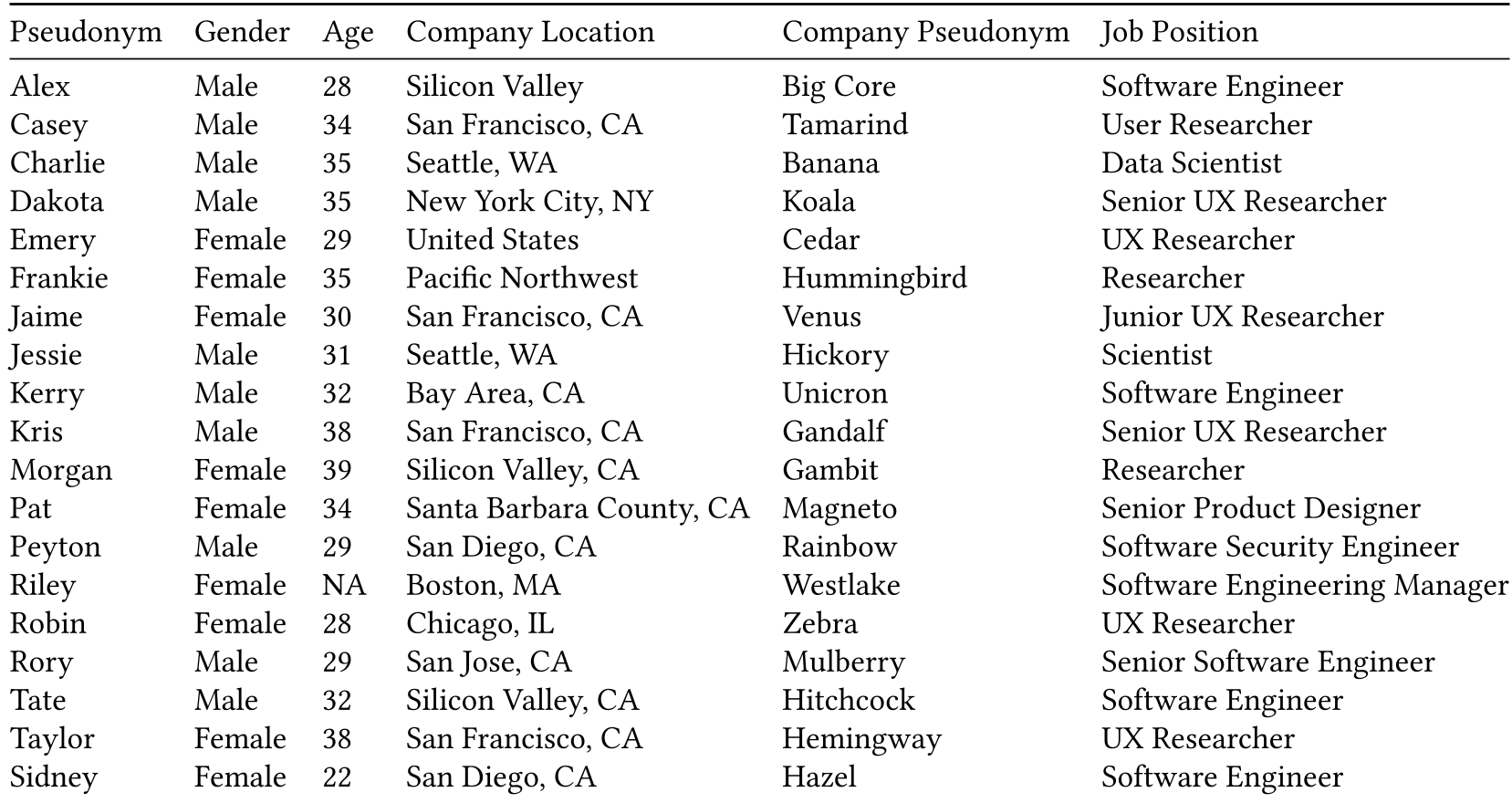
This paper explores "Techlash" from the perspective of 19 industry practitioners, investigating how public inquiry and rage affect tech workers' lives. Using an ethnographic "affective writing" style, the authors introduce the concept of "emotional habitus"—a structured disposition towards rationality and optimism that governs how tech workers process and respond to external critique.
TL;DR
The "Techlash" isn’t just a series of headlines or congressional hearings; it is a visceral, everyday experience for the people writing the code. This paper dives into the "emotional habitus" of tech workers—the underlying psychological architecture that makes them react to criticism with a blend of rationality, optimism, and occasionally, a "tough skin like scales." It argues that until we change the way tech workers feel about their responsibility, the industry’s systemic issues will remain unfixable.
Problem & Motivation: Beyond "Big Tech" as a Monolith
We often talk about companies like Google, Amazon, or Meta as faceless behemoths. But behind every controversial algorithm is a developer who probably joined the company for its "prestige" and "allure."
The authors argue that current critiques often fail because they don't land:
- Misalignment: Academic critiques are often seen as "old news" by workers who operate on one-week sprint cycles.
- The Binary Trap: Tech workers are habituated to ask, "What do you want me to build?" If a critique (like "fix capitalism") isn't actionable code, it’s often dismissed as noise.
- The Moral Taint: Much like the banking crisis of 2008, tech work has acquired a "moral taint," turning company hoodies into liabilities.
Methodology: Feeling the Data
Rather than standard coding of transcripts, the authors use Affective Writing. This isn't just about what was said; it’s about the "vibe." They asked 19 workers to sketch their experiences of critique, capturing the "heat" and "trauma" that traditional surveys miss.
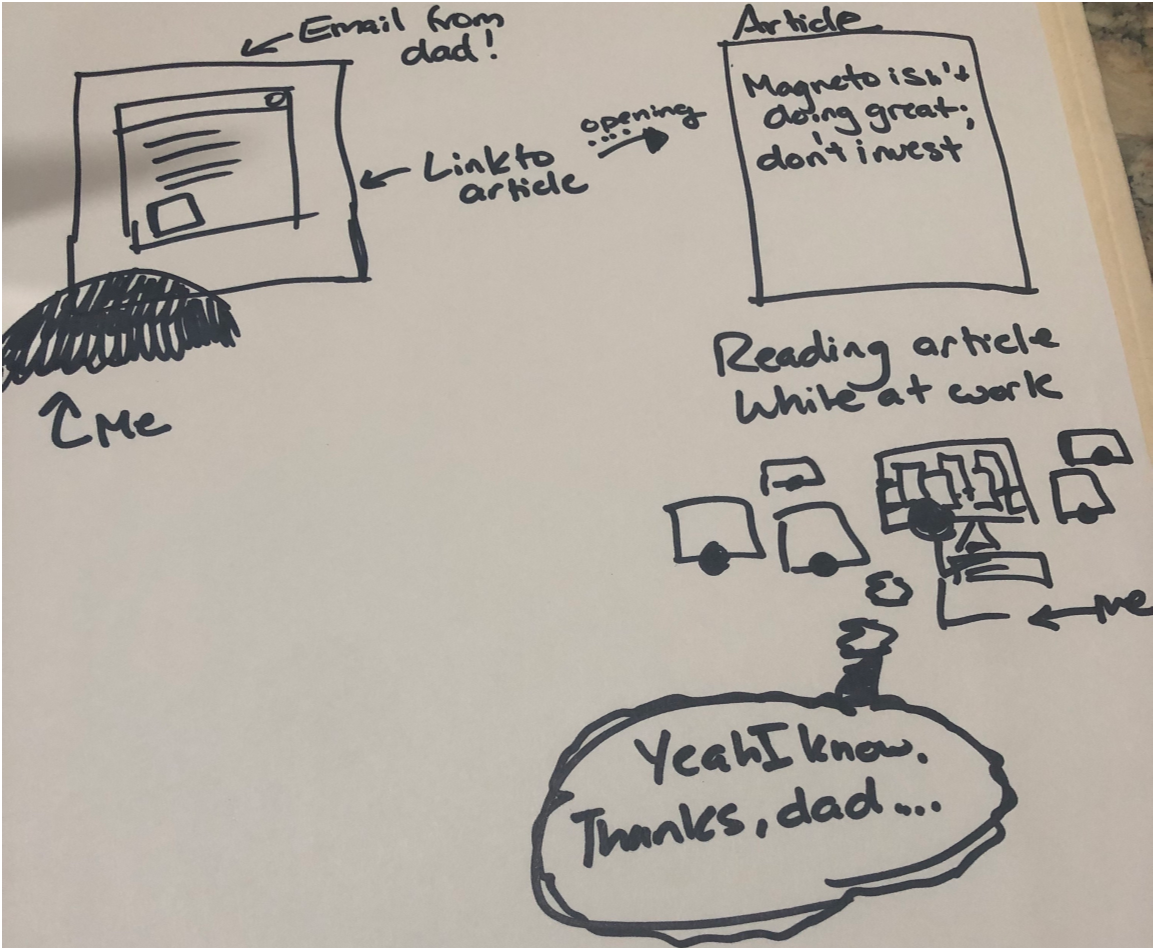 Figure 1: A visualization of a worker receiving a dense, unflattering article about their company—a disruption that moralizes the mundane workday.
The Core Concept: Emotional Habitus
The paper's most sharp insight is the Emotional Habitus. This is the set of durable patterns—learned in engineering schools and reinforced by corporate culture—that dictates how a worker should feel.
- Rationality over Emotion: If a user's story is "anecdotal" and can't be converted to binary, it’s often ignored.
- Technological Utopianism: The belief that every problem has a technical solution, and "not building" is rarely seen as a valid option.
- The "Good Person" Shield: Many workers fall into "tech worker fragility," feeling heartbroken that the public doesn't see their "good intentions," which unfortunately acts as a barrier to seeing systemic harm.
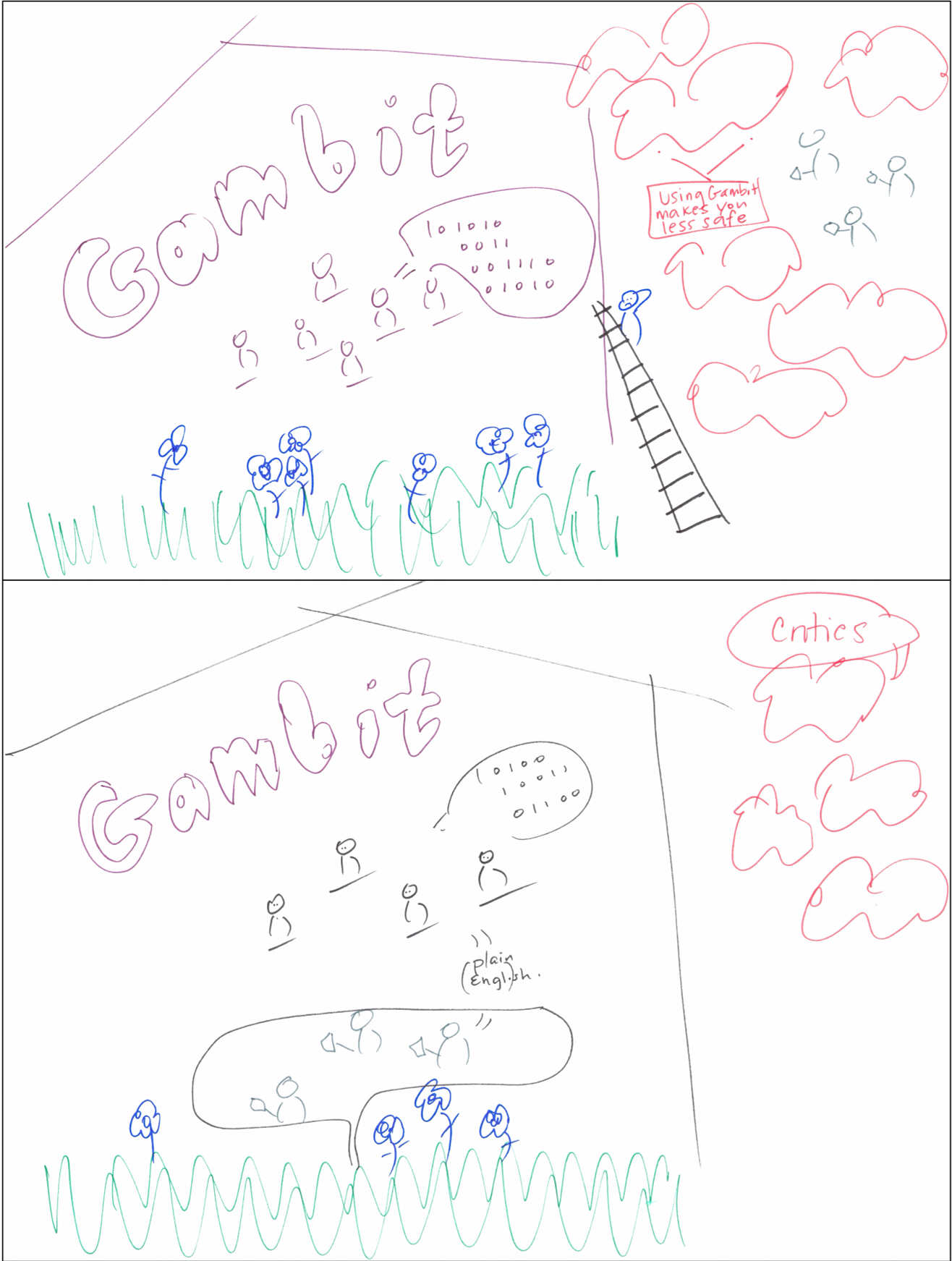 Figure 2: A worker's conceptualization of being "stuck in the middle"—trying to translate "hot, red clouds" of user rage into the "binary" language of the engineering "nirvana" inside.
Results: The "Scarlet Letter" Effect
The interviews reveal a dramatic shift in how tech workers navigate the world:
- Incognito Commuting: Workers are advised not to wear company schwag in public to avoid "dirty looks" or confrontations about gentrification.
- Dating & Social Life: Mentioning one’s employer on dating apps has moved from a "flex" to an "ethical debate."
- Internal Silence: Because of NDAs, workers feel they are doing "invisible work" to kill bad projects, leading to a sense of being "ostracized" by critics who only see the final, shipped product.
Critical Analysis: Prying Open the Habitus
Is the habitus permanent? The authors think not. They suggest that crises—like the 2016 election or the "Muslim Ban"—act as "moral shocks" that crack the shell of corporate optimism.
The Future of Tech Activism: The paper points to groups like the Tech Workers Coalition (TWC) as "alternative spaces." These spaces allow workers to "vent" without the requirement of being "constructive" or "rational," which is exactly where new political solidarities begin.
Conclusion: A New Solidarity
The study concludes that we need a "systemic analysis" that joins critics and tech workers. Instead of blaming individuals (who may have "skin like scales" from years of defensiveness), we should aim to create coalitions between the "insiders" who know the systems and the "outsiders" who suffer their consequences.
Final Takeaway: To change Tech, we must first allow tech workers the space to feel something other than "optimism." We must move from "rationality" to "solidarity."
Reference Table of Informants: