
Do We Talk Differently? Unmasking Cultural Friction in Global Conference Calls
Do We Talk Differently: Cross Culture Study on Conference Call
This paper presents an ethnographic study investigating cultural differences and their impact on communication issues within cross-cultural conference calls. By interviewing experienced professionals, the authors identify key dimensions of divergence among Chinese, Japanese, Indian, and American participants, specifically within the IBM corporate environment.
TL;DR
In the high-stakes environment of global corporate collaboration, the "how" of communication is often more important than the "what." This study reveals that cultural traits—ranging from the directness of Americans to the power-distance respect of the Japanese—critically shape the efficiency of conference calls, often leading to hidden misunderstandings and skewed decision-making.
The Invisible Barrier: Motivation
Globalization has forced diverse teams into virtual rooms. However, when you remove body language (as in a traditional conference call), the "Communication Style" becomes the sole vehicle for meaning. The authors argue that prior research has ignored how these styles—rather than just language proficiency—create "Process Loss," where multicultural teams underperform due to friction in their interaction patterns.
Methodology: Coding Culture
The researchers conducted deep-dive interviews with Chinese professionals who have navigated the "East-meets-West" corporate landscape for decades. They coded the resulting transcripts against several sociological pillars:
- Indirectness: Saving "face" vs. being straightforward.
- Assertiveness: The willingness to disagree or request.
- Power Distance: The level of deference shown to authority/managers.
- Speaker vs. Listener Centered: Who bears the responsibility for understanding?
Key Dimensions of Difference
The study found a clear spectrum across the four investigated nations:
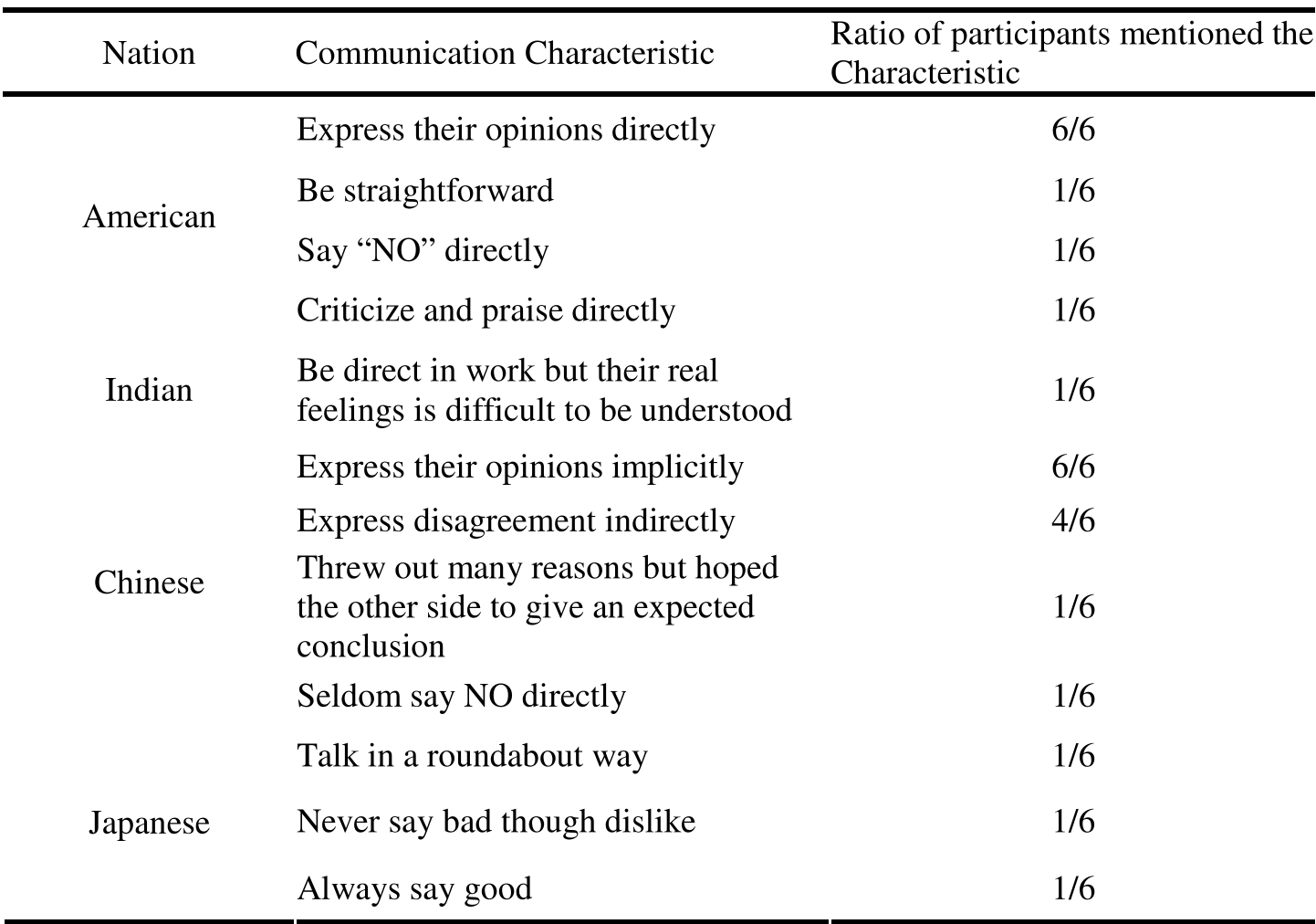
1. Indirectness and "The Roundabout Way"
Americans were consistently rated as the most direct—they say "No" without hesitation. In contrast, Chinese and Japanese participants often "provide reasons first" and expect the listener to infer the conclusion.
2. Assertiveness & Participation
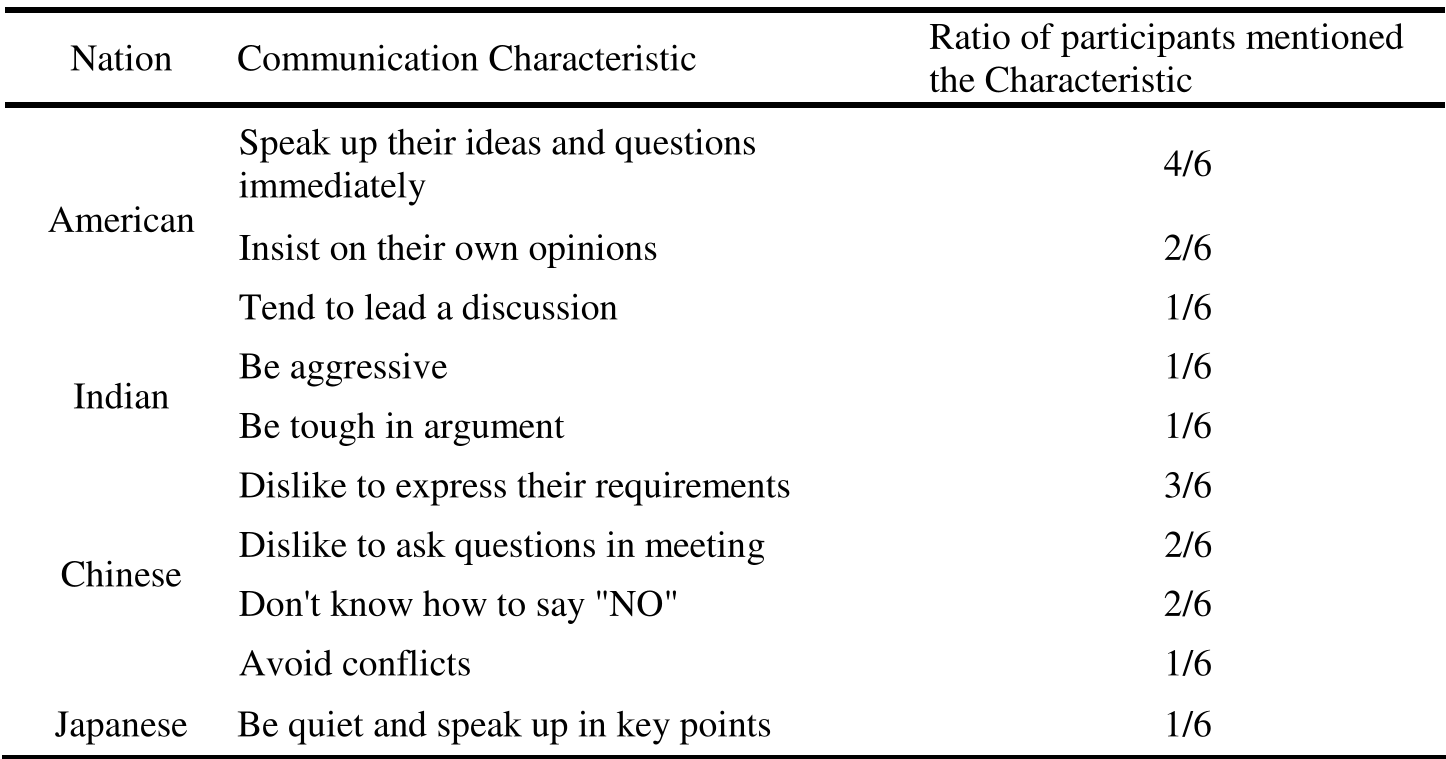
A critical discovery was that American participants tend to "Speak up immediately," whereas Japanese participants remain quiet until "key points" are reached. To an American, this silence might look like a lack of contribution; to the Japanese, it is a sign of respect and careful listening.
The "Cultural Crash": Real-World Impacts
The paper doesn't just categorize styles; it links them to specific meeting failures:
- Misunderstanding: Direct challenges from Westerners are often perceived as personal negative evaluations by Easterners.
- External Meetings: Because Chinese participants use indirect logic (reasons before conclusions), direct Westerners often miss the point, leading the meeting into "unrelated threads" or tangents.
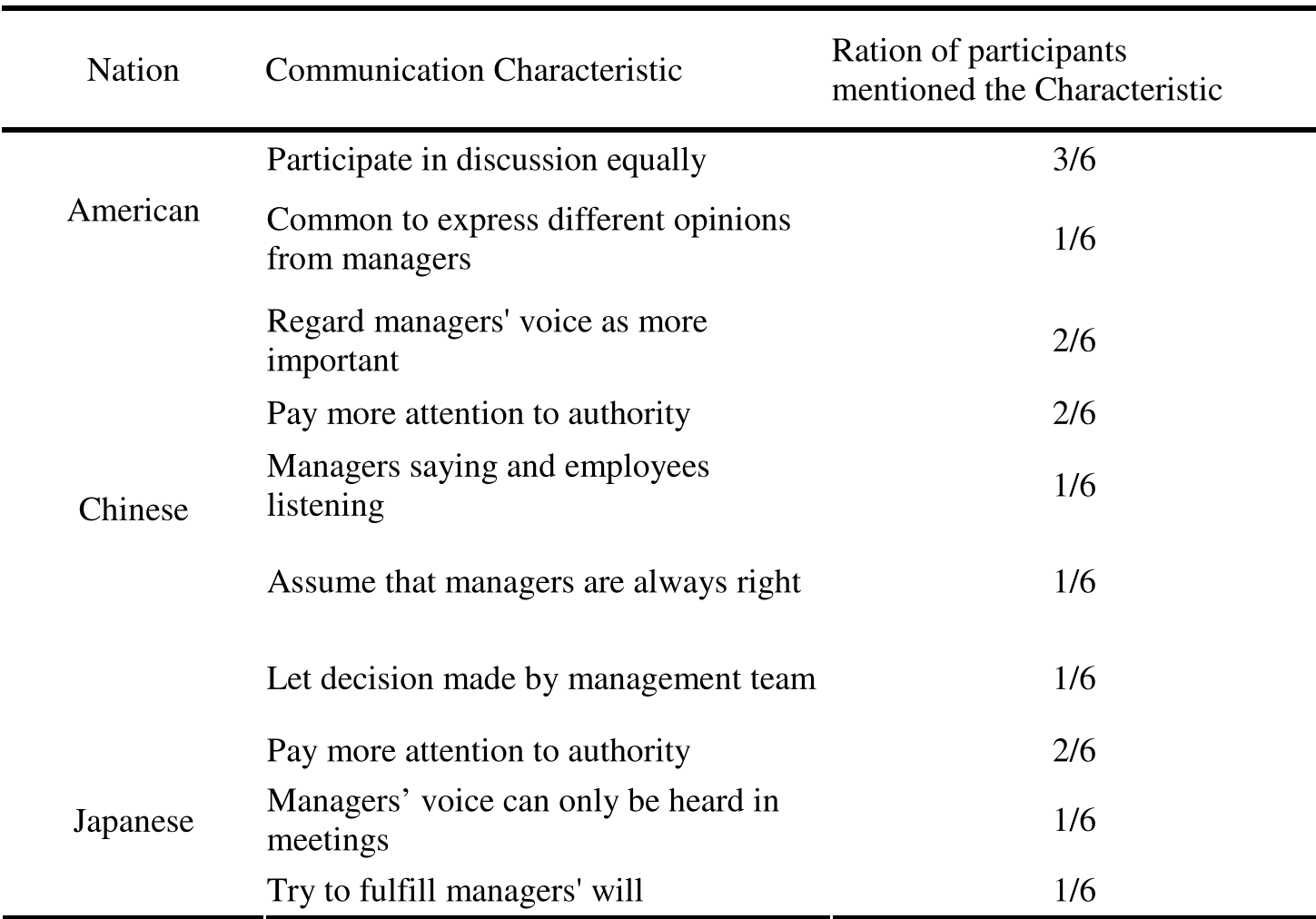
- Unequal Participation: High Power Distance in Asian cultures means you only hear the manager's voice. If the manager lacks technical details, the meeting fails even though experts are present in the room.
Critical Insight: The "Bad Impression" Trap
One of the most profound takeaways is the "Bad Impression" problem. Participants noted that "Listener-centered" individuals are frequently judged as "uninvolved or inactive" by "Speaker-centered" peers (Americans/Indians). This bias can lead to talented individuals being overlooked for promotions or their ideas being dismissed simply because their cultural "tempo" didn't match the dominant group.
Conclusion & Future Outlook
The paper concludes that "Language" (vocabulary/grammar) is only the tip of the iceberg. The real challenge lies in the Cultural Awareness of communication logic.
Future Work: The authors suggest moving from interviews to real-world "Field Studies" to observe these dynamics in real-time, especially as video cues (and now AI transcription) provide new layers to how we interpret the "silences" and "indirectness" of our global colleagues.