
DeepRec: Bridging Social Circles and Shopping Carts via Reinforcement Learning
Cross-platform dynamic goods recommendation system based on reinforcement learning and social networks
This paper introduces a cross-platform dynamic recommendation system that integrates social network data (Sina Weibo) with e-commerce behavior (Taobao). By employing Reinforcement Learning (RL) and Edge Computing, the system—termed DeepRec—models both direct and potential user relationships to achieve SOTA performance in friend and product recommendations.
TL;DR
The divide between social media activity and e-commerce behavior represents a wasted opportunity for personalization. This paper presents a cross-platform dynamic recommendation system that uses Reinforcement Learning (RL) to bridge platforms like Sina Weibo and Taobao. By modeling "potential" friends and products rather than just historical data, it overcomes the classic Cold Start and Sparsity bottlenecks.
Background: The Static Fallacy
Most recommendation engines operate on a static snapshot of user data. However, human interests are fluid—a user might follow a football star today and purchase athletic gear tomorrow. Traditional Collaborative Filtering (CF) fails when a user is new (Cold Start) or has niche tastes (Gray Sheep). The authors argue that the missing link is cross-platform intelligence: using social signals to predict commercial intent and vice versa.
Methodology: Beyond Direct Connections
The core innovation lies in the two-layer prediction architecture:
- Direct Prediction: Relies on explicit attributes (job, city, age) and known purchase history.
- Potential Prediction: Uses a probabilistic approach to find "friends of friends" or hidden item similarities that haven't triggered a transaction yet.
The RL Engine
To handle the "Dynamic" aspect, the authors don't just train a static model; they deploy an RL Agent.
- State (): The current category label of a social or product connection.
- Action (): Adjusting the weight of specific user attributes or preference vectors.
- Reward (): Defined as the negative cross-entropy loss.
By utilizing a Radial Basis Function (RBF) network for function approximation, the agent can converge faster than standard neural networks, making it suitable for real-time updates at the "Edge" of the network.
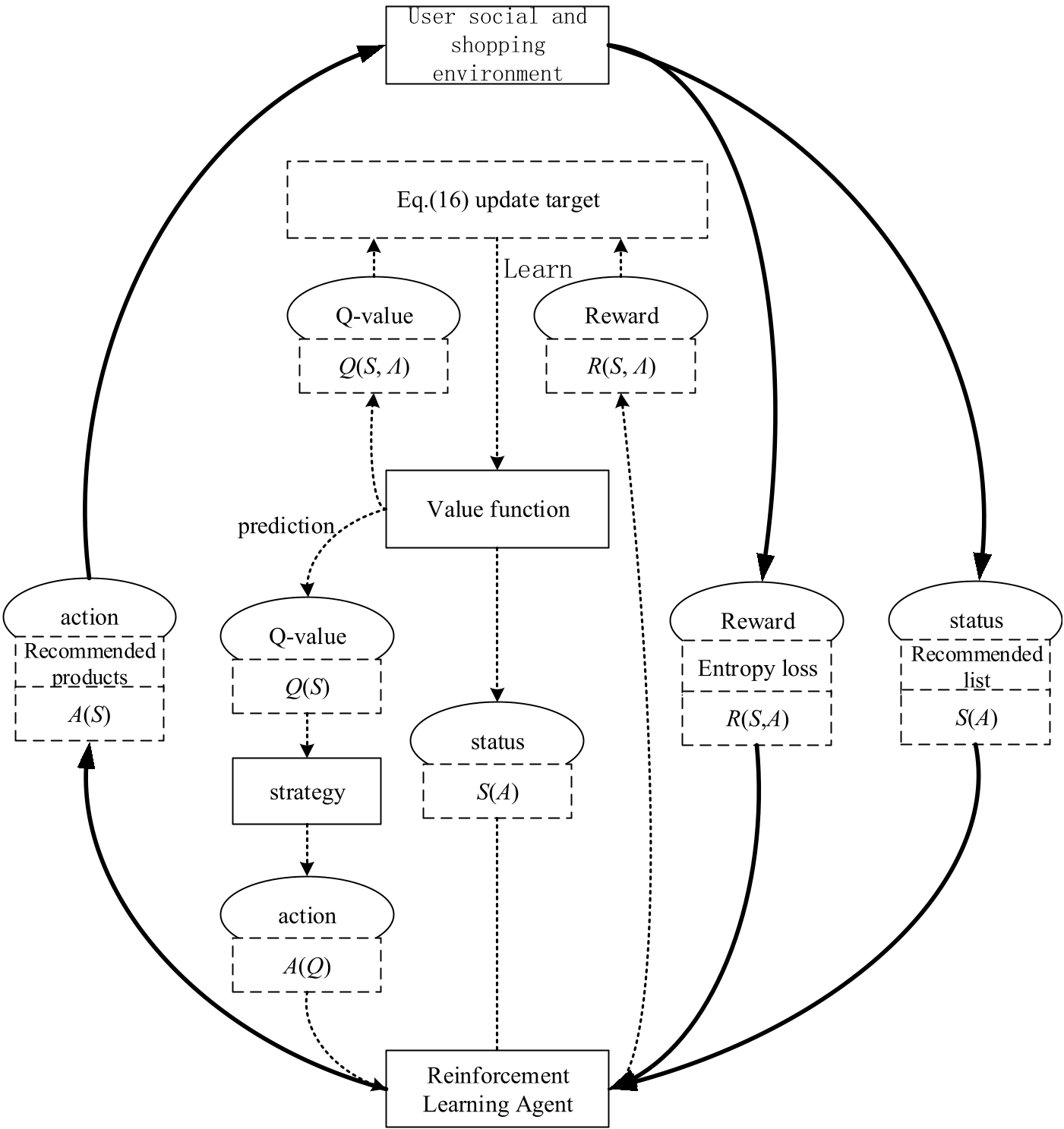 Fig 1. The Reinforcement Learning loop: State, Action, and Reward cycle for dynamic preference adjustment.
Experimental Validation
The researchers tested their system on a real-world dataset combining Sina Weibo and Taobao user IDs. They compared their approach (DeepRec) against several baselines, including TDRec and adaptive KNN systems.
Key Findings:
- Friend Prediction: DeepRec showed a significant advantage in F-measure and AUC, proving that "potential relationship" modeling identifies future friends better than profile-matching alone.
- Product Accuracy: By incorporating social influence (e.g., if many friends buy footballs, the target user's preference for footballs increases), DeepRec maintained high precision even as the recommendation list length increased.
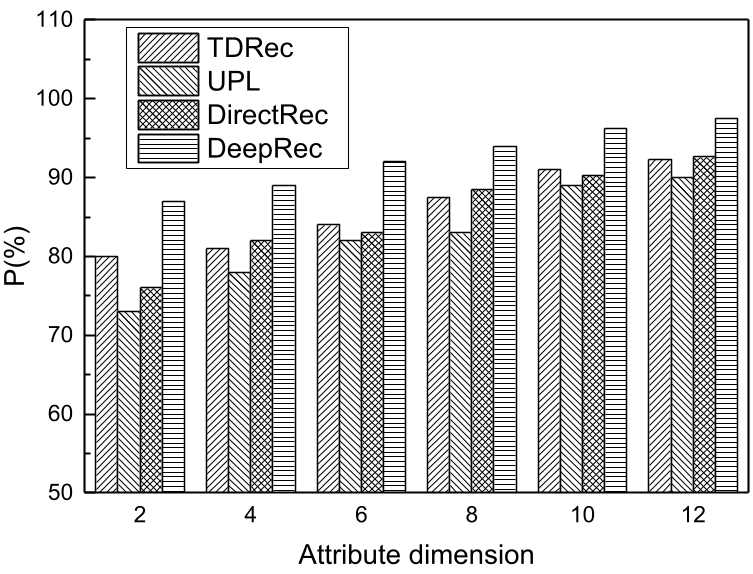 Fig 2. Performance comparison across different attribute dimensions.
Critical Insight: Why it Works
The "secret sauce" is the Adamic/Adar index used to calculate social influence, which is then fed into the RL state. This allows the model to quantify how much a user is influenced by their social circle versus their own history. In a world where privacy regulations make data silos common, this method shows that even high-level, cross-platform social metadata can drastically reduce the need for deep, invasive tracking on a single platform.
Conclusion & Future Work
DeepRec successfully demonstrates that dynamic evolution is the key to modern recommendations. While the current implementation faces challenges with scaling to millions of users due to RL's computational overhead, the shift toward Edge Computing and Distributed Learning (as noted by the authors) will be the next frontier in making these cross-platform insights instantaneous.
Takeaway for Architects
If your recommendation system struggles with new users, stop looking deeper into your own database. Look at the latent social manifold surrounding the user on other platforms.