
Truncated InceptionNet: Breaking the Population Bias in Tuberculosis Screening
Cross-Population Train/Test Deep Learning Model: Abnormality Screening in Chest X-Rays
This paper introduces a cross-population validation framework for detecting Tuberculosis (TB) in Chest X-rays (CXRs) using a modified InceptionNet V3. It demonstrates for the first time that a deep learning model trained on data from one geographic region (e.g., China) can effectively generalize to another (e.g., USA), achieving SOTA-level cross-dataset AUC scores.
Executive Summary
TL;DR: This study addresses a critical gap in medical AI: Population Bias. By training a modified InceptionNet V3 on one global region (Shenzhen, China) and testing it on another (Montgomery County, USA), the authors provide the first evidence that deep learning can achieve robust cross-population Tuberculosis (TB) screening without needing local retraining.
Background: Most Computer-Aided Diagnosis (CAD) systems are "territory-locked." They perform excellently on their original datasets but fail in the real world due to anatomical and equipment variations across different global populations. This work sits at the intersection of Transfer Learning and Model Generalization.
Problem & Motivation: The "Data Silo" Problem in Radiology
Traditional machine learning evaluations involve splitting a single dataset into train and test sets. While this yields high accuracy, it masks a systemic weakness: the model learns the specific "signature" of a single population or hospital.
In the context of TB—a disease that kills millions in under-resourced areas—we cannot wait to collect thousands of local images to train a model. We need systems that are "Deployment-Ready": trained in the West or Asia and immediately functional in sub-Saharan Africa. The challenge is the "Domain Shift" caused by different X-ray machines and ethnic anatomical differences.
Methodology: Engineering for Robustness
The authors didn't just throw a standard model at the problem. They implemented three strategic modifications to handle the small, noisy nature of medical datasets:
- Model Truncation: Unlike the massive 48-layer InceptionNet used for ImageNet, this version was truncated after the fourth concatenation layer. This prevents the model from "memorizing" (overfitting) the small CXR datasets and forces it to focus on more generalizable features.
- Texture-Aware kernels: TB manifests as subtle textural changes. The Inception module’s parallel 1x1, 3x3, and 5x5 filters allow the model to capture features across varying spatial scales.
- Advanced Preprocessing: The pipeline uses Atlas-based segmentation to isolate the lungs and CLAHE (Contrast Limited Adaptive Histogram Equalization) to normalize image contrast, creating a more uniform input for the CNN.
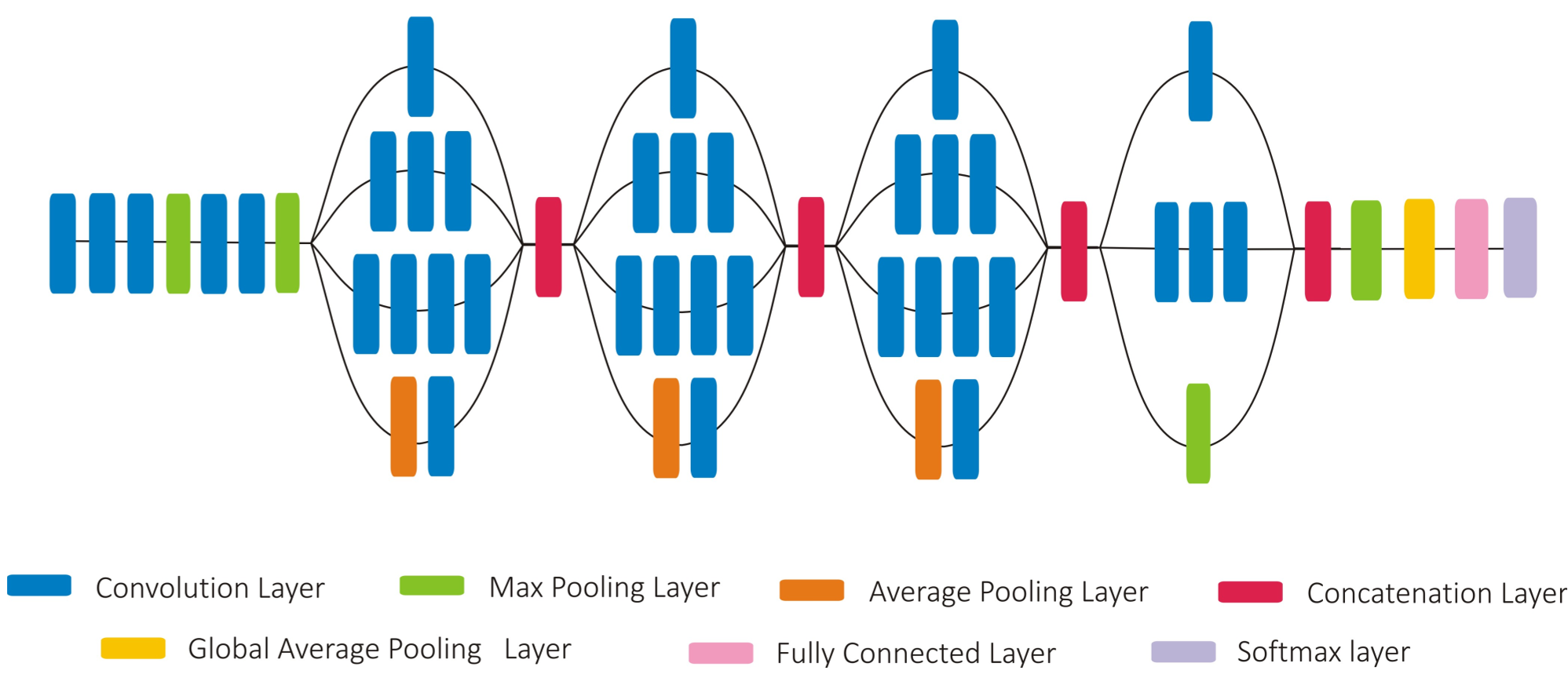 Figure 1: The truncated InceptionNet architecture designed to prevent overfitting on limited CXR samples.
Experiments & Results
The study utilized two benchmarks: the Shenzhen (CH) and Montgomery (MC) collections.
The Cross-Population Test
When trained on Chinese data and tested on American patients (and vice versa), the model maintained high reliability:
- CH MC: 76.05% Accuracy | 0.84 AUC
- MC CH: 71.47% Accuracy | 0.79 AUC
The lower performance when training on the USA dataset is attributed to its smaller size (about 1/5th of the China dataset), proving that diversity in training data is the primary driver of cross-population success.
Comparison with Handcrafted Features
Interestingly, the authors compared their results with traditional feature-engineering methods (using edge and shape symmetry). While traditional methods showed slightly more stability, the deep learning model demonstrated a much higher ceiling for improvement when data from both populations were combined.
 Figure 2: The standard preprocessing pipeline: from raw CXR to segmented, contrast-enhanced ROIs.
Critical Analysis & Conclusion
Takeaway: This research proves that Deep Learning isn't just for "big data" environments. With proper architectural pruning (truncation) and domain-specific preprocessing, these models can bridge the gap between different global populations.
Limitations:
- The absolute accuracy in cross-population tests (roughly 71-76%) is lower than intra-dataset tests (nearly 90%).
- The model still struggles with dataset imbalance (more normal cases than abnormal in some sets).
Future Outlook: The future of global CAD lies in Combined Population Training. As shown in the study's extension, merging diverse datasets pushed the AUC to 0.95. The goal for the industry should be the creation of a "World CXR Model" that aggregates data from every continent to eliminate demographic bias entirely.