
CrowdOut: Turning Citizens into Guardians of Road Safety in Digital Cities
CrowdOut: A mobile crowdsourcing service for road safety in digital cities
CrowdOut is a mobile crowdsourcing service designed for Android that improves road safety in digital cities by allowing citizens to report traffic offenses in real-time. The system integrates GPS localization, photo uploads, and community mapping to create a "safety heat map" for both residents and urban planners.
TL;DR
CrowdOut is an innovative mobile crowdsourcing platform that empowers citizens to report road safety issues—such as illegal parking and speeding—in real-time. By mapping these incidents, it provides a transparent safety index for residents and a strategic data tool for city administrators to refine urban planning.
Problem & Motivation: The Gap in Urban Safety
In the evolution of Smart Cities, there is a persistent disconnect between theoretical city management and the actual lived experience of residents. Traditional road safety monitoring is often reactive, relying on accidents or periodic enforcement.
Prior works have attempted to map urban issues, but they often face a dual challenge:
- The Privacy-Utility Tradeoff: Sharing photos of traffic violations helps prove an incident but risks exposing personal data like license plates.
- Data Scalability: Sending high-resolution imagery to thousands of mobile clients simultaneously bottlenecks network performance.
The researchers behind CrowdOut identified an opportunity to bridge this gap using the Mobile Crowdsourcing paradigm, turning every smartphone into a sensor for the public good.
Methodology: Architecture and Privacy-First Design
CrowdOut utilizes a robust Client-Server Architecture. The Android application serves as the "content producer," while the backend (MySQL and Java-based server) acts as the aggregator.
The Multi-Tier Functionality
- User Reporting: Citizens select an offense icon (e.g., pedestrian risk, traffic jam), add a comment, and attach a photo.
- Real-time Mapping: The server generates XML data of active reports, which the mobile clients parse and display using the Google Maps API.
- Privacy-Aware Access Control: In a strategic move, the system distinguishes between Public Markers (visible to all) and Evidence Photos (visible only to administrators). This prevents the platform from becoming a "public shaming" tool and protects sensitive information.
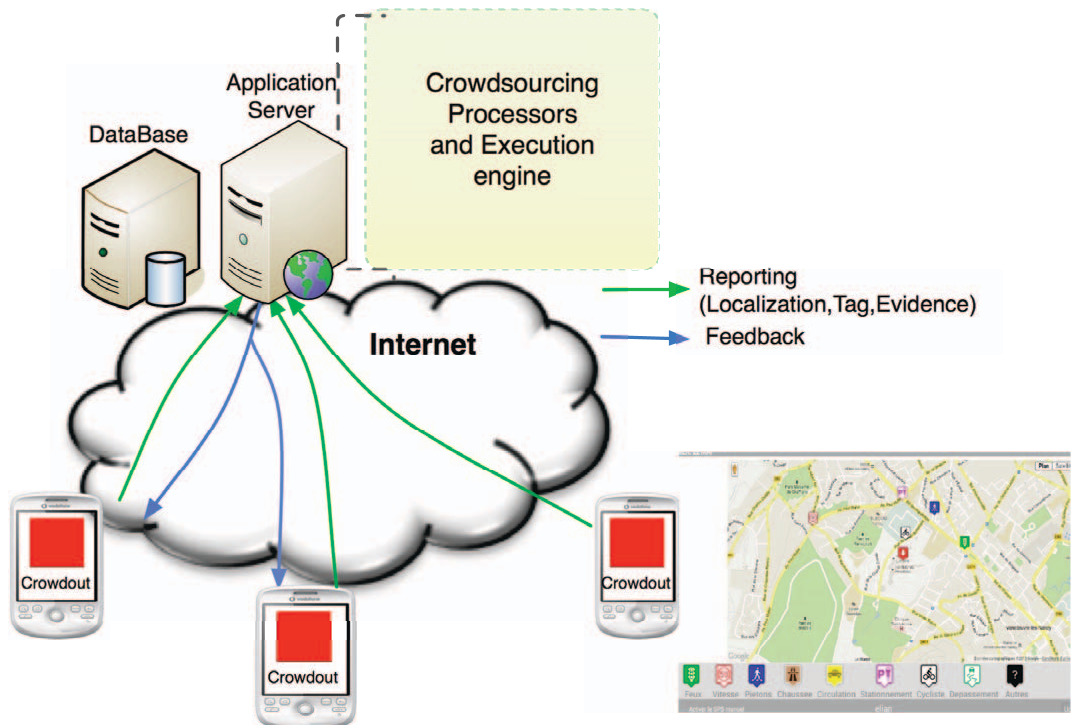 Fig 1. High-level architecture illustrating the flow between mobile clients and the central repository.
Experiments & Results: Real-World Testing
The prototype was deployed in Grand Nancy, France, and showcased at the Futur-en-Seine festival in Paris.
Insights for Administrators
The system provides more than just a map; it generates statistical distributions of urban friction. For example, by analyzing the frequency of reported "Illegal Parking" on bike lanes, city planners can objectively justify building physical barriers or increasing patrols in specific districts.
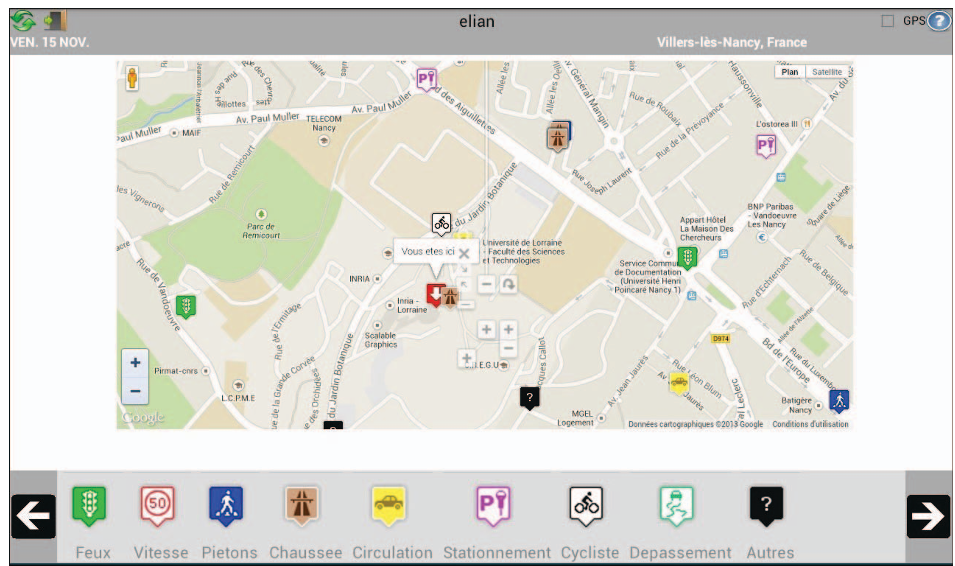 Fig 2. The intuitive Android UI designed for rapid reporting in high-stress urban environments.
Key Quantitative Feedback:
- User Acceptance: Testing at Living Labs revealed that users preferred a simple, icon-driven interface over text-heavy inputs.
- System Reliability: The inclusion of a manual GPS override button proved critical during urban "canyoning" where satellite signals are weak.
Critical Analysis & Future Outlook
CrowdOut represents a significant step toward Participatory Sensing, but it faces challenges that the authors recognize as areas for future growth:
- The Trust Factor: How do we prevent malicious users from "spamming" fake reports to clear a street for their own benefit? The authors suggest implementing Reputation-based Score Mechanisms (like EigenTrust).
- Privacy Automation: Future iterations would benefit from automated blurring algorithms to anonymize people and vehicles directly on the edge (the smartphone) before upload.
- Scaling Architecture: Moving from a traditional Client-Server model to a Peer-to-Peer (P2P) or Cloud-based architecture will be necessary as the user base grows from hundreds to millions.
Conclusion
CrowdOut isn't just an app; it’s a Social Control Loop. It transforms the citizen from a passive consumer of urban infrastructure into an active participant in its maintenance, creating a safer, more transparent digital city.