
CrowdSLR: Scaling Systematic Literature Reviews with Collective Intelligence
CrowdSLR: a tool to support the use of crowdsourcing in systematic literature reviews
CrowdSLR is a specialized open-source tool designed to facilitate the selection phase of Systematic Literature Reviews (SLRs) through crowdsourcing. It acts as an integration layer between researchers and microtask platforms like Clickworker, automating study distribution and result collection to reduce manual labor in Software Engineering evidence synthesis.
TL;DR
Systematic Literature Reviews (SLRs) are the backbone of Evidence-Based Software Engineering, but the sheer volume of new publications makes manual screening nearly impossible. CrowdSLR is an open-source tool that enables researchers to "delegate" the tedious study selection process to a global crowd. By bridging the gap between academic rigor and crowdsourcing platforms, it reduces the time-to-results for evidence synthesis without sacrificing quality.
The "Reviewer Fatigue" Problem
The Software Engineering (SE) community relies on SLRs for reliable scientific evidence. However, an SLR is often a victim of its own success: the more research we produce, the harder it becomes to review. Traditional methods are:
- Labor-intensive: Screening thousands of titles and abstracts is mind-numbing work.
- Expensive: High-level researchers spend hundreds of hours on binary "Include/Exclude" decisions.
- Bottlenecked: Full automation via NLP is still not 100% reliable for nuanced inclusion criteria.
The author's insight is that while we can't fully automate judgment yet, we can distribute it. Crowdsourcing offers a middle ground, but generic platforms like Amazon Mechanical Turk aren't built for the specific logic of an SLR (e.g., screening against specific Inclusion/Exclusion criteria).
Methodology: How CrowdSLR Works
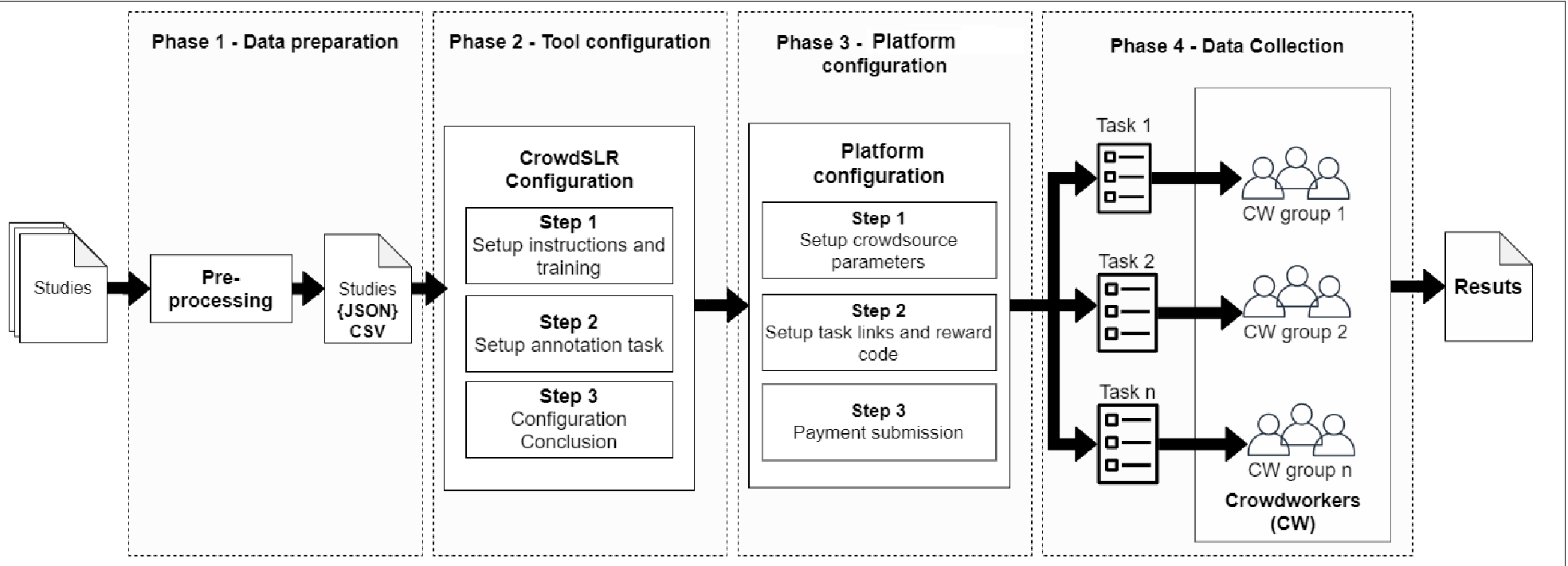
CrowdSLR acts as a specialized "middleware." It doesn't replace platforms like Clickworker; it makes them usable for scientists.
1. The Architecture
The tool is built on a lightweight PHP backbone. Interestingly, it avoids heavy databases, using JSON files for portability. This allows researchers to deploy an instance on almost any public server (like Apache) in minutes.
2. The Crowdworker Lifecycle
To ensure quality (the biggest fear in crowdsourcing), CrowdSLR implements a rigorous three-step flow for the worker:
- Phase 1: Training: Workers classify "Oracle" studies (pre-verified by the researcher). If their score is too low (e.g., <75%), their future work is flagged.
- Phase 2: Execution: The worker reviews the Title and Abstract, providing a decision and a confidence level.
- Phase 3: Validation: "Attention tests" are embedded to catch "non-committed" workers who are just clicking buttons for rewards.
Experimental Validation: Proof of Concept
The authors tested CrowdSLR using a set of 24 articles (4 for training, 20 for tasks) and 180 crowdworker responses.
Key Findings:
- Reliability: By aggregating votes from workers who passed the training phase, the "crowd decision" accurately matched the expert "Oracle" decision.
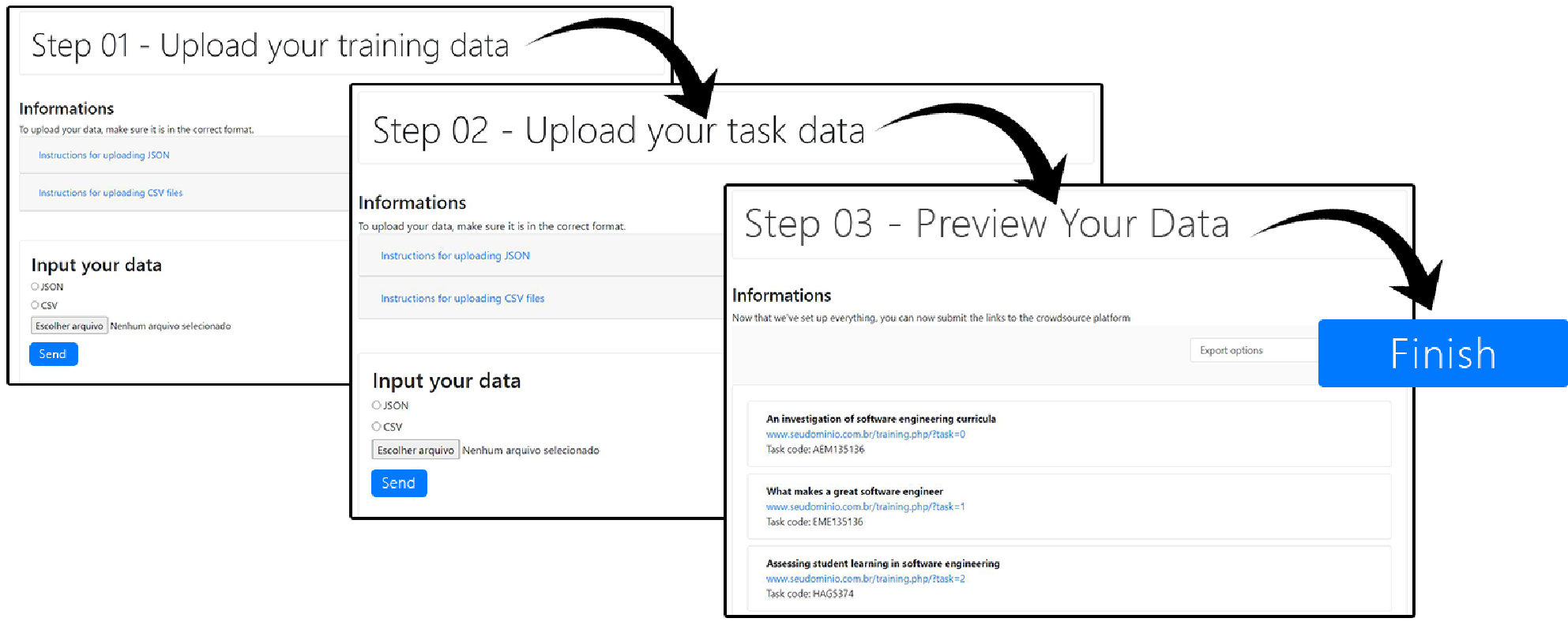
- Efficiency: The tool automated the generation of microtask links and the consolidation of results into a clean CSV format, eliminating the manual spreadsheet nightmare typically associated with such tasks.
Critical Insight & Future Outlook
The real value of CrowdSLR isn't just in "doing the work"—it's in the quality control infrastructure. By providing a specialized interface for scientific screening, it solves the "trust gap" in crowdsourcing.
Limitations to Consider:
- Currently, the tool focuses on Title and Abstract screening. Full-text analysis remains a challenge due to copyright issues and the complexity of deep technical reading.
- Incentive Design: The effectiveness of the crowd is highly dependent on how much you pay (the authors used 10-20 Euros for their test) and how you define your target group interests.
Conclusion: CrowdSLR is a significant step toward "High-Throughput Science" in Software Engineering. As we move toward 2026 and beyond, tools that facilitate the human-in-the-loop processing of massive datasets will be essential for keeping scientific syntheses up to date.
Source: Santos et al. (2021). "CrowdSLR: a tool to support the use of crowdsourcing in systematic literature reviews." SBES '21.