
CLAS: Bridging the Gap Between Human Insight and Model Efficiency in Student concentration Assessment
A Crowdsourcing-Based Approach to Assess Concentration Levels of Students in Class Videos
This paper introduces the Concentration Level Assessment System (CLAS), a hybrid framework combining a Markovian Doze-and-Wake Model (DAWM) with crowdsourcing to monitor student focus in class videos. By using the model to predict student states and only querying crowd workers when confidence is low, the system achieves up to 98% accuracy.
TL;DR
The Concentration Level Assessment System (CLAS) is a strategic hybrid that uses a Doze-and-Wake Model (DAWM) based on Markov chains to predict student focus. It only employs human "crowd workers" when the model is uncertain, achieving a staggering 98% accuracy with an 86% reduction in cost compared to manual labeling.
Background: The Cost of Attention
In modern digital and physical learning environments, understanding student engagement is vital for both personalized review and pedagogical adjustment. However, we've hit a technical "trilemma":
- Expert Reviews are too expensive.
- Computer Vision (CV) fails in messy, real-world classroom lighting or when faces are partially obscured.
- Wearables are too intrusive for natural behavior.
The authors recognize that while humans are the ultimate "gold standard" for detecting subtle cues like eye-blinks or posture shifts, we shouldn't have to pay for every second of video if a student's state is highly predictable.
Methodology: High-Logic, Low-Cost
The heart of CLAS is the Doze-and-Wake Model (DAWM). It treats a student's state as a sequence of "Wake" () or "Doze" () blocks.
The Markovian Advantage
The system doesn't treat every video frame as an independent event. Instead, it calculates transition probabilities: If a student has been awake for 10 minutes, what is the likelihood they will stay awake for the next minute? If the probability is above a Confidence Threshold (e.g., 0.9), the system auto-labels the state. If it drops below, a microtask is sent to Amazon Mechanical Turk.
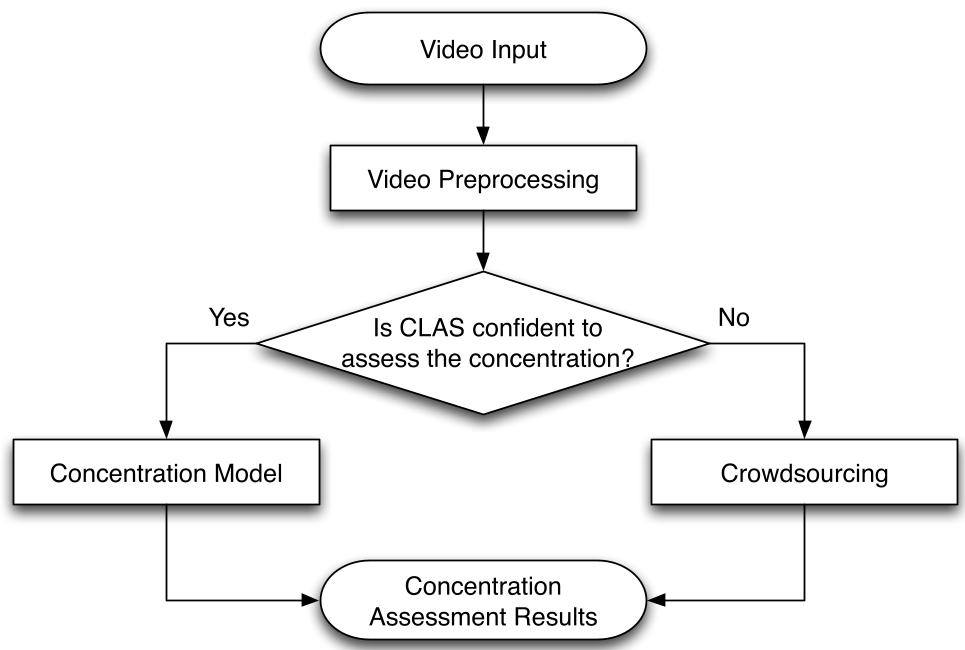 Figure 1: The CLAS Workflow—Integrating Video Pre-processing with Probabilistic Modeling.
Experiments and Insights
The research team tested CLAS using 513 minutes of graduate-level seminar footage.
The Pareto Frontier of Cost vs. Accuracy
By adjusting the sub-video length () and the confidence threshold, the authors found a "sweet spot." Setting the threshold at 0.9 provides the best balance. Interestingly, shorter sub-videos (100 seconds) yield much higher accuracy for detecting the "Doze" state than longer ones, as they capture shorter lapses in concentration.
 Figure 2: The Markov Chain governing state transitions in DAWM.
Key Findings:
- The "Glasses" Variable: Accuracy drops significantly when students wear glasses, as crowd workers find it harder to detect eye-blink patterns.
- Cost Efficiency: CLAS saved 86% of the budget compared to the standard "Exhaustive" crowdsourcing approach while maintaining near-perfect accuracy.
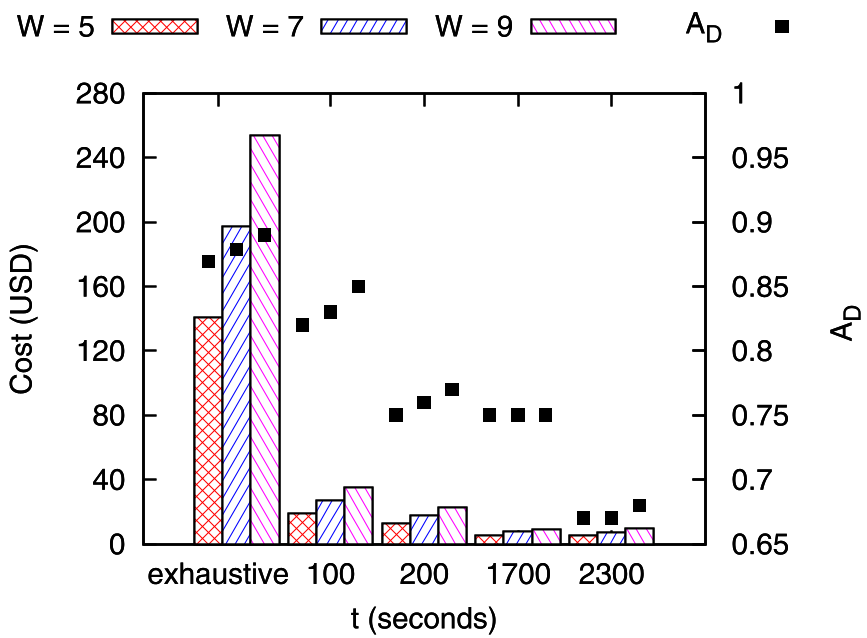 Figure 3: Monetary cost savings vs. Doze state accuracy.
Critical Analysis & Conclusion
CLAS proves that we don't need "perfect" AI to solve "perfectly human" problems. By using a simple Markov model as a filter, we can reserve expensive human intelligence for the moments that actually matter.
Limitations: The model relies on initial "Expert Data" to set transition probabilities. If a classroom dynamic changes (e.g., a high-intensity lab vs. a low-intensity lecture), the DAWM might need recalibration.
Future Outlook: This framework could easily be extended beyond the classroom—think driver fatigue monitoring or safety surveillance in high-stakes industrial environments. The synergy between probabilistic modeling and crowdsourcing is a powerful template for any task where "Human-Level Accuracy" is required but "Human-Level Cost" is not sustainable.