
Ride ATC: Leveraging Crowdsourcing and Bluetooth Beacons for Low-Cost Bus Tracking
Collecting Bus Locations by Users: A Crowdsourcing Model to Estimate Operation Status of Bus Transit Service
This paper presents "Ride ATC," a crowdsourcing-based bus tracking system that utilizes onboard passengers' smartphones to detect Bluetooth beacons installed on buses. The method eliminates the need for expensive GPS/cellular hardware on every vehicle, enabling small-scale operators to offer real-time location services.
TL;DR
The paper introduces a sustainable, crowdsourced bus location service designed for small transit operators. By replacing expensive onboard GPS units with $20 Bluetooth beacons and leveraging the smartphones of passengers, the "Ride ATC" system provides high-frequency real-time tracking without the heavy infrastructure costs of traditional Intelligent Transportation Systems (ITS).
Background: The Cost Barrier of Small-Scale Transit
Real-time bus tracking is a critical factor in passenger satisfaction and service reliability. However, small bus operators face a paradox: the fewer buses they run, the more passengers need to know exactly where they are—yet these small operators are the least likely to afford the GPS receivers and cellular data plans required for every vehicle in their fleet.
Current SOTA (State-of-the-Art) solutions generally follow two paths:
- Onboard GPS/Cellular: High hardware and recurring data costs.
- Environmental Detectors: High infrastructure costs for installing sensors at every bus stop.
The authors argue that for a smart city to be truly sustainable, it must be inclusive of small-scale operators through lower entry barriers.
Methodology: The User-as-a-Sensor Paradigm
The core innovation of the Ride ATC (Ride Around-The-Corner) application is shifting the sensing task from the operator to the passenger.
1. System Architecture
Instead of complex telemetry hardware, the operator installs a simple Bluetooth Beacon on each bus.
- The Beacon: Broadcasts a unique UUID and Minor ID (identifying the specific vehicle).
- The App: When a passenger's phone scans the beacon, it captures the phone's own GPS location and sends a packet (Timestamp + Bus ID + Location) to the cloud.
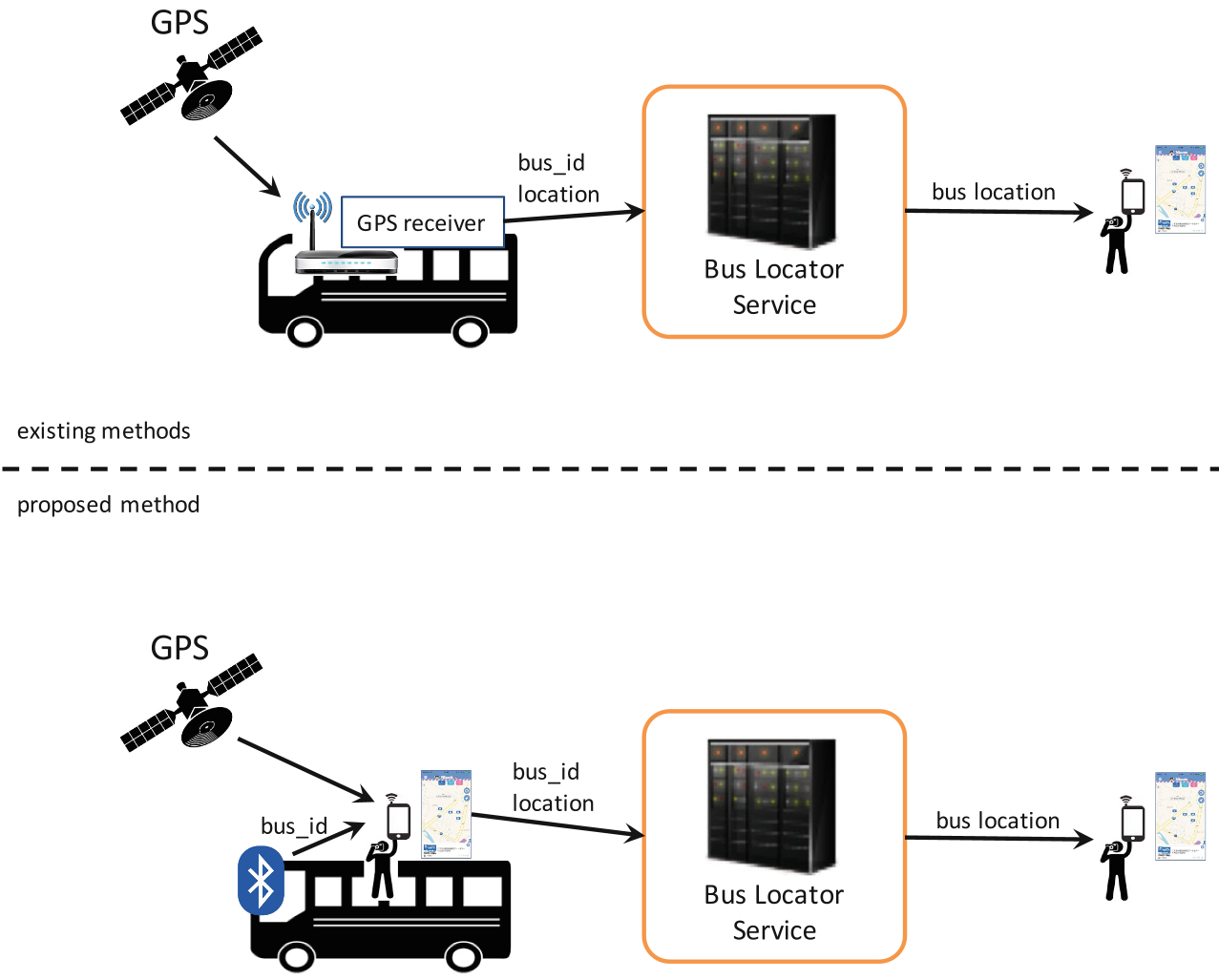 Figure 1: Comparison between traditional GPS-based tracking and the proposed crowdsourced beacon approach.
2. Strategic Sensing Locations
The authors also suggest placing beacons at Bus Stops. This enables the system to:
- Identify waiting passengers.
- Verify boarding/alighting events.
- Provide "Watching Services" (e.g., notifying a parent when a child arrives at a specific stop).
The "Motivation" Insight
A common critique of crowdsourcing is the "participation gap"—what happens if no one on the bus has the app? The authors offer two compelling counter-arguments:
- Mutual Benefit: Unlike voluntary street-reporting (like FixMyStreet), the people providing the data are the ones who benefit most from the service. The motivation to keep the service accurate is built-in.
- External Sensing: A passenger sitting at a bus stop or a pedestrian on the sidewalk can "detect" a passing bus's beacon, meaning a data provider doesn't strictly need to be on the bus to contribute.
Experimental Results and Data Density
The authors conducted preliminary trials in Sapporo, Japan, in partnership with Hokkaido Chuo Bus Co.
- Accuracy vs. Integrity: While traditional GPS systems provide 100% "integrity" (coverage of all sections), they often have low "density" (reporting once per minute).
- High Frequency: Because the Ride ATC app scans in the background, it can transmit location data every second, providing much smoother movement visualization on maps than traditional systems.
- Data Interpolation: For segments where no user is present, the system uses historical travel times to estimate positions, though the authors admit that verifying the accuracy of these estimates remains a future task.
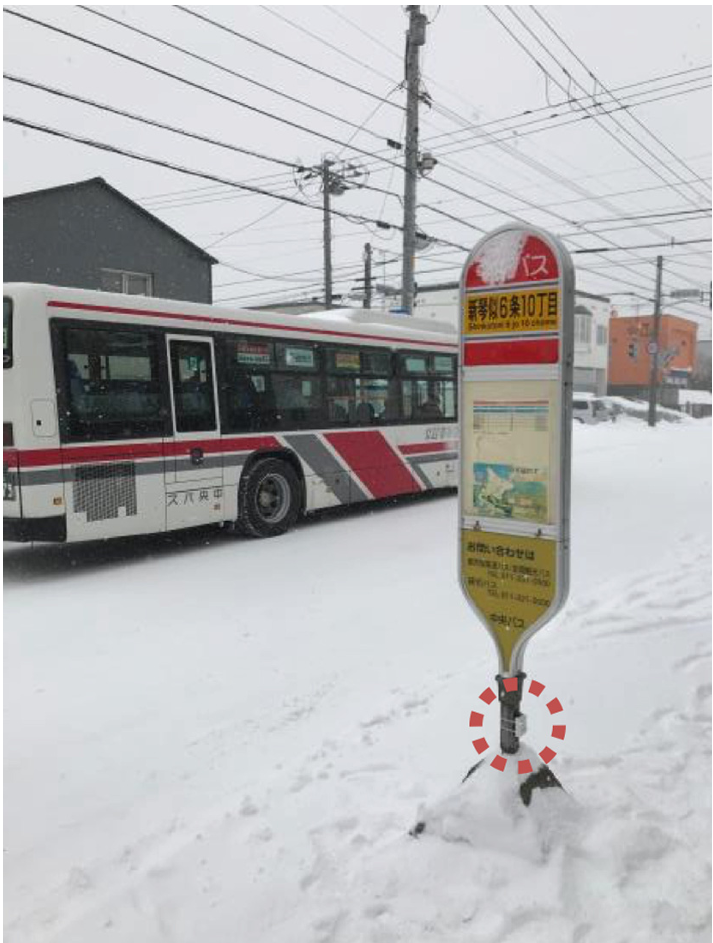 Figure 2: Real-world deployment of a beacon at a base of a bus stop column.
Critical Analysis: Is it Truly Viable?
Ride ATC presents a brilliant "hack" for the economics of transit. However, from a technical perspective, two challenges remain:
- Cold Start Problem: If 0% of riders use the app, the system provides 0 information. The authors suggest that one user is enough to "activate" a bus, but in low-density rural routes, the "0-user" scenario is highly probable.
- Battery Consumption: Continuous Bluetooth scanning and GPS transmission on user devices is a significant drain. Future work would need to optimize "Sensing Scheduling" to save battery.
Conclusion
This paper moves the needle for Smart City research by proving that high-tech results don't always require high-cost infrastructure. By utilizing the existing smartphone ecosystem, the Ride ATC model provides a blueprint for democratizing real-time transit data for small operators and neglected suburban routes.
Future Outlook: The integration of "Watching Services" adds a social safety layer that traditional GPS trackers lack, suggesting that crowdsourced transit data can offer value-added services far beyond just "where is the bus."