
Crowdsourcing the Smart City: Revolutionizing Citizen Engagement in Small Urban Hubs
Crowdsourcing: Tackling Challenges in the Engagement of Citizens with Smart City Initiatives
This paper presents a crowdsourcing-inspired framework for citizen engagement in Smart City (SC) initiatives, specifically applied to Cork City, Ireland. By mobilizing a collaborative network of academics, local government, and student volunteers, the study achieved a wide-scale assessment of local needs for project prioritization.
TL;DR
Smart City (SC) projects often fail because they treat residents as subjects rather than stakeholders. This paper documents a successful experiment in Cork City, Ireland, where researchers bypassed expensive consultants by using a crowdsourcing-inspired model. By involving local students and academics, they achieved a representative survey of the city at one-third of the traditional cost, proving that engagement can be both high-quality and low-budget.
The Engagement Gap: Why Top-Down Fails
Most "Smart City" initiatives are technically impressive but socially hollow. They focus on installing sensors or testing "test-beds" without understanding the real urban challenges—like traffic congestion or waste management—from the perspective of those who live there.
The primary barrier for smaller cities (population < 500,000) is the "Prohibitive Trio": Cost, Design complexity, and Deployment logistics. Traditional consulting firms are often too expensive, and the resulting top-down plans lack local "ownership," leading to public apathy or resistance.
Methodology: Turning the Crowd into a Workforce
The authors didn't just ask for opinions; they built a collaborative ecosystem. Their methodology, inspired by the "Wisdom of Crowds" (Surowiecki, 2005), followed a tiered structure:
- Stakeholder Mapping: Identifying the mutual benefits between local government, the International Energy Research Centre (IERC), and University College Cork (UCC).
- Expert Crowdsourcing: Instead of hiring a firm, local academics were tapped to design five sets of rigorous surveys covering various demographics (General Public, Youth, Seniors, Officials).
- Deployment via Volunteers: 200 student volunteers from UCC and CIT carried out door-to-door interviews. They were motivated by academic credits, skill development, and "token incentives" rather than high salaries.
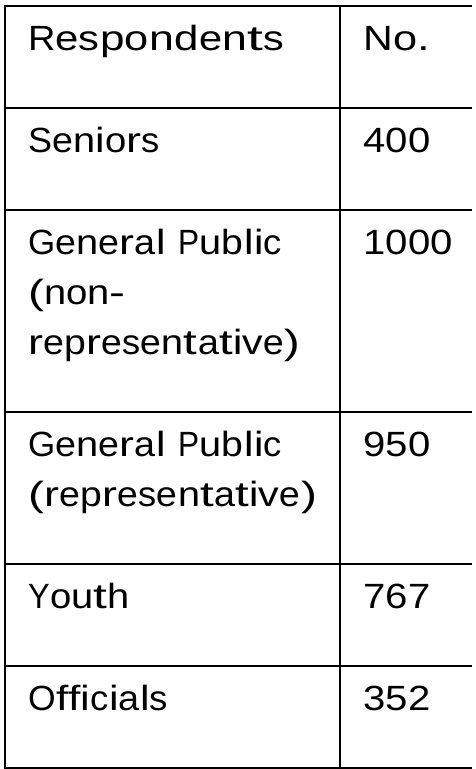 Table 1: Breakdown of respondents reached through the crowdsourced survey model.
Why This Worked: The Physics of Motivation
The paper emphasizes that this wasn't "free labor"—it was a value exchange.
- Students gained interpersonal skills and academic recognition.
- Academics gained access to a massive dataset for future research.
- The City Council gained high-volume, reliable data for project prioritization.
This alignment of incentives allowed the project to move faster than traditional initiatives that often stall at "finance thresholds."
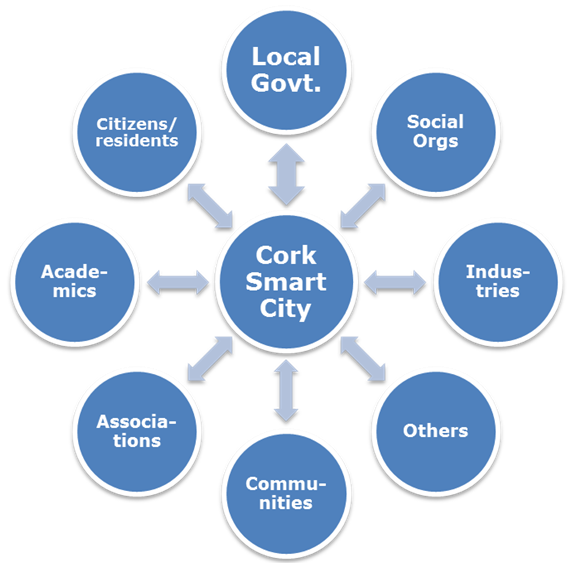 Figure 1: The complex mapping of economic, political, and social layers required to identify stakeholder boundaries.
Key Results and Impact
The impact of this approach was both quantitative and qualitative:
- Cost Efficiency: The strategy was at least 3x cheaper than traditional service providers.
- Scalability: Reached over 2% of the city’s total population, creating a "sizable baseline" for future planning.
- Trust Building: By engaging residents at the early design phase, the city fostered a sense of advocacy rather than just acceptance.
Critical Insight & Conclusion
The Cork City experiment suggests that the "Smart" in Smart City shouldn't just refer to the technology, but to the intelligence of the engagement strategy.
Limitations: While successful in a city with a high density of students and universities (like Cork), this model might be harder to replicate in industrial hubs or areas without strong academic partnerships. Furthermore, the reliance on volunteers requires a high level of coordination and "homework" in stakeholder mapping.
Final Takeaway: Citizen-led methods stand in sharp contrast to the typical "acceptability" approach. For cities with limited resources, the crowd isn't just a source of data—it’s the engine for delivery.