
Crowdsourcing the Urban Commons: A Community-Centric Strategy for Japan’s Vacant House Crisis
Supporting community-centric use and management of vacant houses: a crowdsourcing-based approach
The paper proposes an integrated crowdsourcing-based approach to manage the increasing number of vacant houses in Japan. It introduces an open-source, community-centric platform featuring three pillars: crowdsourced data collection, maintenance tasks, and idea generation for property repurposing.
TL;DR
As Japan faces a shrinking population, vacant houses (Akiya) are becoming a significant social burden. This paper presents an integrated crowdsourcing platform deployed in Kashiwa City that enables residents to collect data, perform maintenance, and brainstorm new uses for abandoned properties. By moving away from rigid, top-down city management toward a modular, "situated" mobile approach, the researchers aim to turn urban liabilities into community assets.
The "Akiya" Problem: Why Top-Down Fails
In 2008, over 13% of houses in Japan were already vacant—a figure that has only climbed since. These properties are not just "eyesores"; they pose fire risks, decrease neighborhood safety, and drain community vitality.
The current bottleneck is information and labor. National surveys occur only once every five years, providing data that is too coarse to be actionable. Meanwhile, city officials lack the budget to inspect every alleyway. Traditional civic apps often fail because they are "monolithic"—they work in one city but ignore the unique cultural "collective information practices" of another.
Methodology: The Three Pillars of Community Crowdsourcing
The authors argue that solving the vacant house crisis requires more than just a map; it requires a socio-technical ecosystem. Their platform is built on three distinct crowdsourcing modules:
- Data Collection: Using mobile devices to create high-resolution, frequently updated datasets that include maintenance history and precise conditions.
- Maintenance: Facilitating "gig-economy" style tasks (like cleaning or gardening) that can be performed by local seniors or neighbors, strengthening community ties while lowering costs for owners.
- Idea Generation: A participatory design space where residents suggest how a vacant house could become a library, a cafe, or a shelter.
Architecture Overview
The system follows a decentralized logic. Instead of a single giant database, it uses a modular setup:
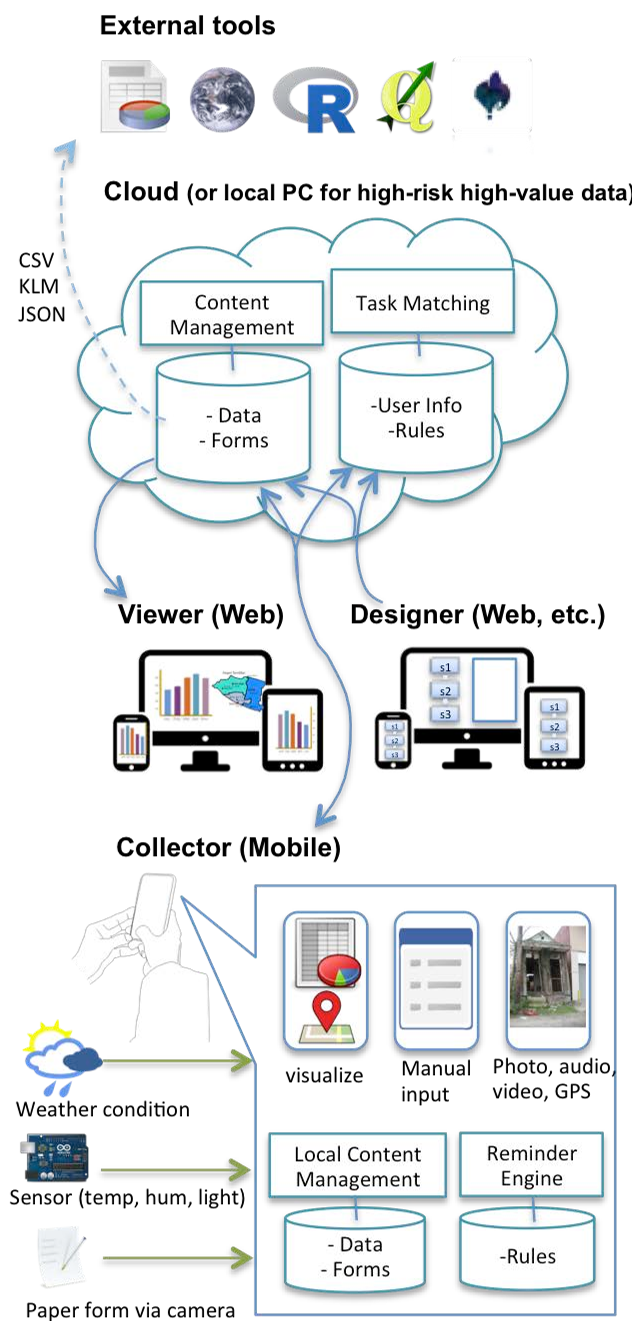
The platform consists of four key components: Collector (mobile app), Viewer (visualization), Designer (to customize forms), and a Server capable of running locally to protect sensitive owner data.
Real-World Deployment: Kashiwa City Pilot
In Kashiwa City, which struggles with approximately 20,000 vacant units, the researchers moved beyond simple Google Earth visualizations to a proactive system.
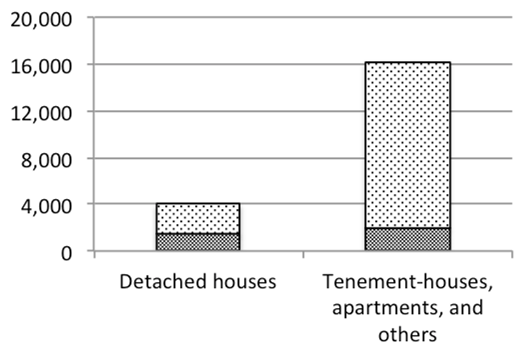
One of the most significant technical shifts was the move from User-Driven to System-Driven contributions. Instead of waiting for a volunteer to remember to take a photo, the system uses "Contextual Reminders" to prompt users when they are physically near a property that requires an update. This proactively reduces "data staleness."
Critical Insight: Why This Works
The brilliance of this approach lies in its Inductive Bias toward locality.
- Privacy First: By allowing communities to host their own servers, the researchers bypassed the typical "open data" friction regarding sensitive property owner information.
- Open Source Sustainability: By building on existing toolkits like Open Data Kit, they avoid the "develop-and-throwaway" cycle typical of civic technology.
Conclusion and Future Outlook
This work demonstrates that "Smart Cities" shouldn't just be about sensors and AI; they should be about empowering the humans living within them. The Kashiwa City project proves that crowdsourcing can effectively bridge the gap between municipal limitations and community needs.
However, questions remain regarding long-term incentives. While "intrinsic motivation" (pride in one's neighborhood) is a strong start, the authors suggest that future iterations might need to incorporate alternative currencies or formal monetary rewards to sustain the crowdsourced maintenance of Japan's aging architectural landscape.