
LuzDeploy: Crowdsourcing the "Hard Part" of Indoor Navigation
Crowdsourcing the Installation and Maintenance of Indoor Localization Infrastructure to Support Blind Navigation
This paper presents LuzDeploy, a physical crowdsourcing system designed to automate the installation and long-term maintenance of Bluetooth Low Energy (BLE) beacon infrastructure for blind indoor navigation (NavCog). By coordinating non-expert volunteers via a Facebook bot, the system achieves sub-meter localization accuracy comparable to expert-led deployments.
TL;DR
Assistive technologies often die in the lab because the real world is messy—batteries fail, and expert labor is expensive. LuzDeploy solves this by turning building occupants (students, employees, passers-by) into an "on-demand" maintenance crew through a Facebook bot. Utilizing micro-tasks, the system successfully installed and maintained an indoor navigation system for the blind in a 7-story university building with accuracy nearly matching expert standards.
The "Maintenance Gap" in Accessibility
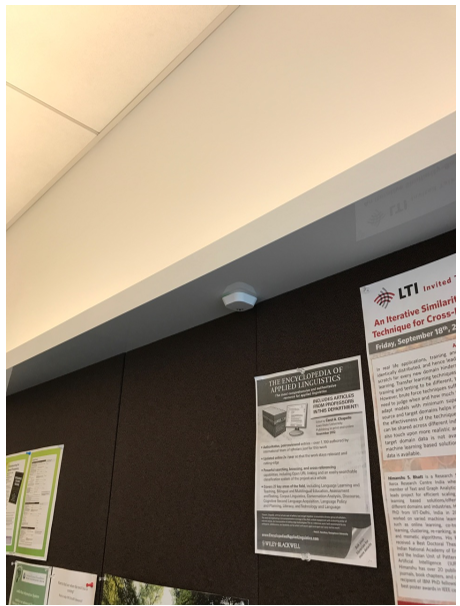
Current state-of-the-art indoor navigation for people with visual impairments, such as NavCog, relies on Bluetooth Low Energy (BLE) fingerprints. To work well, these systems require:
- Hundreds of beacons placed precisely.
- Massive data sampling (fingerprinting) to map signal strength.
- Constant vigilance for missing beacons or dead batteries.
Historically, this has required PhD-level experts or specialized contractors. Once they leave, the system begins to "decay." The authors identify this as the primary barrier to widespread adoption of indoor navigation.
Methodology: High-Level Coordination for Low-Level Tasks
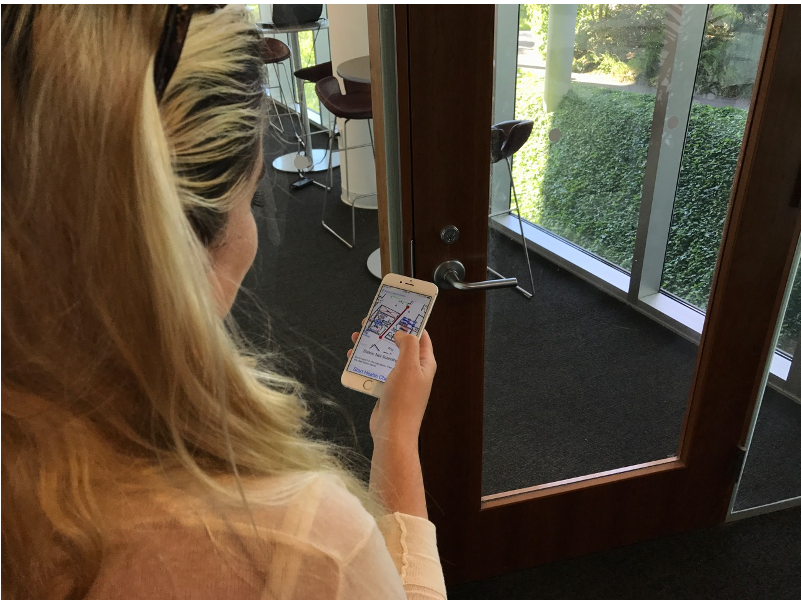
The genius of LuzDeploy lies in decontextualization. A volunteer doesn’t need to understand signal propagation or Trilateration. Instead, they interact with a Facebook Messenger bot that treats the building like a giant game board.
The System Architecture
The workflow is split into three technical components:
- LuzDeploy Bot: A state-machine-driven server that manages user progress, reminders, and task distribution.
- LuzDeploy Map: A web-based interface for administrators to mark targets and for workers to find placement spots.
- LuzDeploy Data Sampler: A specialized iOS app that bypasses Facebook's limitations to collect raw RSSI (signal strength) data.
Moving from "Event" to "Casual" Deployment
The paper explores two modes of human engagement:
- Event-Based: High-intensity bursts (e.g., an afternoon kickoff). This was great for initial beacon placement but suffered from high walking overhead.
- Casual-Based: Sporadic participation over months. By introducing batching—where a user picks up 5 beacons and places them in a logical sequence—the authors drastically reduced "walking waste" and improved user retention.
Experiments and Comparative Results
To validate the system, the authors pitted 127 non-experts against a LiDAR-equipped expert team.
Performance Benchmarks
While non-experts were naturally less precise, the resulting localization model was surprisingly robust.
- Expert Model: Median error of 1.2m.
- LuzDeploy (Crowd) Model: Median error of 1.6m.
For a person navigating a hallway, a 40cm difference (the width of a human shoulder) is often negligible if the system remains reliable near "decision points" like doors and turns.
The Incentive Spectrum
What makes people move? The authors tested:
- Altruism: High initial sign-up but low repeat engagement.
- Gamification: Leaderboards motivated "power users."
- Micropayments: Essential for high-density data sampling tasks (e.g., $0.125 per fingerprint).
Critical Insight: The Human as a "Sensor Actuator"
LuzDeploy proves that "Physical Crowdsourcing" is not just about labor; it's about distributed presence. The hardest part of ubiquitous computing isn't the code—it's having a pair of hands in the right hallway at the right time.
Limitations
- Platform Lock-in: The current reliance on iOS and Facebook Messenger limits the potential pool of volunteers.
- Authentication & Trust: The paper notes that "attaching things to walls" can be seen as vandalism. Future systems must navigate the social and legal hierarchies of public space ownership.
Conclusion
LuzDeploy provides a blueprint for the sustainable scaling of assistive infrastructure. By lowering the expertise floor and leveraging existing social networks, we can move from "smart building" prototypes to genuinely accessible indoor environments.
Takeaway: The future of smart cities isn't just better sensors; it's better systems for coordinating the people who live in them.