
Structuring Creativity: A Neuro-Fuzzy Approach to Crowdsourcing Innovation
A crowdsourcing development approach based on a neuro-fuzzy network for creating innovative product concepts
This paper proposes a prototype crowdsourcing system specifically designed for innovative product concept generation, utilizing a neuro-fuzzy network to optimize task allocation. The framework integrates target analysis, human intelligent task (HIT) allocation, and proactive cheating control to transform vague innovation goals into structured, high-quality contributions.
TL;DR
Innovation often feels like "lightning in a bottle," but this paper argues it can be engineered. By replacing intuitive task design with a Neuro-Fuzzy Network, the authors developed a system that not only filters out cheaters but strategically matches the complexity of crowdsourcing tasks to the creative freedom required for future product concepts.
The Problem: The "Quantity vs. Quality" Trap in Crowdsourcing
Crowdsourcing has long been celebrated as a way to aggregate the "wisdom of the crowd." However, for complex tasks like product innovation, the crowd often produces noise rather than signal. The authors identify three critical gaps in existing workflows:
- Lack of Structure: No unified framework exists to turn a broad "innovation goal" into specific tasks.
- Poor Task Design: Assignments (HITs) are often too rigid or too vague, failing to stimulate the right level of creativity.
- The Cheating Crisis: Because the crowd is anonymous and reward-driven, "rushed" or "random" responses are rampant, undermining data validity.
Methodology: Mapping Intuition via Neuro-Fuzzy Logic
The core innovation of this research is the Task Development Model, which moves away from "one-size-fits-all" surveys.
1. Innovation Target Analysis
The system first decomposes a product into features (e.g., shape, color, hardware) and assigns them a "Space for Creativity." This defines which parts of the product are fixed (incremental innovation) and which are open for radical reinvention.
2. The Neuro-Fuzzy HIT Allocator
How do you decide if a question should be a simple "Multiple Choice" or a complex "Paragraph Text"? The authors use a neuro-fuzzy network that processes three inputs:
- Degree of Innovation Freedom
- Required Human Input (Operation)
- Required Human Input (Attention)
By using fuzzy sets (terms like "Rather High" or "Medium"), the system reconciles the vagueness of design requirements with a quantitative output: the Task Level.
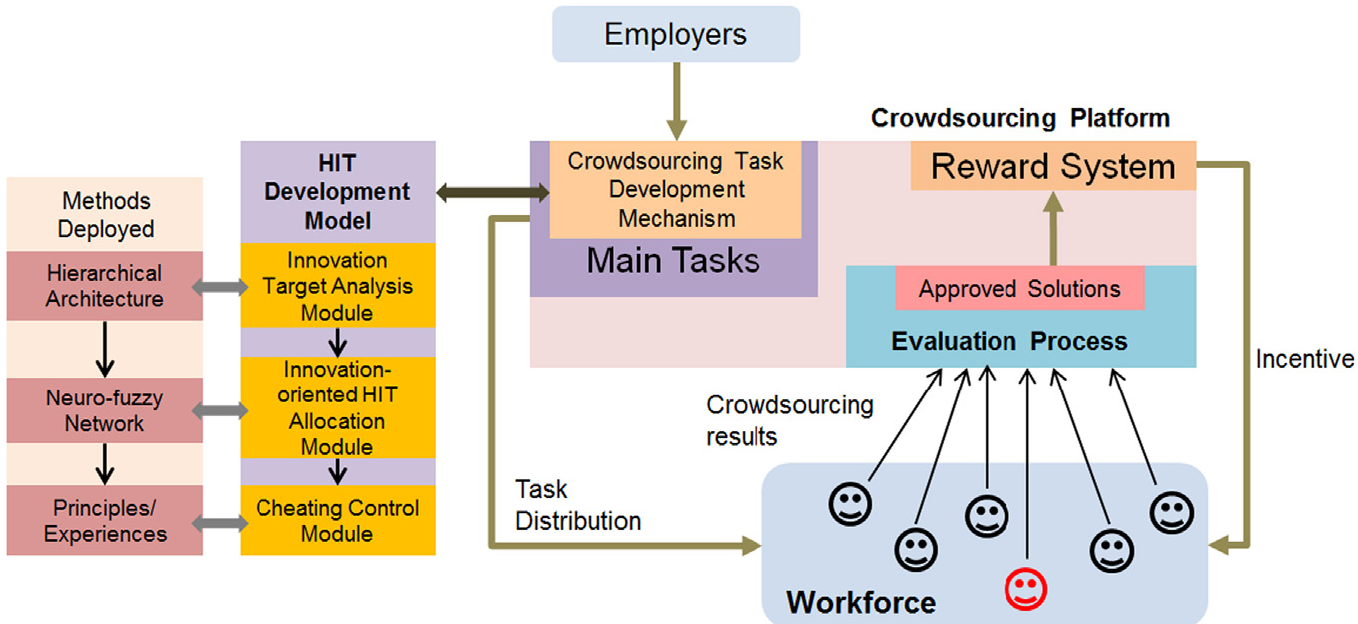 Figure 1: The framework of the proposed crowdsourcing system emphasizing the three-module task development mechanism.
3. Embedded Cheating Control
Instead of just filtering results after the fact, the system embeds "gold units" and verification questions directly into the workflow. By grouping similar questions and checking for consistency, the system identifies perfunctory participants in real-time.
Experimental Results: The LifeBook Case Study
The researchers applied their system to Fujitsu’s "LifeBook" (future PC design) project. They compared their approach against a typical crowdsourcing scheme used in industry.
| Metric | Typical Scheme | Proposed System |
|---|---|---|
| Valid Solutions (No Cheating) | 90.79% | 94.92% |
| Qualified Solutions | 86.96% | 91.07% |
| Excellent Innovative Ideas | 8.70% | 12.50% |
The proposed system generated fewer total responses but a significantly higher density of high-value, innovative concepts. This proves that a curated, more difficult task load can actually attract a higher caliber of creative thinking.
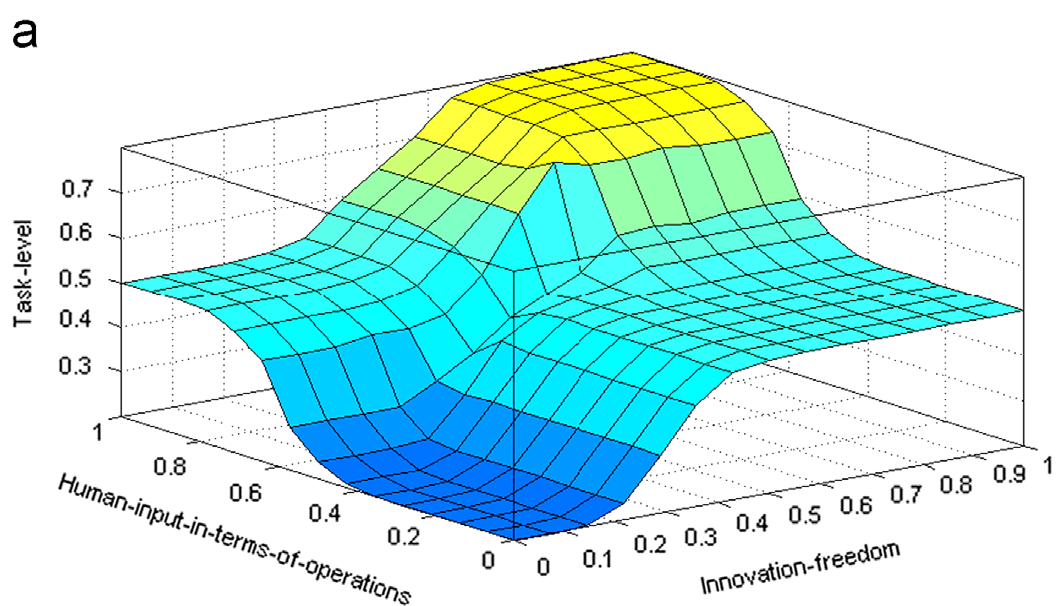 Figure 2: Surface view showing how Innovation Freedom and Human Input affect the final Task Level.
Deep Insight: Why This Matters
The fundamental takeaway is that "Innovation-Oriented Task Allocation" is a specialized discipline. Unlike data labeling (which is repetitive), innovation requires a delicate balance of "Freedom" and "Constraint." The neuro-fuzzy approach provides a mathematical bridge between the subjective world of "Design Thinking" and the objective world of "System Engineering."
Limitations and Future Work
- The Barrier to Entry: The system's higher task load (more attention required) led to a lower overall volume of participants.
- Incentive Alignment: To keep the crowd engaged in these higher-level cognitive tasks, future systems will likely need to integrate dynamic reward structures that match the "Task Level" assigned by the fuzzy network.
Conclusion
This paper serves as a blueprint for organizations looking to move beyond "suggestion boxes" and toward systematic co-creation. By treating the crowd as a precision tool rather than a mass resource, we can unlock the potential for truly radical product innovation.