
Beyond the Core: Scaling Community Activism via Crowdsourcing and Pointification
Using crowdsourcing to support pro-environmental community activism
The paper introduces a suite of mobile crowdsourcing applications designed to assist the "Close the Door" environmental campaign in mapping energy waste. It explores how gamification (pointification) and financial incentives can scale community activism by engaging casual volunteers in environmental data collection.
TL;DR
This research tackles the "scalability wall" faced by grassroots environmental movements. By deploying mobile apps to track energy waste in retail shops, the study proves that while financial rewards are the strongest performance driver, the real secret to scaling is aligning tasks with the lifestyles of casual volunteers—not just their environmental passion.
Background: The Activist's Dilemma
Most community groups are powered by a "core" of hyper-motivated activists. However, labor-intensive tasks—like monitoring thousands of shop doors to ensure they stay closed during winter—can burn out these volunteers. The researchers partnered with the Close the Door (CTD) campaign to transform this burden into a crowdsourced "citizen science" task for the general public.
Motivation: Why Do People Help?
The study identifies a critical gap: Environmental interest is a "threshold motivator" but not an "engagement motivator." People sign up because they care, but they keep collecting data because of extrinsic rewards or lifestyle convenience.
The authors tested three distinct psychological levers:
- Intrinsic Motivation: The satisfaction of helping the planet (Control).
- Pointification: Using game mechanics like points, badges, and leaderboards.
- Financial Incentives: Performance-based monetary rewards.
Methodology: The Three-App Experiment
Each participant used an iPhone app that displayed local shops on a map. Users would click a shop to record if the door was open (wasting heat) or closed.
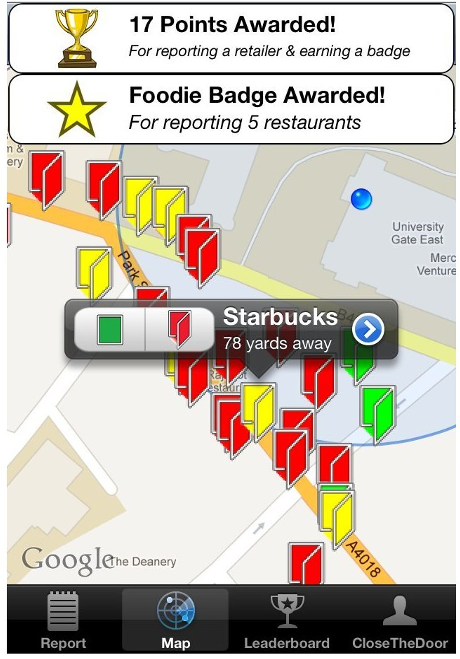 The app design focused on simplicity: mapping shop door statuses (left) and tracking rewards/leaderboards (right).
Key Insights from the Results
The quantitative data revealed a clear hierarchy of performance:
- The Financial Group was the clear winner in volume, adding nearly 3x as many shops as the control group.
- The Virtual (Gamified) Group faced a "leaderboard trap." Top performers were highly motivated by competition, but those far behind felt "distant competition" was demotivating and gave up.
- The "Lifestyle" Factor: Surprisingly, the most active participant was a mother on maternity leave. Her lifestyle (walking daily with a pram) made her "time-rich" and perfectly positioned for data collection, regardless of the reward structure.
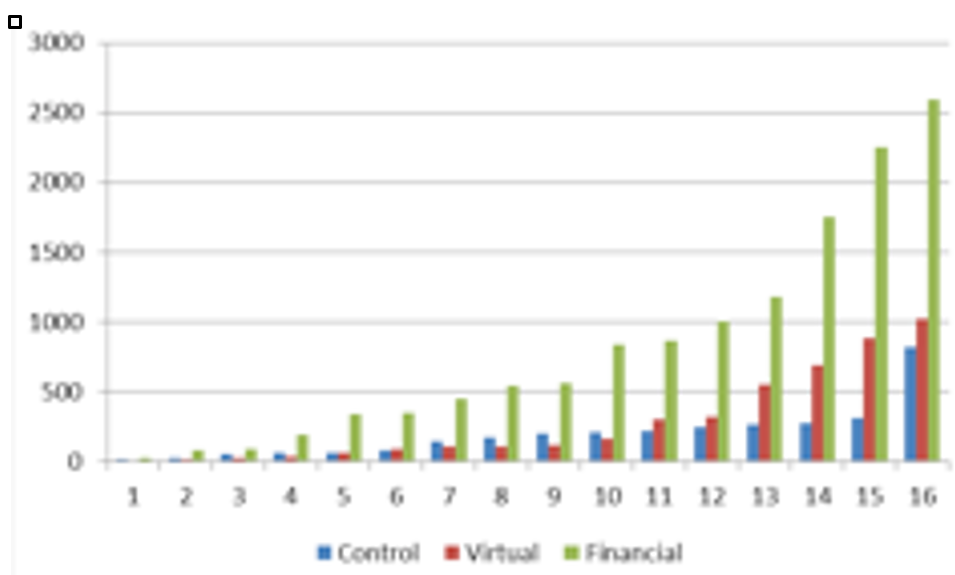 Figure 3 shows the massive performance gap created by financial incentives, while Figure 4 (Z-scores) highlights how competition creates a "power law" of engagement.
Recommendations for the Future of Activist Tech
Based on their findings, the authors offer several "golden rules" for designing community-based crowdsourcing:
- Seek Compatible Lifestyles: Target users whose existing routines (dog walking, commuting, parenting) put them in the right place at the right time.
- Normify, Don't just Gamify: Instead of just showing the #1 leader, show "Community Norms" (e.g., "The average volunteer has checked 5 shops today") to encourage "acceptable mediocrity" rather than elite competition.
- Use Micro-Payments Carefully: Financial rewards drive short-term data spikes but can "crowd out" intrinsic motivation, making users less likely to volunteer for free in the future.
Critical Analysis & Conclusion
While "pointification" is often seen as a silver bullet for engagement, this paper provides a sober reminder of its dual nature: it motivates the few but can alienate the many. The most valuable takeaway is the shift from individual behavior change toward community-supported advocacy. By providing data-driven maps of "open-door" offenders, the apps empower activists to focus on high-impact negotiation with shop owners rather than tedious data entry.
The future of pro-environmental tech lies not just in making people "act green," but in making it effortlessly convenient for them to help others lead the way.