
CSRA: Harnessing the "Wisdom of Crowds" to Revolutionize Person Re-Identification
Crowdsourcing-Based Ranking Aggregation for Person Re-Identification
This paper introduces CSRA (Crowdsourcing-based Ranking Aggregation), a novel late-fusion framework for Person Re-Identification (re-ID) that adaptively merges multiple ranking lists from different "investigators." It treats the fusion problem as a truth-inference task in crowdsourcing, achieving new SOTA performance by learning to weight the reliability of diverse retrieval models.
TL;DR
In real-world criminal investigations, multiple detectives often search for the same suspect, each producing a different list of potential matches. This paper presents CSRA (Crowdsourcing-based Ranking Aggregation), a deep learning-based framework that automatically learns which "investigator" (model) to trust for a specific query, merging their results to achieve a unified, superior ranking list.
Problem & Motivation: The Single Model Limitation
Most research in Person Re-ID focuses on making a single model stronger by refining features or distance metrics. However, in practice:
- No single model is perfect: One model might excel at identifying people from a side view, while another is better at handling low-resolution images.
- Diverse Feedback: Different investigators use different retrieval parameters or "personalized" viewpoints.
The authors observe that even when models have similar average performance, their strengths are often complementary. The challenge is: How do we aggregate these diverse lists without human intervention? Existing crowdsourcing methods are built for simple "Label A vs. Label B" classification, not the complex, fine-grained ranking required for re-ID.
Methodology: The CSRA Framework
The core innovation lies in treating model fusion as a reliability estimation problem.
1. Assessment Feature Generation
Instead of just averaging scores, CSRA computes a dynamic feature for every (investigator, query) pair. It estimates:
- Investigator Precision: How often does this model get the "estimated" truth right across many queries?
- Query Difficulty: How many models failed to find the target for this specific query?
2. The Long Tail Distribution Insight
In re-ID, the difference between Rank 1 and Rank 2 is massive, but the difference between Rank 100 and Rank 101 is negligible. To capture this, the authors use a Long Tail Distribution function: This gives exponentially higher "scores" to top-tier results, forcing the model to care deeply about the top of the list.
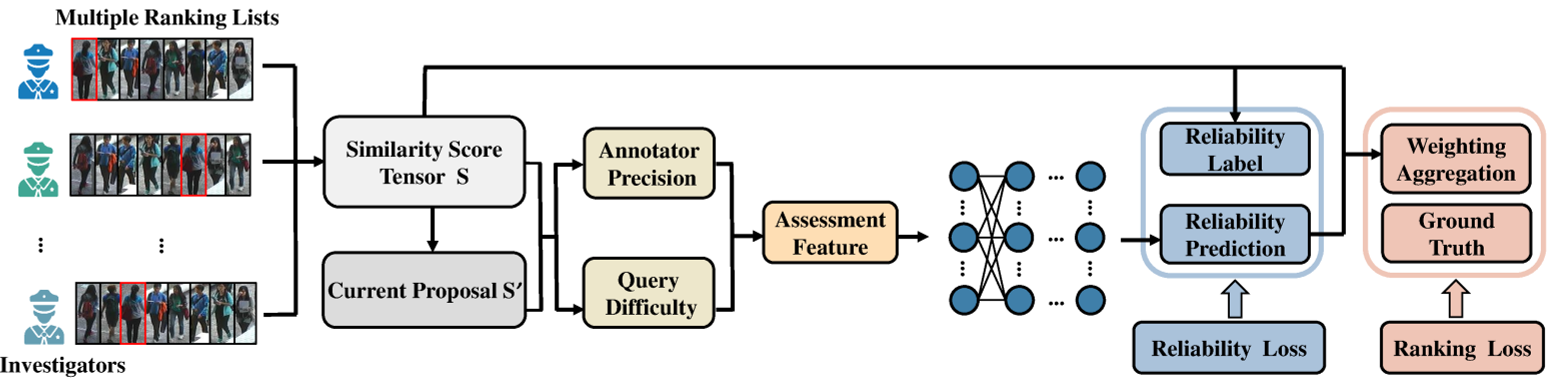 Figure 1: The CSRA Framework, showing the pipeline from similarity tensor collection to reliability-weighted aggregation.
Experiments & SOTA Results
The authors simulated 16 "investigators" using various feature extractors (like GOG, ResNet50) and metric learning methods (like XQDA, KISSME).
Quantitative Performance
CSRA consistently outperformed the best individual investigator across four major datasets.
- PRID450s: Rank-1 accuracy jumped from 57.9% (best single) to 71.0% (CSRA).
- CUHK03: Outperformed specialized re-ranking methods like K-reciprocal and ECN.
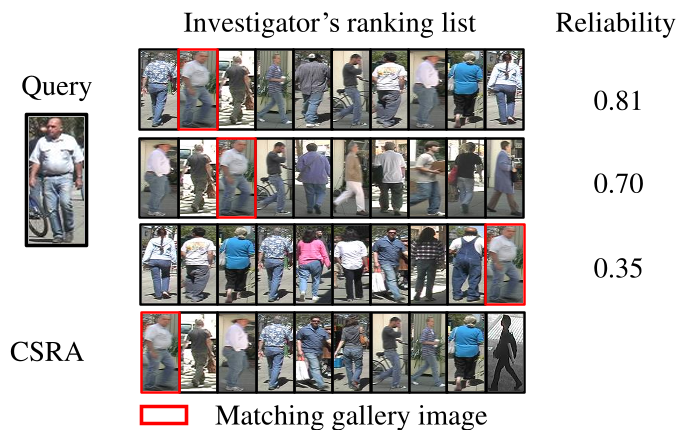 Table 2: CSRA vs. conventional aggregation (Mean/Median) and re-ranking optimization methods.
Why it Works
The model effectively "mines" the advantages of specific investigators. As shown in the paper's visualization, for a query where Model A fails due to lighting, the network recognizes the reliability of Model B and gives its ranking higher weight in the final output.
Critical Analysis & Future Outlook
Strengths:
- Plugin-and-Play: It can aggregate any number of existing re-ID models without retraining the base models themselves.
- Data-Driven: Unlike manual re-ranking rules, it learns the weights from data.
Limitations:
- Computational Overhead: To get the best result, you need to run multiple investigators initially, which increases the inference cost.
- Diversity Dependency: The method's gain is smaller when all investigators are too similar (as seen in the DukeMTMC results).
Conclusion: CSRA provides a robust theoretical bridge between crowdsourcing and person retrieval, offering a practical solution for multi-agency or multi-algorithmic collaborative forensic systems.