
Turning Every Car into a Road Inspector: The SPC System and the Physics of Bumps
Toward Crowdsourcing-Based Road Pavement Monitoring by Mobile Sensing Technologies
The paper introduces a Smartphone Probe Car (SPC) system for road pavement monitoring via crowdsourcing. It features a novel heuristic for vertical acceleration extraction and an Anomaly Index (AI) based on the Underdamped Oscillation Model (UOM) to achieve device-independent road surface assessment.
TL;DR
Researchers have developed a Smartphone Probe Car (SPC) system that allows ordinary drivers to monitor road quality simply by mounting their phones. By leveraging the Underdamped Oscillation Model (UOM), the system extracts a consistent "Anomaly Index" that remains accurate regardless of the smartphone model, the mounting method, or the vehicle's speed.
Background: The Crowdsourcing Challenge
Maintaining road networks is a multi-billion dollar headache for governments. Traditional inspection involves specialized vehicles equipped with expensive laser scanners. While crowdsourced mobile sensing (using accelerometers in phones) seems like a logical alternative, it faces a massive alignment and consistency problem:
- Posture: Every driver mounts their phone differently.
- Hardware: Different phones have different sampling rates and sensor sensitivities.
- Dynamics: A pothole hit at 20 km/h looks very different from one hit at 60 km/h.
This paper tackles these by moving away from simple "threshold" triggers toward a physics-based assessment model.
Methodology: The Physics of the "Bounce"
1. Vertical Component (VC) Extraction
To ignore how the phone is tilted, the system uses a running average and Principal Component Analysis (PCA) logic to constantly track the gravity vector. By projecting all acceleration readings onto this gravity vector, it "realigns" the sensor data to a true vertical axis automatically.
2. The Underdamped Oscillation Model (UOM)
The core insight is treating the car's suspension and the phone mount as a single underdamped system. When a car hits a bump, it doesn't just "jump"; it oscillates and settles.
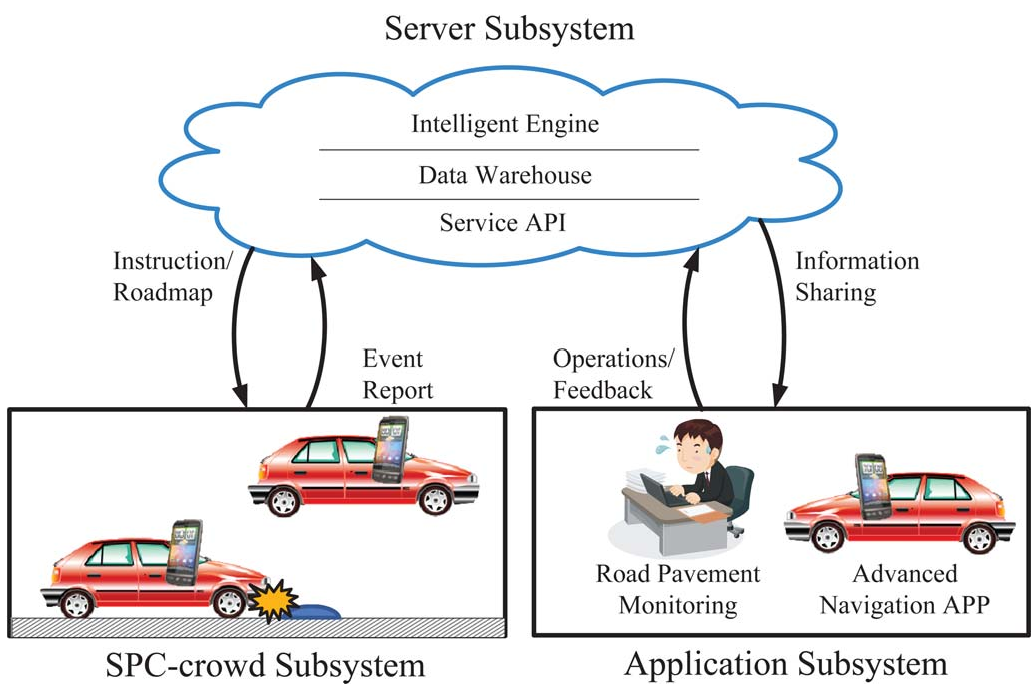 Fig 1: The SPC ecosystem connecting drivers, cloud servers, and road management.
The researchers found that the standard deviation of these oscillations () is proportional to the initial impact force. By calculating a ratio—the Anomaly Index (AI)—between the vibration during a bump and the "background noise" of the road, they created a metric that is remarkably stable across different cars.
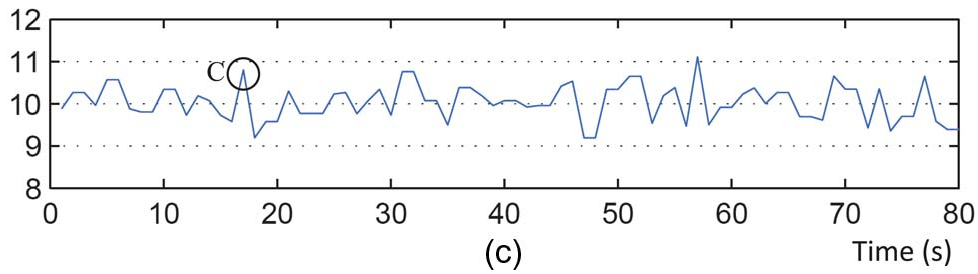 Fig 2: A characteristic "double wave" signature representing front and rear wheels hitting a 3.5cm speed bump.
Experiments and Results
The authors validated the system using a fleet of cars (Toyota Camry, Lexus ES) and various sensors.
- Cross-Device Consistency: The AI for a 3.5cm bump averaged 3.33, while a 5cm bump averaged 4.57, regardless of whether a high-end accelerometer or a budget smartphone was used.
- Speed Adaptability: By grouping data into speed ranges (e.g., 10-20 km/h), the system successfully mitigated the "faster equals bigger bump" bias.
- System-Level Mining: Using a modified DENCLUE clustering algorithm, the cloud server was able to filter out "one-off" False Positives (like a driver dropping their phone) and pinpoint actual road defects within a 5-7 meter accuracy range using noisy GPS data.
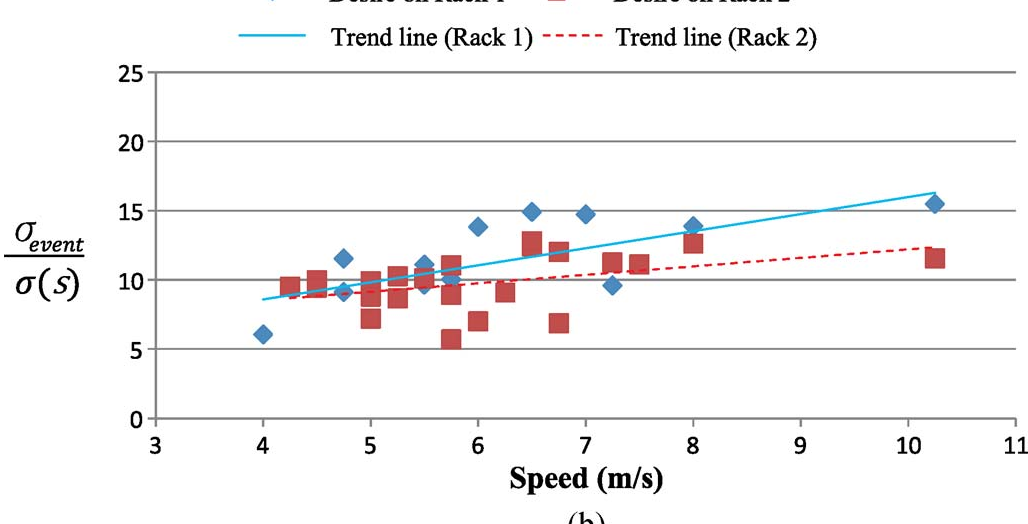 Fig 3: AI results across various vehicle types and sensing devices, demonstrating high parity.
Deep Insight: Why This Matters
Most "pothole apps" fail because they rely on simple thresholds (). This paper proves that physical intuition—specifically the math of oscillations—is the "silver bullet" for crowdsourcing. It converts raw, messy sensor data into a hardware-agnostic "Road Health Score."
Limitations & Future Work
While the system is robust, certain mounting methods (like air-vent clips) introduce secondary vibrations that break the UOM model. Future research will likely focus on Long-term Roughness Indices (IRI) to determine not just where a pothole is, but when a whole road segment needs repaving.
Conclusion
The SPC system represents a major step toward a "hassle-free" ecosystem for road maintenance. By removing the need for calibration, it lowers the barrier for citizen participation, turning every smartphone into a vital node for urban infrastructure health.