Crowdsourcing a Text Corpus is not a Game: The Cold Reality of Gamification
Crowdsourcing a Text Corpus is not a Game
This paper investigates the effectiveness of gamification in crowdsourcing text corpora for the low-resource language isiXhosa. The authors developed a custom online platform to source translations and rankings through a series of four experiments comparing intrinsic motivation, direct payment, and competitive leaderboards.
TL;DR
Building specialized datasets for low-resource languages like isiXhosa is a massive bottleneck for AI. This paper puts the "gamification" trend to the test, asking if we can replace expensive professional translation with a competitive game. The answer? A resounding no. The study proves that while points and leaderboards are nice "extras," they cannot replace cold, hard cash. Without guaranteed payments, engagement plummeted to zero.
Background: The isiXhosa Challenge
isiXhosa is spoken by over 8 million people, yet it remains "digitally under-resourced." Its complex, agglutinative nature (where words are formed by "gluing" parts together) makes simple rule-based translation fail. To build modern Machine Translation (MT) systems, researchers need massive parallel corpora, but scraping the web often results in low-quality data.
The Experiment: Pay vs. Play
The authors designed a custom platform where users translated Wikipedia sentences and ranked others' work. They tested four scenarios:
- Pilot: Crowdsourcing via Twitter (Volunteer).
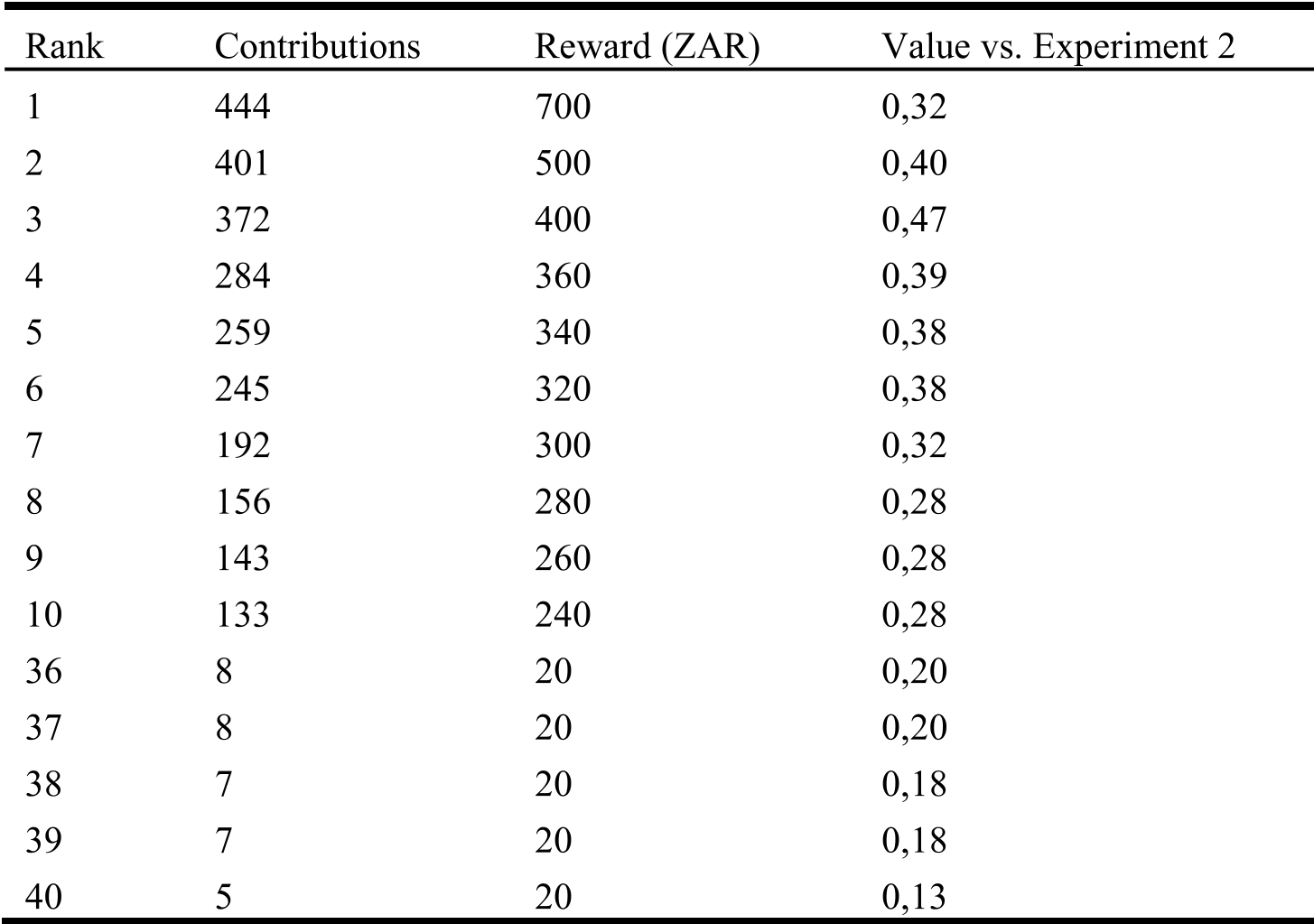
- Guaranteed Pay: Users earned points directly convertible to money (ZAR 0.01 per point).
- Pure Intrinsic Motivation: No money, just a sense of social contribution.
- Competitive Reward: Only the top 40 users on the leaderboard won a share of a larger prize pool.
Key Methodology Insight: The Payment Model
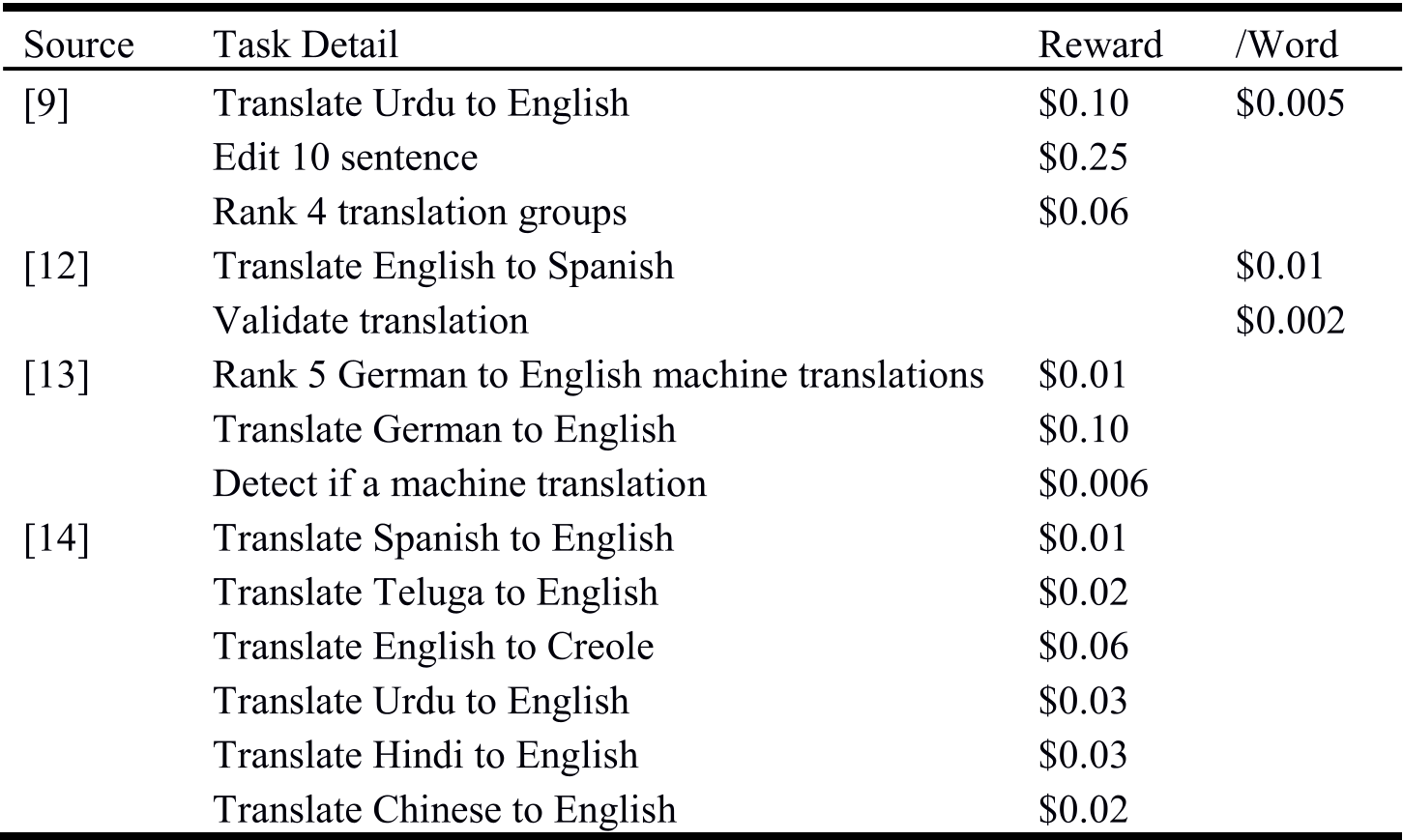
The authors didn't just pick random numbers. They benchmarked against Mechanical Turk rates (0.25 per sentence) and South African minimum wage standards to ensure the tasks were fair yet cheaper than professional services.
Results: Why "Possibility" is the Enemy of "Participation"
The most striking finding was the difference between Experiment 2 (Guaranteed Pay) and Experiment 4 (Leaderboard Pay).
- Volunteer Failure: In Experiment 3 (Volunteer), activity was negligible. People simply did not value the "social good" or virtual points enough to perform the labor of translation.
- The Leaderboard Trap: While Experiment 4 had a higher total budget, the competitive nature actually worsened efficiency. Users felt discouraged if they weren't in the top 10, whereas the guaranteed rate in Experiment 2 kept a broader base of users active.
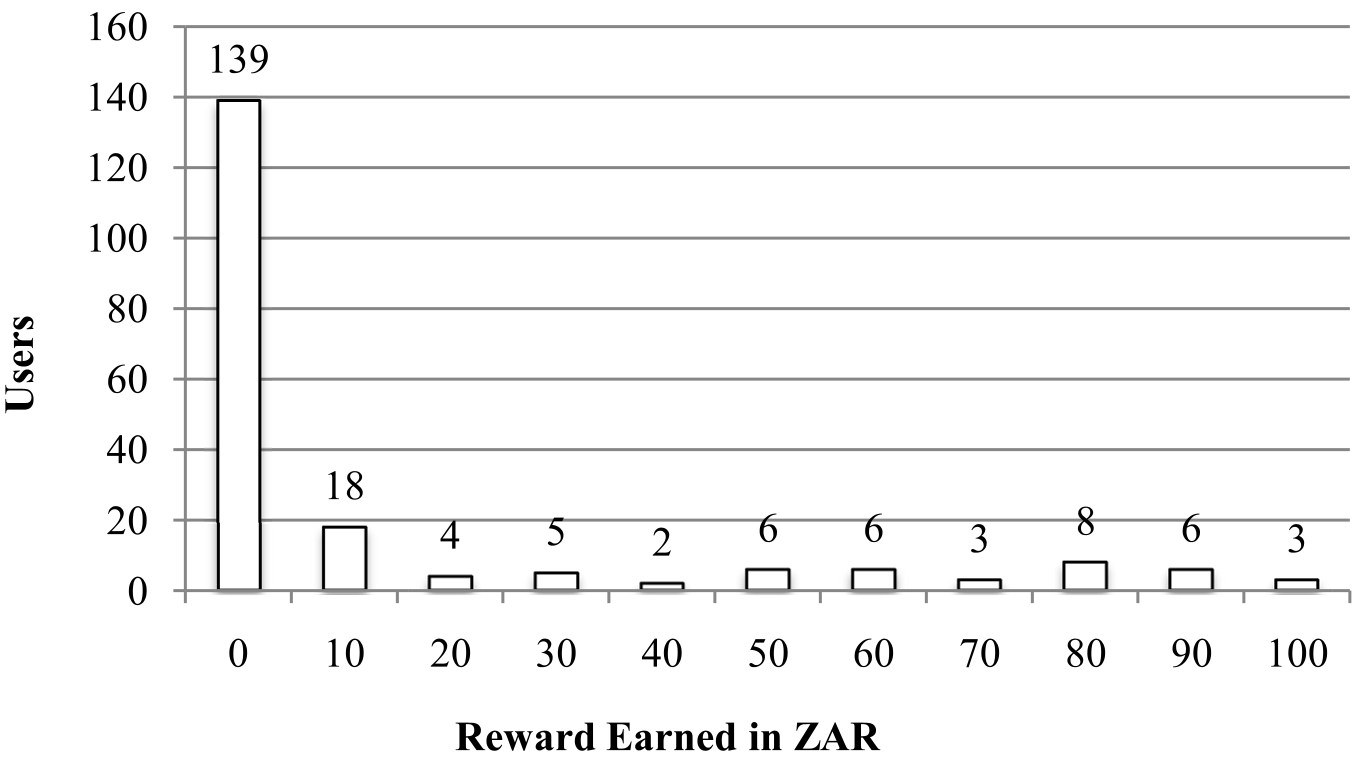
As shown in the data, only a handful of "super-users" reached the maximum reward. The vast majority of users dropped off quickly, suggesting that even small financial friction can kill a crowdsourcing project.
Critical Analysis: The Professional Verdict
This paper serves as a vital reality check for "Social AI" projects. The Inductive Bias many researchers have is that people want to help their community for free if the task is "fun." This study refutes that:
- Direct Incentives > Competitive Incentives: Humans prefer knowing exactly what they will earn for their next minute of work.
- Gamification is "Sprinkles," not the "Cake": Points and badges might increase retention for those already being paid, but they are not a primary driver for labor-intensive tasks like translation.
- Cost Efficiency: Despite being "not a game," the crowdsourced approach was still 5-30 times cheaper than professional translation services, proving that crowdsourcing is the future, provided the payment model is honest.
Future Work & Limitations
The study was conducted with university students, who may have different motivation profiles than the general public. Future research could explore:
- Physical Rewards: Would airtime or data vouchers work better than bank transfers?
- Long-term Engagement: How do we prevent "crowd fatigue" over months instead of weeks?
Conclusion: If you want to build a corpus for a low-resource language, don't build a game. Build a marketplace.