
Designing the Human-Machine Loop: Optimal Strategies for Crowdsourced Text Creation
Deployment strategies for crowdsourcing text creation
This paper explores optimal deployment strategies for crowdsourcing text creation tasks, including translation, summarization, and narrative writing. By formalizing strategies across three dimensions—work structure, workforce organization, and work style—the authors identify specific configurations that optimize the trade-offs between text quality, cost, and latency.
TL;DR
Algorithmically generating creative text—like narratives or nuanced translations—remains a frontier where machines struggle and humans tire. This paper provides a rigorous framework to deploy "human-computation" efficiently. By testing different combinations of work structures (Sequential vs. Simultaneous) and styles (Hybrid vs. Crowd-only), the authors provide a roadmap for maximizing quality while minimizing the cost and latency of distributed human labor.
Background: Beyond Micro-tasks
Crowdsourcing traditionally excels at simple "micro-tasks" like image labeling. However, text creation is a "macro-task" requiring high-level abstraction and creativity. The researchers argue that the way a task is deployed—its architecture—is just as important as the workers themselves. They position this work as a bridge between database management systems (like CrowdDB) and creative writing.
Methodology: The 3D Deployment Framework
The core contribution is a formalization of deployment strategy along three axes:
- Work Structure: Should workers build on each other's work (Sequential) or work in parallel and pick the best (Simultaneous)?
- Workforce Organization: Do individuals work alone (Independent) or in a shared space (Collaborative)?
- Work Style: Should we start from scratch (Crowd-only) or have humans edit machine-generated drafts (Hybrid)?
 Fig 1: The three dimensions defining a crowdsourcing deployment strategy.
To facilitate this, the authors built CDeployer, a command-line tool that automates the publishing of HITs (Human Intelligence Tasks) on Amazon Mechanical Turk and manages the flow between creation, improvement, and evaluation.
Key Insights from Experiments
The study applied these strategies to Translation, Summarization, and Narrative Writing. The results debunk the idea that "more humans are always better."
1. Translation: Length Matters
For long texts, the Sequential-Hybrid approach dominated. Starting with a Google Translate draft and letting workers iteratively polish it was cost-effective and high-quality. However, for short snippets, workers offered more diverse and accurate options when working Simultaneously from scratch.
2. Summarization: The Content Trap
In multi-source summarization, the authors found that if workers are given an initial machine-generated summary, they tend to fix syntax (grammar) rather than content (meaning). Thus, for complex summarization, they recommend a Simultaneous Crowd-only structure to ensure diverse perspectives aren't "anchored" by a poor machine draft.
3. Narrative Writing: Creativity vs. Mechanics
Hybrid styles (Machine + Human) failed in narrative writing because machine templates felt "mechanical." Humans were significantly more effective when allowed to be creative from the start.
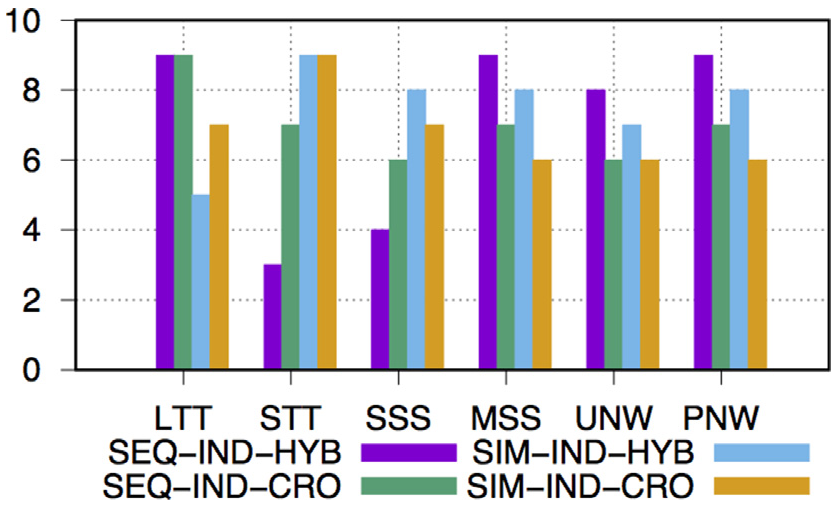 Fig 2: Quality scores across different tasks. Note how narrative writing favors crowd-only styles for creative depth.
Critical Analysis: The "Requester-in-the-Loop"
A fascinating takeaway is the "Requester-in-the-loop" insight. The authors suggest that requesters shouldn't just "fire and forget." Being involved in intermediate stages allows for "stopping early" if a machine draft is sufficient, or pivot strategies if the crowd is struggling, effectively managing the budget dynamically.
Conclusion & Future Work
This paper serves as an architectural guide for anyone building human-in-the-loop systems. While the "machine" part of the hybrid style has evolved from Google Translate to LLMs like GPT-4, the fundamental logic of Sequential vs. Simultaneous structures remains highly relevant for RLHF (Reinforcement Learning from Human Feedback) workflows today.
Future research is needed to investigate how varying incentive levels (payments) might shift these optimal strategy clusters.