
Crowdsourcing Flood Intelligence: Turning Citizens into Urban Sensors
15436_Toward a Crowdsourcing-Based Urban Flood Mitigation Platform.
This paper proposes a crowdsourcing-based platform for urban flood mitigation, specifically targeting conditions in Vietnam. The authors introduce a framework that leverages mobile user reports to estimate real-time flood levels and predict future water levels through a decentralized data validation and reputation system.
TL;DR
With rapid urbanization making traditional sensor networks inadequate, this research presents a decentralized platform that uses crowdsourced mobile data to map and predict urban floods. By implementing a sophisticated reputation-based weighting system, the platform filters out noise and provides high-fidelity flood data and evacuation instructions in real-time.
The Challenge: The Data Gap in Rising Waters
Urban flooding is a chaotic, hyper-local phenomenon. Traditional physical sensors, while accurate, are often too sparse to capture the street-by-street reality of a flash flood. Crowdsourcing offers a solution, yet it introduces the "trust problem": how can emergency responders distinguish between a precise report and an amateur's guess—or worse, a malicious fake?
Methodology: The Logic of Trust and Reachability
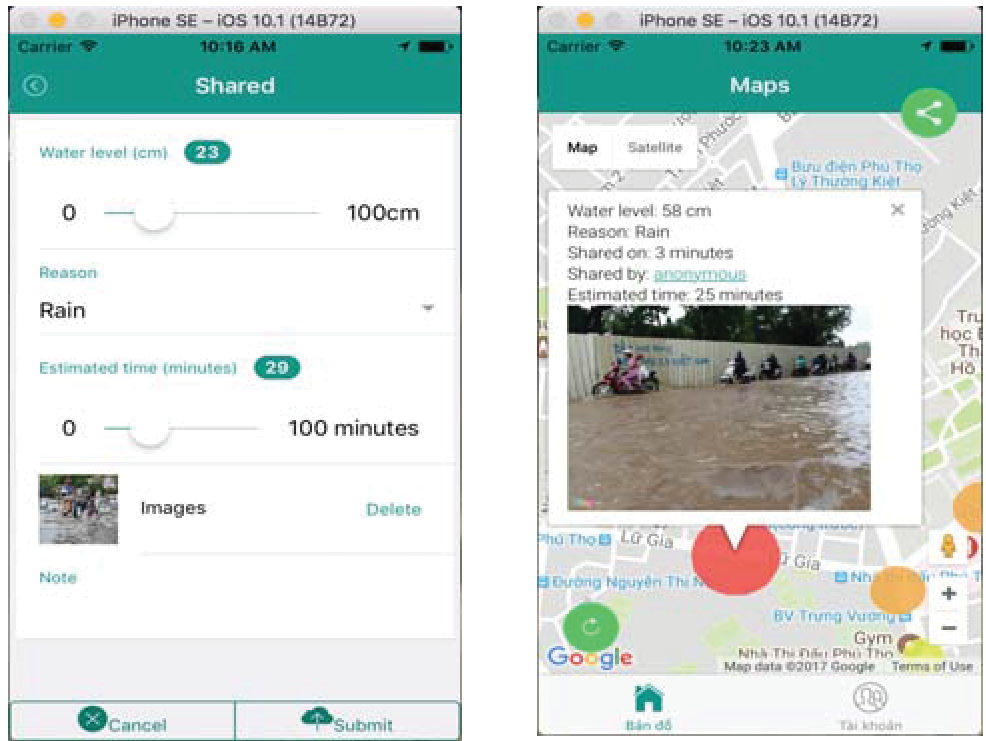
The authors propose a system where every user report—defined by parameters like <latitude, longitude, time, flood level, reason>—is not treated equally. Instead, the system employs a Reputation-based Aggregation Mechanism.
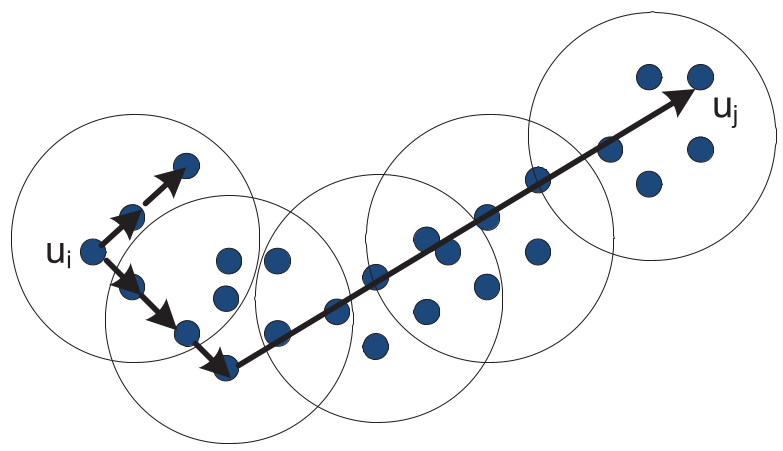
1. Spatial Validation via Reachability
To ensure reports are physically plausible, the system calculates "Direct Reachability." If two users are within a distance threshold (), their reports can cross-validate one another. This spatial clustering helps identify localized flood cells.
2. The Reputation Engine
The weight of a user's report is determined by their reputation score ().
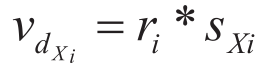
The score evolves over time. If a user's report matches the consensus of the "trusted cluster" (), their reputation increases: This ensures the system is self-cleansing, gradually marginalizing unreliable sources.
3. Predictive Aggregation
The platform doesn't just look at the current state (). It asks users to estimate the flood level in the next period (). By aggregating these subjective forecasts using the same reputation-weighted formula, the system generates a collective prediction of flood trends.
Performance and Experiments
The study validates the algorithm through simulations of varying user densities and reliability levels. The results indicate that:
- Convergence: The aggregated flood level () stabilizes quickly even when 30% of users have low initial reputation.
- Resilience: The system effectively ignores outliers (reports that deviate significantly from the spatial average).
Critical Insight: Beyond Sensing to Mitigation
What sets this work apart is the focus on actionable intelligence. The platform is designed to return "instructions for evacuation" and "how to avoid damage" back to the citizen based on the processed data. It creates a closed-loop system where the crowd senses the problem, and the platform provides the solution.
Limitations and Future Work
While the reputation system is robust, it assumes a sufficient density of users to form a "truth cluster." In sparsely populated areas, the model might struggle with validation. Future iterations could integrate satellite imagery or historical flood maps (Bayesian priors) to supplement user reports in low-density zones.
Conclusion
This research moves us closer to a "Smart City" reality where every smartphone is a tool for disaster mitigation. By solving the trust issue through reputation mathematics, the authors provide a blueprint for resilient urban infrastructure that listens to its citizens.