
Crowdsourcing: From Digital Trend to Scientific Methodology for "Insight Building"
Crowdsourcing and its relationship to wisdom of the crowd and insight building: a bibliometric study
This bibliometric study analyzes the evolution of "crowdsourcing" from its inception in 2006 to its establishment as a formal academic concept around 2009. Using data from the Web of Science, the author maps the field's growth, identifying a shift toward extrinsic motivations and the emergence of China as a dominant force in funding and publication volume.
TL;DR
Is crowdsourcing just a way to get free labor, or is it a sophisticated tool for "Insight Building"? This bibliometric study tracks the academic trajectory of the term since 2006, revealing that while Computer Science remains its home base, the field is undergoing a massive shift: China is becoming the primary financier, and the academic world now views the "crowd" primarily through the lens of extrinsic, goal-oriented research rather than just "internet fun."
The "Insight" Motivation: Why Study the Crowd?
The study argues that crowdsourcing, wisdom of the crowd, and inferential statistics are effectively different facets of the same goal: drawing perceptive conclusions from a large population. The author defines Insight Building as exploratory data analysis seeking to understand an issue based on the accumulation of number of opinions.
The motivation for this study stems from a curious anomaly: why are publications on crowdsourcing skyrocketing while citations are falling?
Methodology: Mapping the Knowledge Landscape
Using the Clarivate Analytics Web of Science database, the researcher analyzed nearly 4,000 papers. The methodology focused on:
- Evolution of Terminology: How "crowding" and "crowded" became the standardized "crowdsourcing" in 2009.
- Geographic Shifts: Tracking the rise of China relative to the USA.
- Motivation Analysis: Coding literature to see if contributors participate for "Self-development" (intrinsic) or for "Knowledge/Rewards" (extrinsic).
Key Findings: The Paradox of Citations
One of the most striking visual evidences in the paper is the divergence between publication volume and citation impact.
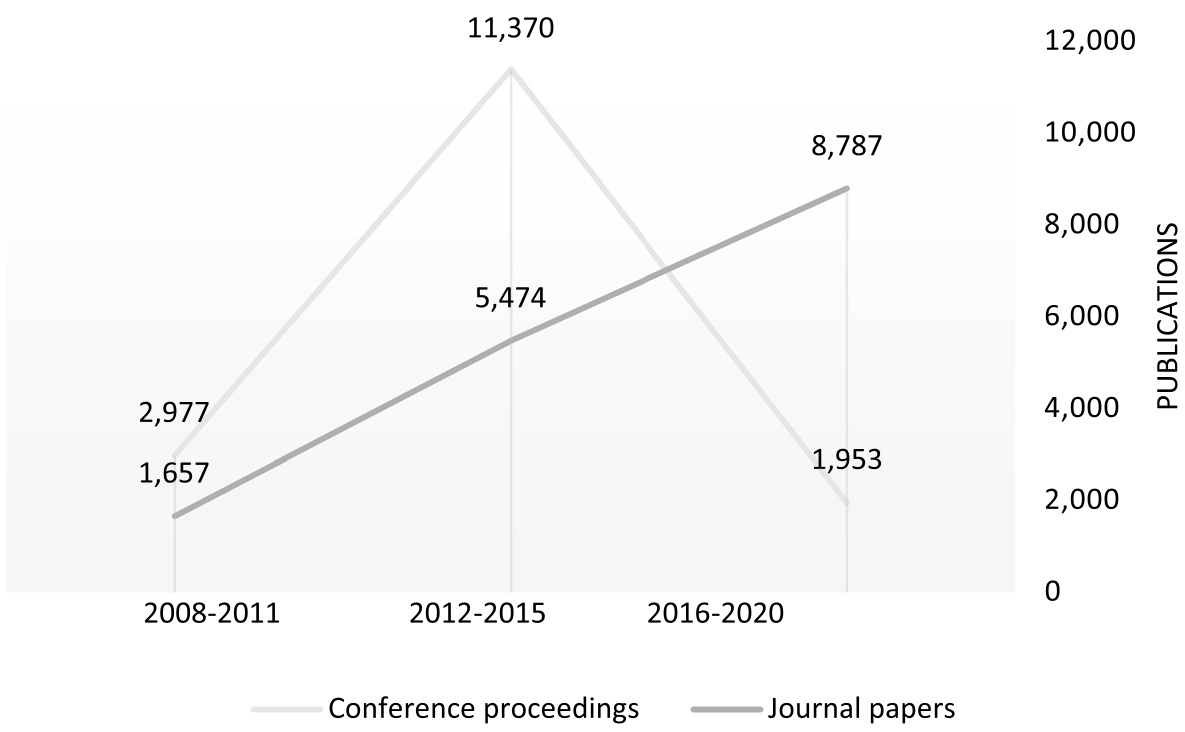 Fig 1: The decline in citations is specifically linked to the high volume of conference proceedings in the field.
The study finds that because the majority of crowdsourcing research happens within Computer Science, there is a heavy reliance on conference papers (e.g., LNCS, IEEE proceedings). Historically, these have a shorter shelf-life and lower citation counts than peer-reviewed journals, which explains the "apparent" decline in influence.
The Rise of China as a Powerhouse
The research highlights a significant geopolitical shift in technology research. While the USA leads in total organizations and authors, China has taken the lead in funding.
| Category | USA (2016-2020) | China (2016-2020) |
|---|---|---|
| Funding Bodies | 637 | 670 |
| Publications | 799 | 680 |
The Anatomy of Modern Crowdsourcing
The paper simplifies the complex definition of crowdsourcing into a functional flowchart centered on the "Wisdom of the Crowd."
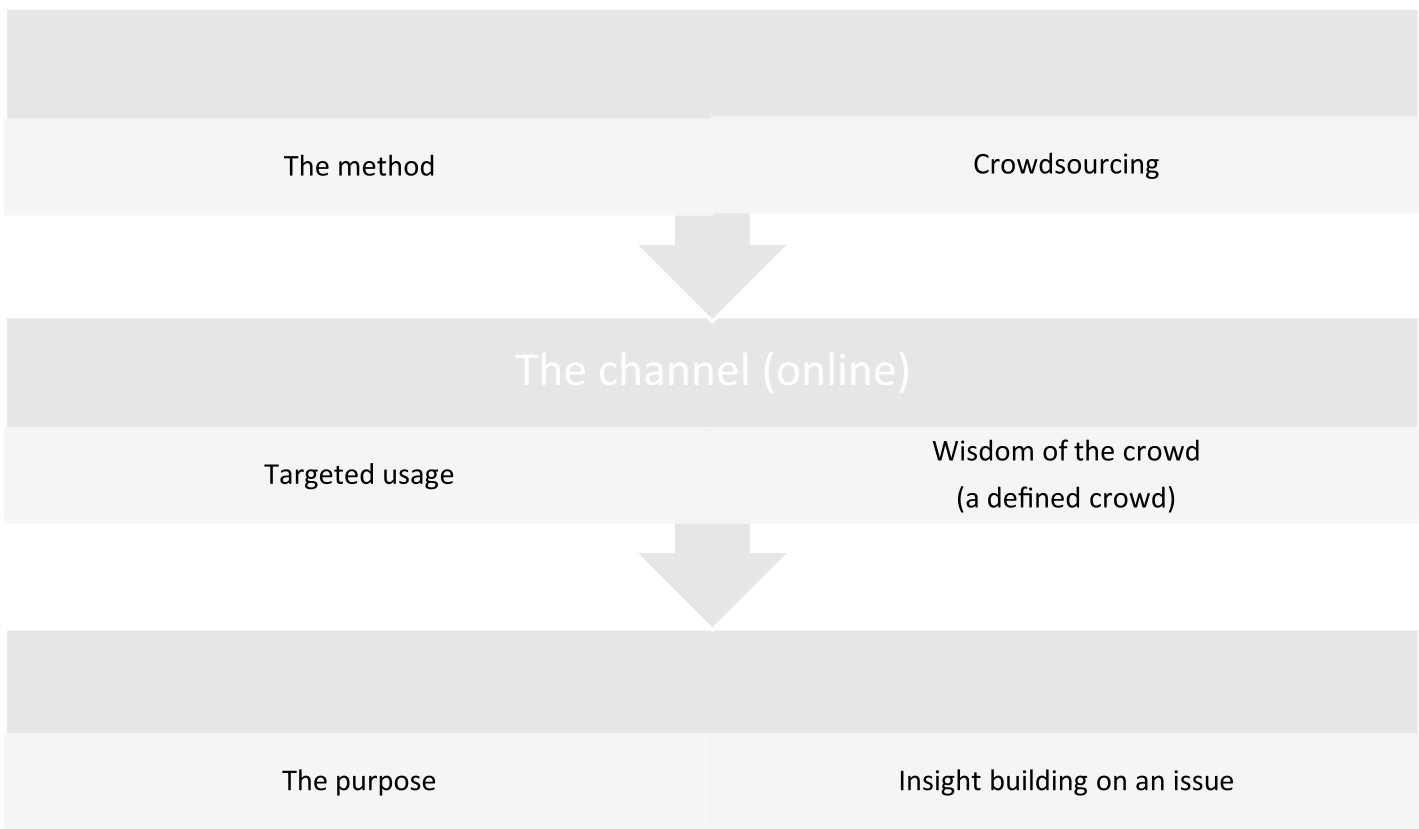 Fig 2: The conceptual flow from crowdsourcing to specific insight building.
Extrinsic vs. Intrinsic: Why do people help?
There is a disconnect between what participants say and what researchers write. While some surveys suggest people participate for "fun" or "altruism," the academic literature overwhelmingly focuses on extrinsic factors:
- Top Motivations found: Knowledge (508 papers), Learning (461), Problem Solving (373).
- Lowest Motivations: Socializing (3), Prestige (2), Social Bonding (2).
This suggests that the academic community views crowdsourcing as a professional Inductive Bias tool—a way to extract "Truth" from a noisy population.
Critical Analysis & Conclusion
Takeaway
Crowdsourcing has successfully transitioned from a buzzword into a robust research framework. Its integration into Urban Planning, Medicine, and Social Sciences indicates it is no longer just a "computer science trick" but a cross-disciplinary standard for data collection.
Limitations
The study relies on a "Title" search in the Web of Science. This might exclude papers that discuss crowdsourced methodologies but use different nomenclature (e.g., "Human-in-the-loop" or "User-Generated Content"). Furthermore, the citation drop might also suggest a "maturation" of the field where only foundational papers are cited, while newer papers are seen as incremental.
Future Outlook
As China continues to outpace the West in funding, we can expect a shift in the applications of crowdsourcing toward large-scale urban and industrial governance. For researchers, the message is clear: to sustain academic impact, the field needs to move away from ephemeral conference "proceedings" and toward high-impact "journal" publications.