
CrystalChat: Turning Digital Echoes into Visual Insights
CrystalChat: Visualizing Personal Chat History
CrystalChat is a specialized visualization system designed to transform personal instant messaging (IM) history into an interactive 3D structure. It utilizes a "hub and spoke" facet-based model to map social interactions, temporal clustering, and emotional tones, moving beyond simple text lists to reveal underlying communication patterns.
TL;DR
CrystalChat is a pioneering research work that reimagines personal chat history as an interactive 3D crystal. By moving away from the "infinite scroll" of text, it uses geometry and color to reveal your social footprints—who you talk to most, how long your messages are, and the emotional rhythm of your digital life.
Background: The Fleeting Nature of Casual Talk
In the physical world, casual conversations are fleeting; they leave no trace. But in the digital realm, Instant Messaging (IM) creates a permanent record. While most apps treat these logs as a simple graveyard of text, CrystalChat treats them as a data-rich map of human relationships. It positions itself not as a tool for "chatting," but as a tool for after-conversation reflection.
The Problem: The "Text List" Blind Spot
Why do we need a 3D crystal to look at chats? The authors argue that current interfaces suffer from three flaws:
- Context Loss: Linear lists make it hard to see the "rhythm" of a relationship over months or years.
- Social Blindness: It is difficult to quantify who is doing the "heavy lifting" (initiating conversations or writing more) just by scrolling.
- Temporal Occlusion: The actual time gaps between messages—crucial for understanding social dynamics—are often collapsed into a uniform list.
Methodology: The Geometry of a Relationship
The core innovation of CrystalChat is its 3D Hub and Spoke architecture. Imagine yourself at the center of a wheel. Every person you chat with is a "spoke" that extends outward into a transparent 3D plane called a facet.
1. The Facet Structure
Each facet is a timeline. Conversations are stacked vertically, with the most recent interactions appearing at the top. Within each row, individual messages are represented as colored discs.
- Grey Discs: Represent the user.
- Colored Discs: Represent the contact.
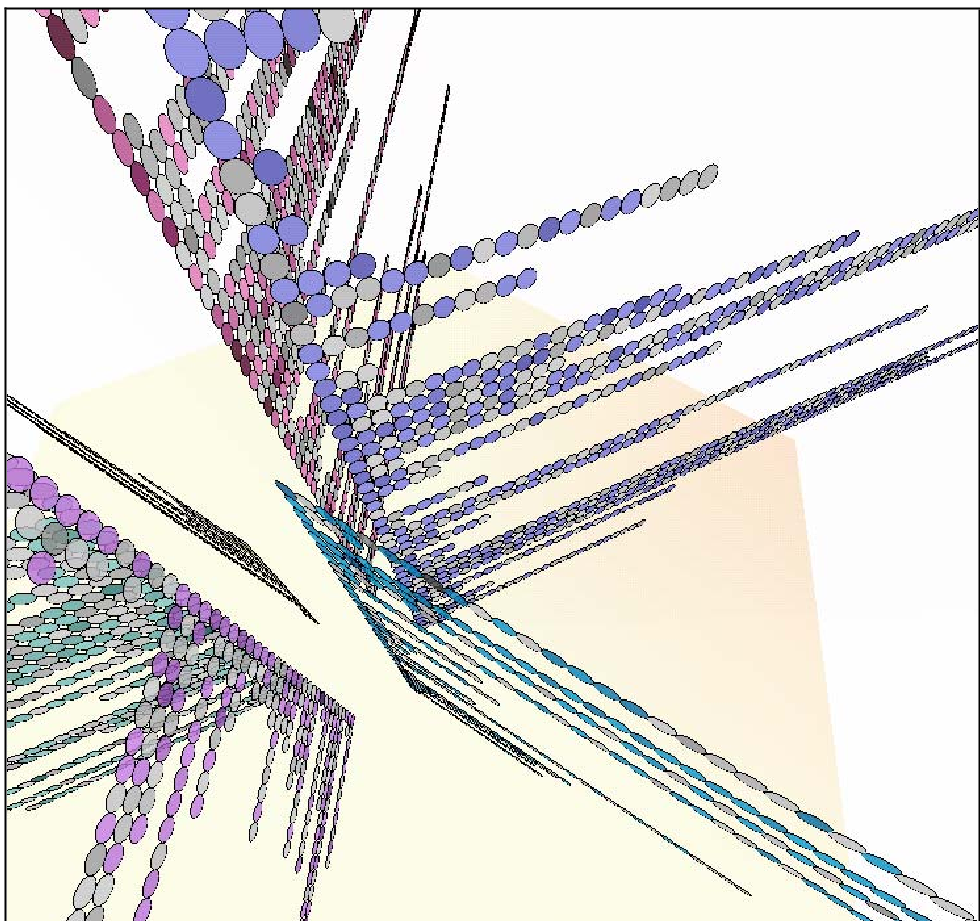 Figure 1: Looking down at the 3D structure of facets in CrystalChat.
2. Temporal Spacing and Fanning
CrystalChat can switch from an "ordinal" view (one message after another) to a "temporal" view. In the temporal mode, the vertical distance between rows represents the actual time elapsed (days or weeks). If multiple chats happen in one day, the system "fans" them out like a deck of cards to prevent overlap.
3. Emotional and Quantitative Mapping
- Message Length: The "Value" (darkness) of a disc indicates message length. Darker discs = more verbose replies.
- Emoticons: A translucent plane behind the facet changes color based on the density of emoticons used, providing a "mood" backlight for the history.
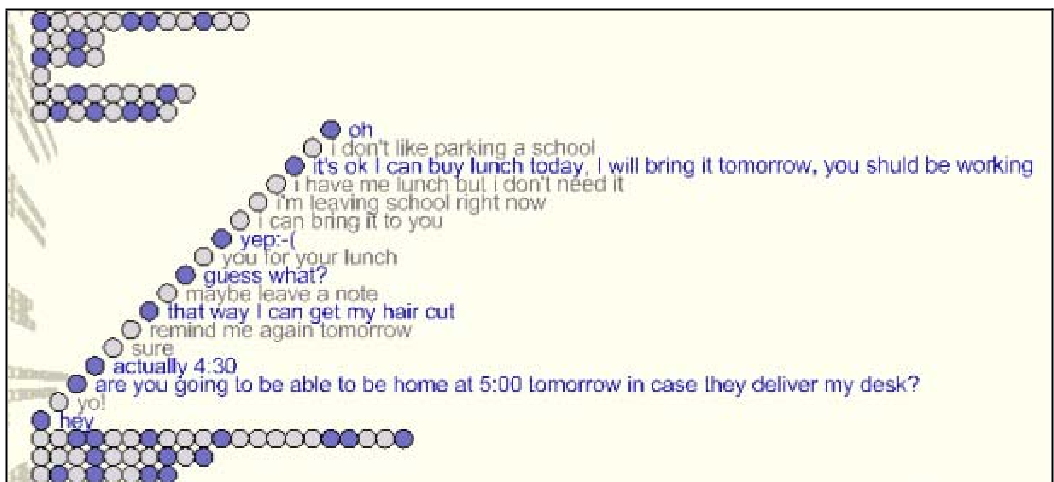 Figure 2: Expanding a conversation to read text while maintaining the visual context.
Emerging Patterns: What the Data Reveals
The visualization uncovers social archetypes that are invisible in raw text:
- The Initiator: One facet might show a specific color always appearing on the far left of the row, revealing who typically starts the conversation.
- The Verbose Partner: A facet dominated by dark-valued circles indicates a contact who writes long, detailed messages compared to the user's quick responses.
- Relationship Decay: Large gaps in the vertical stacking visually signal a friendship that is cooling off.
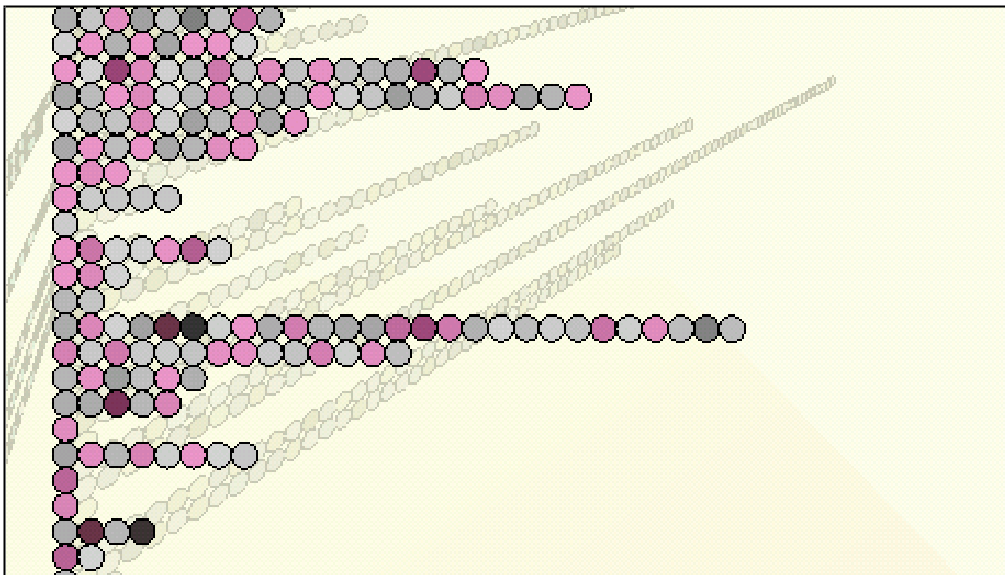 Figure 3: Variations in message length and frequency visualized through color value and circle density.
Critical Analysis & Future Outlook
CrystalChat's greatest strength is its ability to trigger Reminiscence. Test users compared it to a photo album, using the visual clusters to recall specific life events.
However, the methodology faces challenges with scalability. As chat history grows over decades, 3D navigation (panning and zooming) can become "tedious." Furthermore, the shift from ephemeral chat to archived visualization might make users self-conscious, leading to more "formal" and less authentic communication—a phenomenon known as the observer's paradox.
Conclusion: CrystalChat demonstrates that our digital footprints are not just data points; they are a mirror. By visualizing the "shape" of our conversations, we gain the agency to change our social behaviors and cherish our digital connections as much as our physical ones.