
Cultural Clash: Why CS Students Struggle with the Design Studio
Cultural Clash: Exploring How Studio-Based Pedagogy Impacts Learning for Students in HCI Classrooms
This paper explores the integration of studio-based pedagogy (SBP) into Human-Computer Interaction (HCI) courses within a Computer Science department. It introduces a "maker-studio" approach featuring six hands-on modules and two studio techniques (critiques and brainstorming) to foster creative design skills among computing students.
TL;DR
Human-Computer Interaction (HCI) is increasingly moving toward "Creative Design," yet most CS students are trained in "Engineering Design"—a world of right/wrong answers and solitary coding. This paper explores a multi-year study of a "maker-studio" approach in CS classrooms, revealing that the biggest barrier to creative learning isn't a lack of tools, but a deep-seated Cultural Clash between computing norms and studio pedagogy.
The Problem: The Defensive Climate of CS
In a typical Computer Science classroom, the "Defensive Climate" rules. Students work alone to avoid plagiarism charges, compete for grades on rigid rubrics, and often hide their work until it is "finished."
Studio pedagogy—the backbone of art and architecture education—is the polar opposite. It thrives on:
- Visibility: Showing "ugly" unfinished work.
- Critique: Inviting others to tear apart your ideas to make them better.
- Iteration: Exploring many parallel "bad" ideas before finding a "good" one.
The authors argue that when you drop a Studio model into a CS department, these two cultures collide, creating friction that can actually hinder student motivation.
Methodology: The Maker-Studio Approach
The researchers integrated a "maker-studio" model into six courses (HCI, Ubiquitous Computing, and Prototyping). The model stood on two pillars:
- Six Maker Modules: Hands-on activities ranging from Arduino prototyping to "deconstruction of technology."
- Two Studio Techniques:
- Brainstorming: Moving beyond "pushing buttons" to explore rich, emotional interactions.
- Critiques: Moving from formal final presentations to informal "pin-ups" and "round robins."
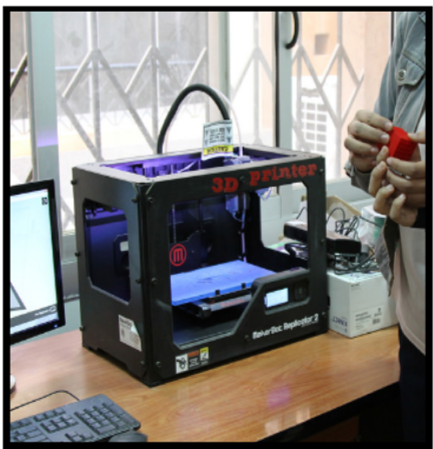 Figure 1: Examples of physical artifacts produced during maker modules, shifting students from screen-based to tactile design.
The Findings: Where the Clash Happened
1. Critiques or Just "Grading"?
In a design school, a critique is a gift of feedback. In the CS classroom, students viewed it as an interrogation. Many students dismissed peer feedback, believing only the instructor's opinion mattered for their grade. One student noted: "It's not necessarily as helpful if you're going for the grade."
2. The "Superiority Complex" and Comparison
Visibility backfired for some. Instead of a "community of learners," the transparent nature of the work led to toxic comparisons. CS majors sometimes disparaged peers from other majors (like Industrial Design), claiming they "focused on the wrong things" or weren't as "productive."
3. The Skill-Time Paradox
The study found that CS students often opted for the easiest path to a "deliverable" because they lacked the base skills (sewing, 3D printing) and the time to master them within a standard 50-minute lecture slot.
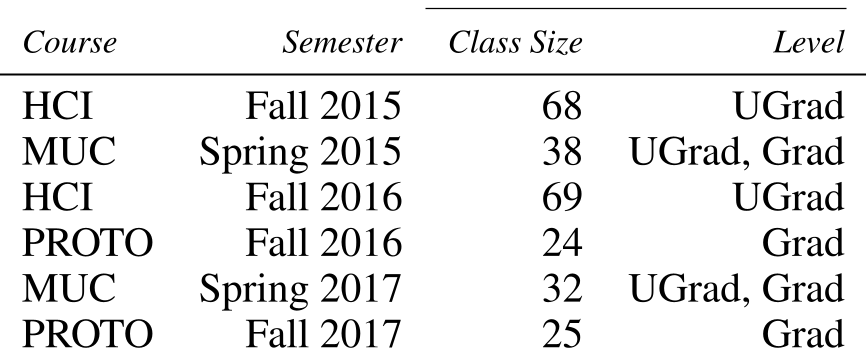 Table 1: The study spanned multiple semesters, highlighting the difficulty of scaling studio practices to classes of up to 69 students.
Critical Insight & Recommendations
The paper concludes that we cannot simply "add" design to CS; we must reshape the culture. For studio-based HCI to work, we need:
- Scaffolded Critiques: Use tools like "Feedback Cards" (asking for one Like, one Improvement, one Consideration) to force students out of their defensive shells.
- Iterative Grading: Grade the process of exploration, not just the final "polished" artifact.
- Narrowed Scope: Instead of trying to teach ten different maker tools, focus on one so students feel enough mastery to take creative risks.
Conclusion
This work serves as a reality check for the "Maker" trend in CS. Innovation doesn't just come from giving a student an Arduino; it comes from creating a safe classroom culture where they are allowed to fail, reflect, and share. Without addressing the underlying "Cultural Clash," the studio approach remains an uncomfortable fit for the traditional computing student.