
Deciphering the Cultural Pulse: Using Psychophysiology to Understand Information Behavior
Exploring cultural differences in information behavior applying psychophysiological methods
This exploratory study investigates cultural differences in information-seeking behavior using psychophysiological methods. By comparing American and Hungarian users, it leverages biometric data like pupil size, heart rate variability, and eye-tracking to pinpoint cross-cultural cognitive and emotional variances during web searches.
TL;DR
In an increasingly globalized digital landscape, a "one-size-fits-all" interface is a myth. This study by Komlodi and Hercegfi moves beyond surface-level surveys to measure the physiological signatures—heart rate, pupil dilation, and skin conductance—of how different cultures (specifically US vs. Hungary) seek information. Their research proves that culture acts as a "selective screen," fundamentally altering what we pay attention to and how much mental effort we expend during a search.
The Problem: The Localization Gap
Most websites today are designed with a Western-centric "Low-Context" bias. When these sites are accessed by users from different cultures, the mismatch isn't just linguistic; it's structural.
Current research has several blind spots:
- Surface Analysis: Most studies focus on what people find, not the micro-steps of how they find it.
- Subjectivity: Surveys rely on self-reporting, which is often biased or inaccurate.
- Categorization Mismatch: Different cultures categorize the world differently (e.g., a "Service" in one culture might be a "Product" in another), leading to "information friction" that is rarely measured in real-time.
Methodology: Beyond the Questionnaire
The authors employ a multi-modal approach that blends psychological theory with biometric rigor.
1. The Human Variable
Participants are first mapped using:
- Hofstede’s Cultural Dimensions: To establish cultural archetypes (e.g., Individualism vs. Collectivism).
- Personal Style Inventory: To account for individual cognitive styles.
2. The Biometric Stack
The core innovation lies in the synchronized tracking of:
- Skin Conductance (SC) & Heart Period Variability (HPV): Indicators of emotional arousal and mental workload.
- Eye-Tracking & Pupil Size: Identifying "hotspots" and processing depth.
- Activity Logs: Measuring the sequence and duration of search steps.
 Figure 1: Conceptual overview of the psychophysiological monitoring setup.
Insights: Why Culture Changes Everything
The study highlights that Information Architecture (IA) is culturally dependent. A "High-Context" user (who relies heavily on surrounding cues) may feel overwhelmed or "lost" in an interface designed for a "Low-Context" user (who expects explicit, direct information).
By using the INTERFACE System (developed at the Budapest University of Technology), the researchers can see exactly when a user's heart rate variability changes, signaling a cognitive "stumble" when the website's categorization doesn't match the user's mental model.
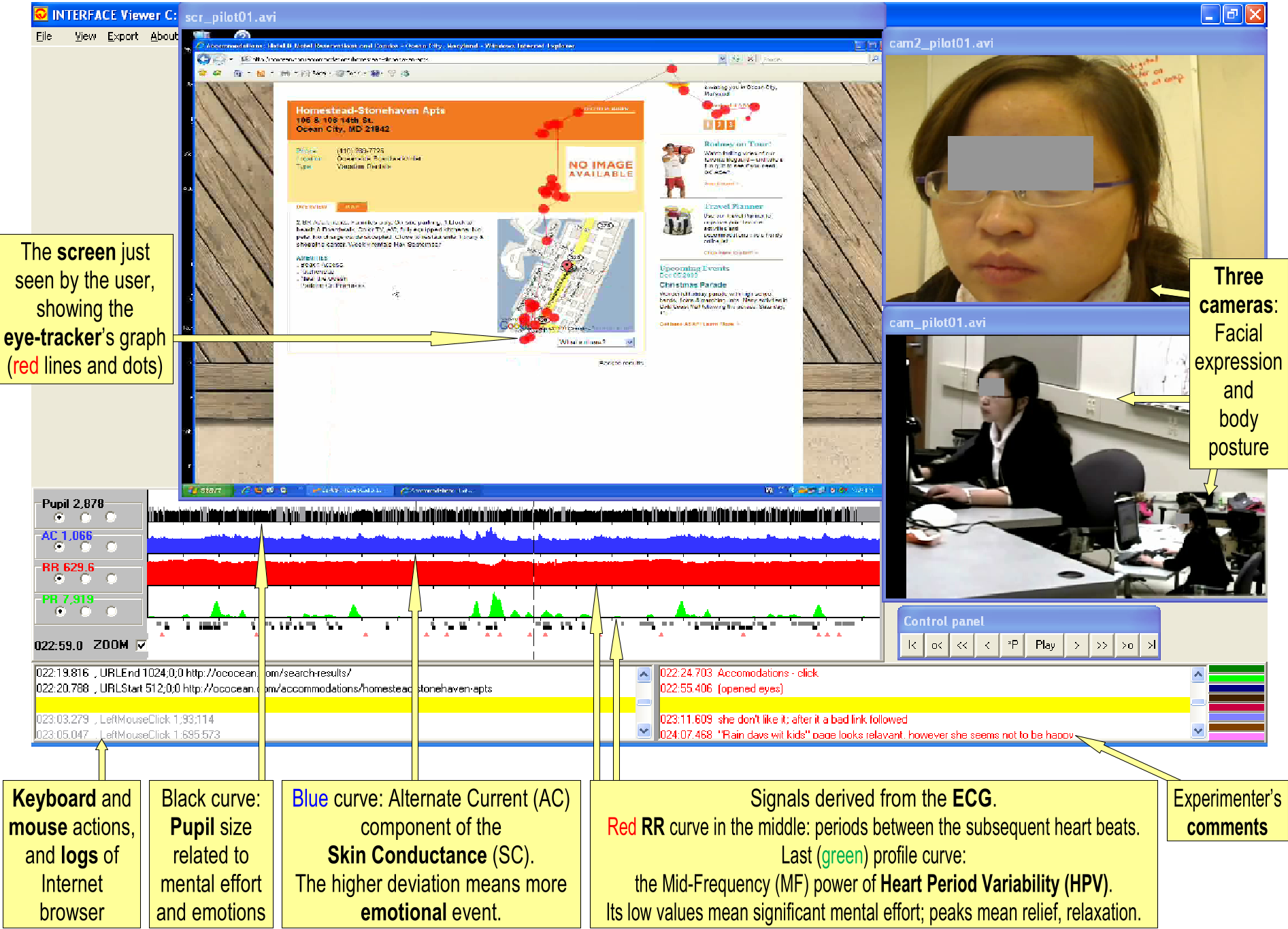 Figure 2: Sample data visualization showing synchronized physiological and activity logs.
Critical Analysis & Conclusion
The "Takeaway"
This work is a call to action for UX researchers to treat culture as a cognitive variable, not just a demographic one. The ability to quantify "mental effort" across cultures via physiological data provides a objective baseline for UX ROI that didn't exist before.
Limitations
As an exploratory study, the sample size (28 participants per group) is a starting point. Furthermore, physiological signals can be "noisy"—a spike in skin conductance could represent excitement or frustration. Distinguishing between these "valences" remains a significant challenge in psychophysiology.
Future Outlook
As wearable technology (like smartwatches with PPG and GSR sensors) becomes ubiquitous, we might soon see Adaptive Interfaces that sense a user's rising stress levels and culturally recalibrate the information density in real-time.