
Cultural Dimensions in the Wild: Bridging the Gap Between Theory and Industry Localization
The Use and Usefulness of Cultural Dimensions in Product Development
This paper investigates the practical application of Hofstede's cultural dimensions in the technology industry through two case studies: Booking.com and Microsoft's Cortana. It reveals how academic cultural models are utilized for idea generation and UI optimization, demonstrating that while these models provide valuable frameworks, industry practitioners often prioritize local intuition and A/B testing over rigid academic guidelines.
TL;DR
Can academic theories from the 1980s really help tech giants like Booking.com and Microsoft design better products today? This paper explores the use of Hofstede’s Cultural Dimensions in modern product development. While these models are great for sparking ideas and justifying design "hunches," the study finds a significant disconnect: industry pros value their own intuition and A/B test results far more than academic UI guidelines.
Problem & Motivation: The Localization Wall
Localization is often misunderstood as mere translation. However, true localization involves adapting a product's User Interface (UI) and User Experience (UX) to fit local mental models and social values.
Academic researchers have long suggested using "Cultural Dimensions" (like Power Distance or Individualism) to create local UI guidelines. Yet, in the fast-paced world of Silicon Valley and global tech, these guidelines often feel too abstract. The authors wanted to know: Is industry actually using this stuff, or is it staying trapped in PDF papers?
Methodology: Two Deep Dives
The researchers looked at two massive players:
- Booking.com: An e-commerce giant that runs ~1,000 A/B tests simultaneously.
- Microsoft (Cortana): An AI assistant where "personality" is the core product.
Through interviews and internal project data, they tracked how cultural theory influenced specific product decisions.
Methodology Detail: The Theoretical Framework
The paper relies heavily on Hofstede’s Five Dimensions:
- Power Distance: Acceptance of hierarchy.
- Individualism vs. Collectivism: Ties to the "group."
- Masculinity vs. Femininity: Assertiveness vs. Quality of Life.
- Uncertainty Avoidance: Tolerance for ambiguity.
- Long-Term Orientation: Focus on future vs. present.
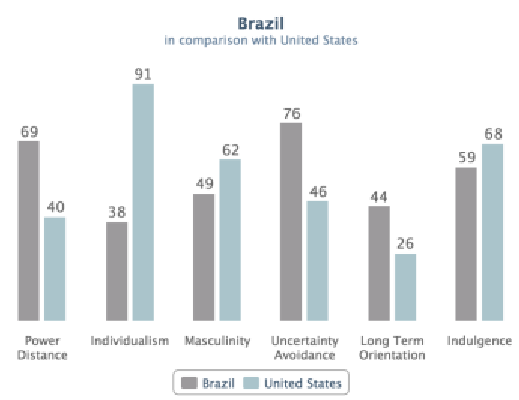 Figure 1: Comparison between US (Individualistic) and Brazil (Collectivistic) scores used for Booking.com's Brazil strategy.
Case Study 1: Booking.com’s Data-Driven Culture
At Booking.com, the team used the Collectivism score of Brazil (36) to hypothesize that Brazilian users value "social proof."
- The Action: They added a message showing how many other Brazilians had accounts.
- The Result: A statistically significant increase in finalized bookings.
However, they also found contradictions. They changed the search box color to pastel tones for Asian markets (CJK - Chinese, Japanese, Korean) because local experts suggested it. While it improved conversion, it contradicted Hofstede’s "Masculinity" index for Japan, which typically calls for more "assertive" designs.
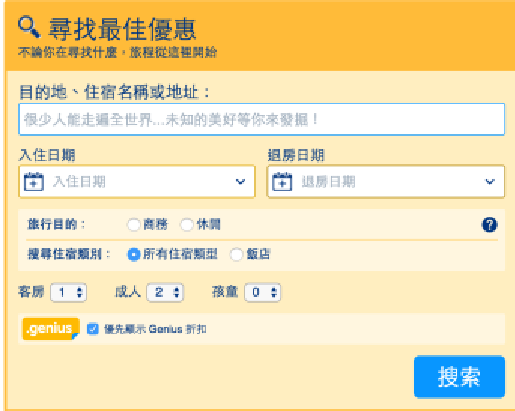 Figure 2: The "Pastel" UI tested in CJK markets to align with local aesthetic preferences.
Case Study 2: Cortana’s Persona
Microsoft used cultural dimensions to "tune" Cortana’s personality.
- Power Distance: In France (High Score), Cortana uses the formal "vous" to address users. In Germany (Lower Score), she is more informal.
- Uncertainty Avoidance: In Germany (High Score), Cortana gives direct, blunt answers to "Will you marry me?" style questions, whereas the US version is more ambiguous and playful.
Critical Insights: Theory vs. Reality
The paper concludes with three major takeaways regarding the Usefulness of these models:
- The "Aha!" Tool: Cultural dimensions are excellent for ideation. They give teams a common language to discuss why a design might fail in a new market.
- Retroactive Justification: Interestingly, designers often make a change based on "gut feeling" and then use Hofstede’s scores to justify the choice to stakeholders.
- The Scalability Trap: Relying on "local experts" (employees from that country) isn't scalable for small startups. Cultural models should help here, but current academic guidelines are too vague to be used without an expert's touch.
Conclusion and Future Outlook
The study highlights that while Cultural Dimensions are not a "magic button" for localization, they are a vital lens. The future of global product development lies in Mixed Methods: using academic theory to generate hypotheses, but letting A/B testing and local intuition provide the final verdict.
Takeaway for Designers: Don't ignore the theory, but don't let it override your data. Cultural dimensions are the "compass," but A/B testing is the "map."