
Neural Social Networks: Modeling Cultural Heritage Experiences via Biologically Inspired Models
A Cultural Heritage Case Study of Visitor Experiences Shared on a Social Network
This paper introduces a biologically inspired mathematical framework using the Leaky Integrate-and-Fire (I&F) neuron model to simulate visitor interactions and information propagation within a Social Network. By mapping cultural heritage visitors to computational neurons and social ties to synapses, the study successfully models how artwork engagement translates into social "spikes" or virality within a community.
TL;DR
This research bridges the gap between neuroscience and social media analysis. By treating museum visitors as "neurons" and their social connections as "synapses," the authors use the Integrate-and-Fire (I&F) model to simulate how an individual's interest in a sculpture can trigger a "viral spike" across a social network.
Background Positioning
In the era of Smart Museums, understanding how visitors interact with artworks is only half the battle; the other half is understanding how that experience spreads online. While most researchers use standard Machine Learning for user profiling, this work sits at the intersection of Computational Neuroscience and Social Computing, viewing the flow of information through the lens of electrical circuit dynamics.
Problem & Motivation: Beyond Static Profiles
The authors argue that existing approaches to user behavior—such as ontologies or typical statistical learning—are often "too restrictive." They fail to capture the temporal dynamics of how an interest in a specific artwork (like a Neapolitan sculpture) turns into a social media post, a like, or a comment.
The insight here is simple yet profound: If biological neurons fire when they reach a threshold of stimulation, why wouldn't a social media user "fire" a post when their interest reaches a certain threshold?
Methodology: The "Leaky" Social Network
The core of the methodology is the Leaky Integrate-and-Fire (I&F) model. In this setup:
- Neurons = Users: Every visitor is a computational unit.
- Synapses () = Friendships: The strength of the connection represents common interests or the degree of "liking."
- Membrane Potential = Social Interest: As a visitor interacts with the "Talking Museum" app, their internal "potential" builds up.
- Spiking = Social Sharing: When the interest crosses a threshold, the user "spikes," sending a signal to all connected friends.
Architecture Overview
The system relies on an IoT framework where BLE (Bluetooth Low Energy) nodes track visitor movement and trigger multimedia content. This real-world interaction data (JSON logs) serves as the input "current" to the neural model.
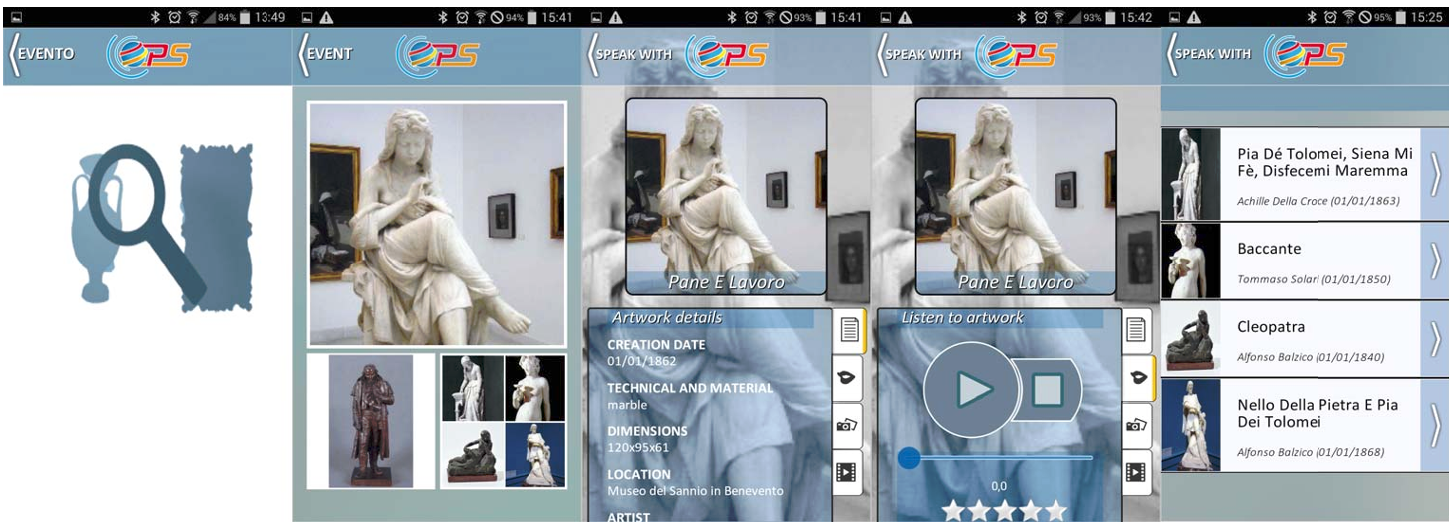 The mobile application collects interaction logs that drive the neural simulation.
The "Sociality Level" is defined by . A lower means the neuron (user) is more excitable—essentially, they are a "social butterfly" who shares information easily.
Experiments & Results: The Anatomy of Virality
The researchers tested their model on two main datasets:
- A synthetic 31-user network to test virality patterns.
- A real-world Facebook dataset with 348 users to simulate "circle" behavior.
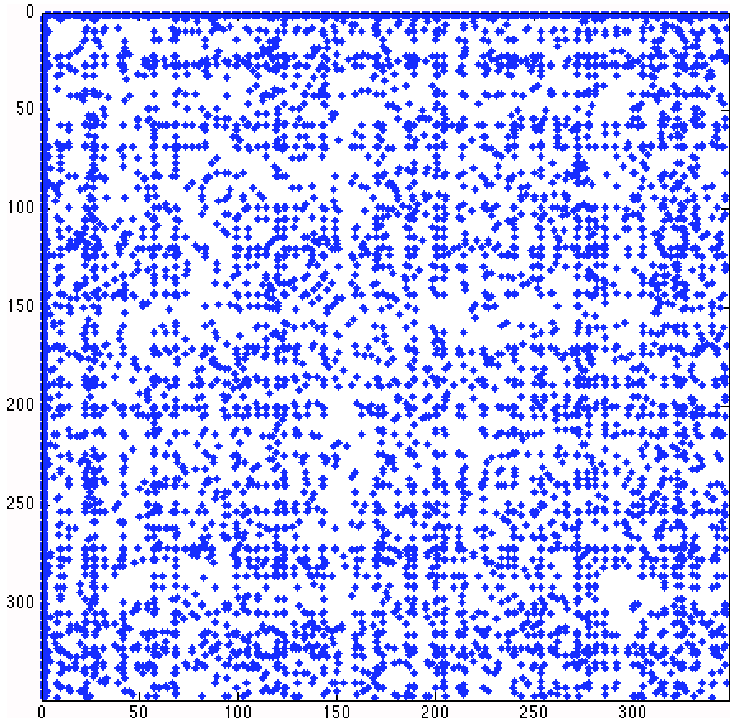 Fig 3: The adjacency matrix representing social ties among 348 users.
Key Findings:
- The Influence of Sociality (): Users with very small values (high sociality) acted as massive amplifiers. For instance, User in the Facebook trial showed an intense number of spikes because they belonged to a specific interest "circle" and had a high sociality level ().
- Viral Propagation: The model successfully demonstrated that information could reach users not directly connected to the original visitor, provided the intermediary "neurons" had sufficient synaptic weight and low resistance.
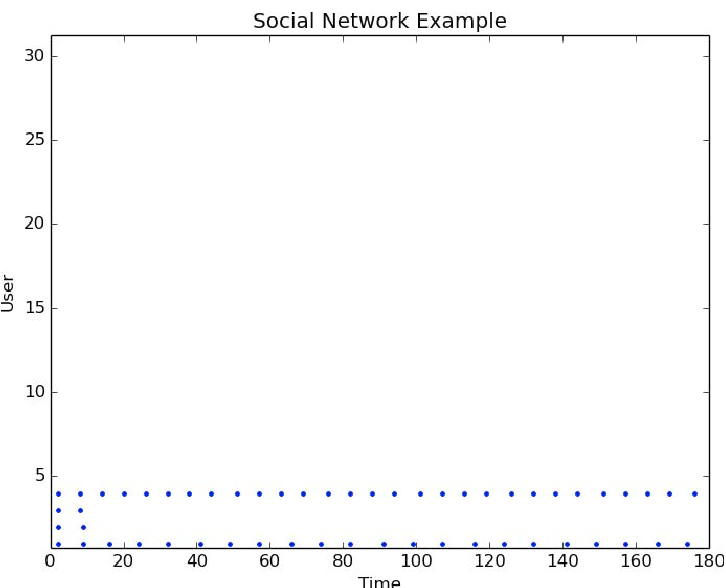 Experimental results showing the spike frequency for different users based on their network position and sociality.
Critical Analysis & Conclusion
Takeaway
This paper demonstrates that biological models are not just for brains—they are highly effective for Social Network Analysis (SNA). By adjusting the "electrical" parameters of the network, museum curators and marketers can predict which artworks are most likely to go viral based on the profile of the visitors interacting with them.
Limitations & Future Work
While the model is elegant, it assumes symmetric friendship weights (), which isn't always true in the age of "Followers" (e.g., Twitter/X). Future iterations could benefit from directed graphs and incorporating the vibe of the content (Sentiment Analysis) as a modifier for the input current.
In conclusion, the integration of IoT, Cloud Computing, and Neural Modeling provides a powerful toolkit for transforming static cultural heritage into a dynamic, measurable social experience.