
Digital Bridges or Virtual Buffers? Measuring Social Network Influence on Cultural Adjustment
Use of Cultural Intelligence to Measure Influence of Online Social Networks on Cultural Adjustment
This study proposes a theoretical framework to examine how Online Social Networks (OSNs), specifically Facebook, influence the cross-cultural adjustment of sojourners. By integrating Social Network Theory and Social Capital Theory with the Cultural Intelligence (CQ) scale, the author evaluates how different types of supportive messages and tie strengths impact motivational and behavioral adaptation.
TL;DR
Crossing borders involves more than just physical movement; it triggers a psychological "culture shock." While we intuitively feel that Facebook and other Online Social Networks (OSNs) help us adjust, this study finds that OSNs are most effective for Tangible Assistance (logistics, money, time) rather than emotional or skill-based adjustment. Surprisingly, the study shows that strong ties are the primary drivers for these practical gains, challenging the idea that the "strength of weak ties" is the dominant factor in digital acculturation.
The "Sojourner's Dilemma": Motivation and Context
When individuals move to a new culture—be it for study or work—they face intense psychological stress. Historically, social support came from local physical communities. Today, sojourners carry their social networks in their pockets.
The author, Shalinda Adikari, identifies a gap: most research focuses on offline interactions. The core Insight here is that OSNs provide a 24/7 lifeline that traditional networks cannot, but we lack a rigorous way to measure if these digital "supportive messages" actually translate into Cultural Intelligence (CQ).
Methodology: The CQ Framework Meets Social Network Theory
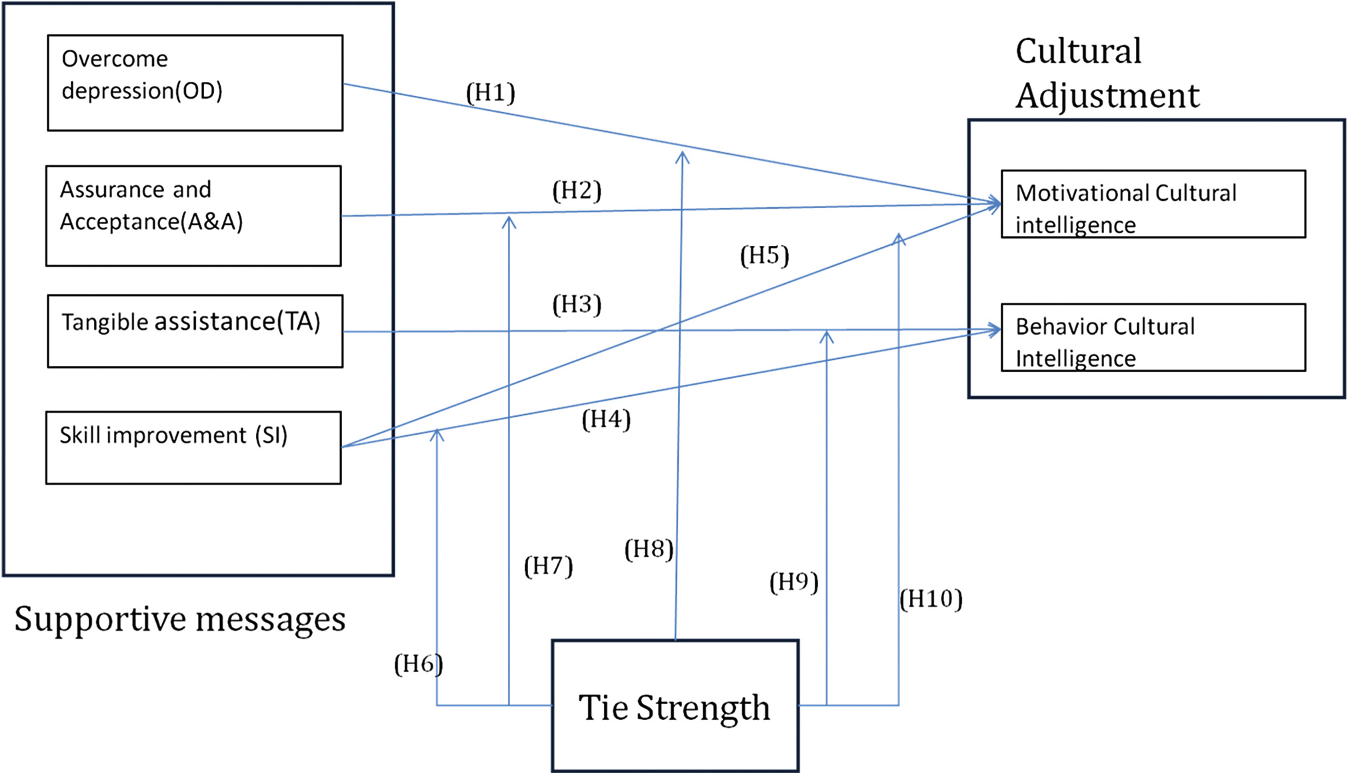
The study adopts the 4-factor model of Cultural Intelligence (Ang et al., 2007) but focuses specifically on two outputs of adjustment:
- Motivational CQ: The drive and confidence to adapt.
- Behavioral CQ: The ability to modify actions (accent, tone, body language) for a new culture.
The Proposed Architecture
The model treats four types of messages as independent variables:
- Overcoming Depression (OD): Psychological relief.
- Acceptance & Assurance (A&A): Validation of self-worth.
- Tangible Assistance (TA): Loans, labor, or physical help.
- Skill Improvement (SI): Navigating the new environment's rules.
Deep Dive: Why Only Tangible Assistance Matters
After analyzing data from 130 residents in Singapore using LISREL, the results were counter-intuitive.
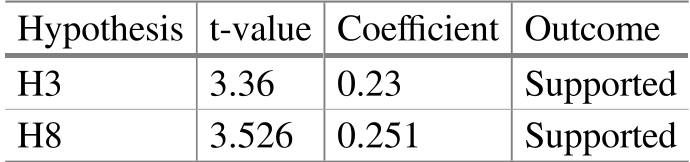
- The Big Winner: Tangible Assistance. Hypotheses H3 and H8 were the only ones supported. When sojourners receive concrete help through OSNs (e.g., help with moving, lending items), it directly improves their Behavioral CQ.
- The Paradox of Strong Ties: While weak ties are usually praised for providing "new information," this study found that Strong Ties (close friends/family) were the ones providing the tangible support that led to better Behavioral CQ.
Key Results Summary
| Hypothesis | Relationship | t-value | Result |
|---|---|---|---|
| H3 | Tangible Assistance -> Behavioral CQ | 3.36 | Supported |
| H8 | Strong Ties * Tangible Assistance | 3.526 | Supported |
Technical Analysis & Critical Reflection
Why did social support for depression or skill-building fail to impact CQ? The author offers a candid critique of the study's own framework:
- CQ might be the wrong yardstick: While CQ measures capability, it may not capture the immediate "uncertainty reduction" that someone feels after a supportive Facebook message.
- Negative Effects of OSNs: The study focused only on supportive messages. It ignores the "doom-scrolling" effect or negative social comparisons that might occur when a sojourner sees their friends back home, which could counteract the benefits of digital adjustment.
Conclusion and Takeaways
This research highlights that while OSNs are a ubiquitous part of the migration experience, they are primarily functional rather than transformational. They help sojourners get their "feet on the ground" through practical assistance, but true emotional and cognitive adjustment might still require deeper, perhaps offline, engagement.
Future Outlook: For researchers, the next step is to explore how negative digital feedback loops hinder adjustment and to refine the measurement of "mastery" beyond the standard CQ metrics.