
Bridging the Cultural Gap: Using Common Sense Knowledge to Build Online Communities
A cultural knowledge-based method to support the formation of homophilous online communities
This paper introduces a three-step cultural knowledge-based method to identify users with similar interests in Social Network Sites (SNS) to foster "homophilous" online communities. The core approach utilizes the OMCS-Br (Open Mind Common Sense Brazil) knowledge base to normalize and expand search queries based on cultural nuances and semantic relations.
TL;DR
Building successful online communities requires Homophily—the tendency of individuals to associate with similar others. However, cultural differences often mask these similarities. This paper proposes a method that uses the OMCS-Br (Open Mind Common Sense Brazil) knowledge base to "translate" user interests across cultural vocabularies, effectively identifying shared passions even when expressed differently.
The Challenge of Cultural Vocabulary
Current recommendation systems often suffer from "Surface-Level Blindness." If User A posts about the "Marvelous City" and User B posts about "Rio de Janeiro," a simple keyword search might miss the fact that they are discussing the exact same place. This problem amplifies across different education levels, regions, and social classes. Existing solutions like "Bag-of-Words" or FOAF (Friend of a Friend) ontologies lack the cultural depth required to understand these semantic overlaps.
Methodology: The Three-Step Cultural Bridge
The researchers developed a pipeline that moves beyond simple keywords to Meta-Relations:
- Syntactic Processing: Using the PALAVRAS parser, a "seed" phrase (e.g., "Rio de Janeiro continues beautiful") is broken down into a structured meta-relation:
continue (Rio de Janeiro, beautiful). - Cultural Expansion: The system queries the OMCS-Br database. It doesn't just look for synonyms; it looks for cultural associations using Minsky’s binary relations. For instance,
DefinedAs("Rio de Janeiro", "Wonderful City")allows the system to generate new search seeds likecontinue ("Wonderful City", "gorgeous"). - Social Search: The system سپس scans SNS posts (the study used Orkut) for these expanded relations, identifying users who are talking about the same topic via different linguistic "routes."
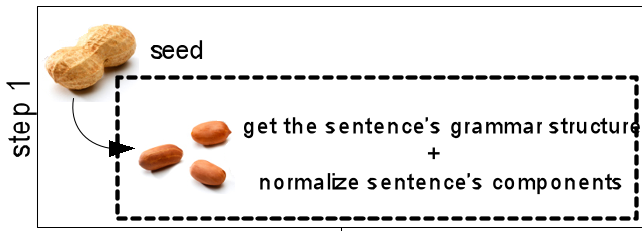 Figure 1: The 3-step method for culturally normalized identification.
Experimental Results: Proving the Value of "Translation"
The study tested three distinct topics: Tourism, Celebrities, and Politics. The results were striking:
- High Precision: 81% of retrieved sentences were judged by human evaluators to be correctly related to the seed topic.
- The Translation Advantage: Over half (53%) of the relevant posts were identified only because of the cultural translation step. Without this method, these users would have remained invisible to one another.
 Table 3: Summary of the meta-relations generated and users retrieved.
Critical Insight: Beyond Logic to Common Sense
The value of this work lies in its utilization of Common Sense Computing. Conventional AI often struggles with the "implied" knowledge that humans take for granted. By leveraging a database built through collaborative human input (OMCS-Br), the engine gains a "Brazilian perspective" on how concepts relate, which is far more effective for local community building than a generic global ontology.
Limitations and Future Work
While successful, the method sometimes suffers from Over-Generalization. For example, replacing a specific subject like "Rio de Janeiro" with a broader term like "Beach" can lead to results that are technically similar but contextually irrelevant. The authors suggest that moving from phrase-level parsing to whole-post analysis will be the next step in refining accuracy.
Conclusion
This study provides a roadmap for the next generation of social platforms. By making algorithms "culturally aware," we can move past the echo chambers of exact-match keywords and foster communities based on deep, shared human interests that transcend regional slang and cultural barriers.