
Culture + Cyber: Decoding the Digital Mind through the Lens of Cultural Anthropology
Culture + Cyber: Exploring the Relationship
This paper explores the deep-seated relationship between national culture and cybersecurity behaviors using Geert Hofstede’s six-dimensional cultural framework. By analyzing over 10 million digital artifacts from the Zone-H archives and ICANN data, the authors identify significant "cultural markers" that correlate national background with specific attack vector preferences, victim vulnerabilities, and defensive strategies.
TL;DR
Is cyberwarfare truly borderless? This paper argues that while the hardware and software of our machines are globalized, the "software of the mind" is not. By mapping 10 years of cyber-attack data from the Zone-H archives to Hofstede’s Cultural Dimensions, the researchers demonstrate that national culture is a powerful, yet overlooked, predictor of how people attack, how they succumb to exploits, and how they defend their digital borders.
The "Illusion of Technology": Why Culture Matters
For decades, cybersecurity has been viewed through a purely technical lens. We study scripts, protocols, and vulnerabilities as if they exist in a vacuum. However, as social psychologist Geert Hofstede famously noted, technology does not dominate culture.
The authors argue that actors in cyberspace—whether they are Attackers, Victims, or Defenders—are influenced by unconscious cultural biases and cognitive patterns established in their physical environments. This "cultural programming" manifests in digital trails, allowing us to use cybersecurity data much like an archaeologist uses physical artifacts to reconstruct ancient civilizations.
Methodology: Mapping the Six Dimensions of Cyber
The research leverages Hofstede’s six-dimensional framework to create "Cultural Markers." These dimensions include:
- Power Distance Index (PDI): Acceptance of hierarchy vs. equality.
- Individualism vs. Collectivism (IvC): Focus on the "I" vs. the "We."
- Masculinity vs. Femininity (MvF): Competition and aggression vs. quality of life and consensus.
- Uncertainty Avoidance (UAI): Comfort level with ambiguity/unknowns.
- Long-term Orientation (LvS): Future rewards vs. short-term gratification.
- Indulgence vs. Restraint (IvR): Level of societal impulse control.
The authors mined the Zone-H database (10M+ records) and ICANN reports to find statistical correlations between these scores and real-world cyber events.
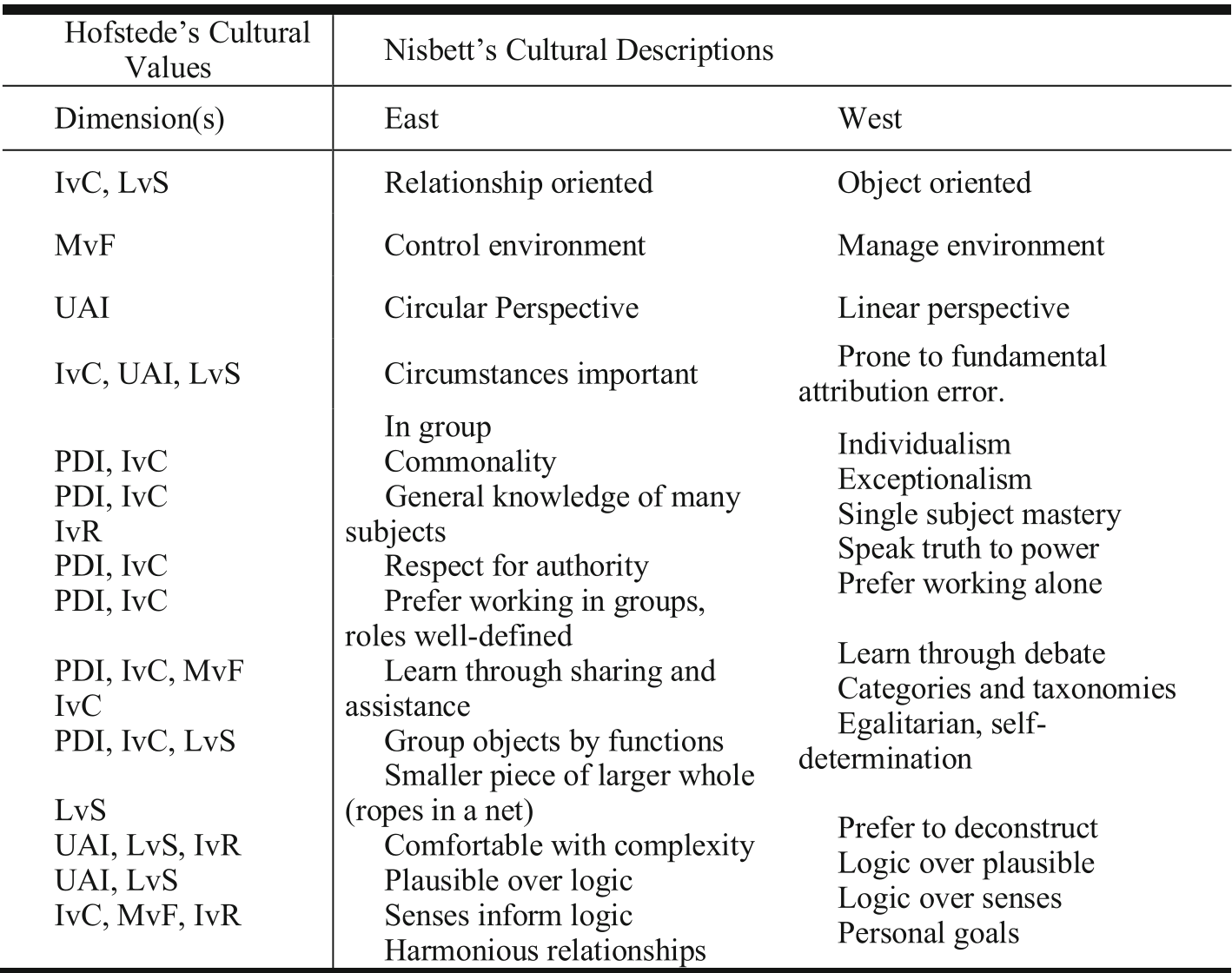 Figure 1: Comparison of East vs. West cultural traits mapped to Hofstede's values.
Key Insights: How Different Cultures "Play" the Cyber Game
1. Attacker Preferences
The study found that attackers are not a monolith. Their choice of "weaponry" (attack vectors) varies by culture:
- High PDI (Hierarchical): Nations with high power distance showed a strong preference for Social Engineering, SQL Injection, and Zero-day exploits. This suggests that respect for (or exploitation of) power structures translates into digital manipulation.
- Masculine Cultures: Associated with more "aggressive" or repetitive tactics like Brute Force and password sniffing.
2. Victim Vulnerabilities
Who gets hacked and why?
- SQL Injection Victims: Predominantly found in countries with High PDI.
- Social Engineering Victims: Most common in cultures that are Individualistic and Masculine. These cultures may prioritize personal goals or competitive edges, making individuals more susceptible to targeted manipulation.
3. Defender Strategies (DNSSEC)
The act of signing a Top-Level Domain (TLD) with DNSSEC—a sign of being a "good net citizen"—was not random.
- Successful Defenders: Traits include Low PDI, Individualism, and Long-term Orientation. These cultures value collective security protocols and are willing to wait for the long-term benefits of a secure network infrastructure.
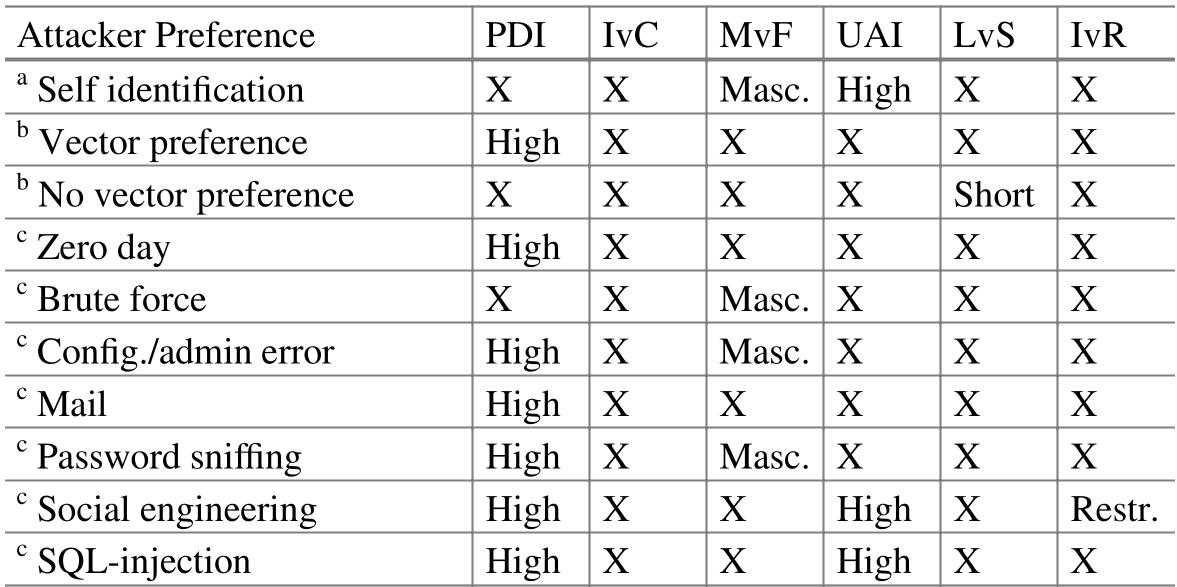 Figure 2: Consolidated findings showing significant links between cultural dimensions and cyber activities.
Critical Analysis: Moving Beyond the Playbook
The true value of this work lies in its challenge to the "Single Hacker Culture" myth. If we assume all attackers follow the same SANS or MITRE playbook, we remain reactive. By understanding that an attacker from a high Uncertainty Avoidance culture might shy away from chaotic tactics, or that a collectivist society might favor synchronized, group-based attacks, we can build predictive defense models.
Limitations & Future Work
- Generalization: Cultural dimensions describe groups, not individuals. A specific hacker may not represent their national average.
- Artifact Depth: Currently, the research focuses on metadata. The authors suggest that analyzing the content of defaced websites—the "digital graffiti"—using sentiment analysis could reveal even deeper psychological insights.
Conclusion
Cybersecurity is as much a social science as it is a technical one. This research proves that our digital behaviors are simply an extension of our physical societal norms. For defenders, the takeaway is clear: To secure the network, you must first understand the mind of the operator.
Blog based on: "Culture + Cyber: Exploring the Relationship" by Sample et al., US Army Research Laboratory.